Get Full Government Meeting Transcripts, Videos, & Alerts Forever!
Get email alerts on the School Budget topic
No spam. Unsubscribe anytime.
Sioux Falls 49-5 previews $3M-plus in cuts as district works to close multi‑year deficit
Summary
District administrators presented a preliminary FY26 budget that relies on a mix of spending reductions and transfers from capital funds to close a multi‑year gap created in part by one‑time ESSER spending and a 1.25% state aid increase.
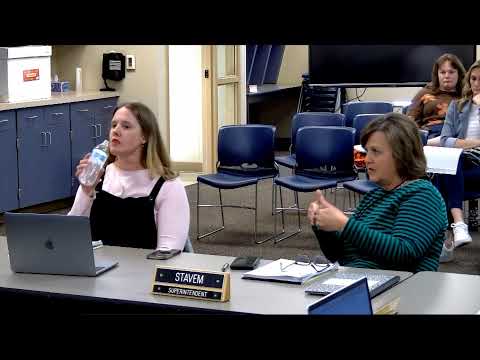
Sioux Falls School District 49‑5 administrators presented a preliminary budget and a package of reductions and fund transfers at a budget work session, identifying options to address multi‑year deficit pressures that rise if one‑time pandemic dollars are not replaced.
“ We are at the part of our process now, where we begin to put the the last look…to arrive at what we would say is usually our preliminary budget,” said Dr. Salim, opening the session. Administrators said the district carried roughly $8.3 million of services originally paid with ESSER (federal pandemic) funds into the current general fund and that, without changes, FY26 would show an $8.4 million structural deficit and grow to about $11 million the following year.
The budget team presented three strategic options: generate additional revenue, enact deeper budget cuts (a roughly 4% reduction was discussed), or use a combination of modest revenue increases and targeted reductions. The board directed a combined approach. Todd Beek, presenting program-level scenarios, said most cost centers include three funding “levels” (for example 2% cut, 1% cut, or level‑funding) and the packets in meeting materials show proposed reductions by cost center.
Administrators outlined about $3.0 million in recommended reductions across departments and programs for FY26 and described an increased use of capital outlay transfers to smooth the general fund. The presentation showed a planned increase in the amount drawn from Capital Outlay funds (initially planned to rise from about $4.25 million to roughly $6.775 million) that would be increased further — administration said by about $1.5 million — to reduce short‑term pressure on the general fund. With the recommended cuts plus capital transfers, the projection for next year moved to a smaller deficit (administration estimated roughly $3.2 million of deficit spending in FY26) with a plan to continue reductions the following year to reach balance.
Board members emphasized priorities that should be protected. “We committed to this year is we did not change class sizes at any of the levels,” a board member said during discussion. Board member Carly, who served on the budget committee, noted the process has been ongoing for several years and that departments were given choices about the timing and size of reductions.
Administrators said the 1.25% state aid increase this year limited revenue growth and heightened the need for reductions. The board scheduled a follow‑up work session to continue debate and to provide more detailed breakdowns (administration agreed to separate the transportation/contracted vendor lines for clarity). The meeting concluded with a motion and second to adjourn; the chair declared the session adjourned without a roll‑call vote recorded in the transcript.
Questions and next steps: the board asked administration to bring a clearer set of phased options (including any phased reductions to one‑time supports) to the next meeting so the board can weigh which programs to protect and which allocations to adjust.