Get Full Government Meeting Transcripts, Videos, & Alerts Forever!
Get email alerts on the Education topic
No spam. Unsubscribe anytime.
House panel hears bill to create need-based grants for student meal support
Summary
Lawmakers heard HB 716, the Hunger Free Campus Act, which would authorize the Georgia Student Finance Commission to establish a need-based grant program to help eligible postsecondary students cover meal costs; sponsors said implementation would be subject to appropriations and further work with institutions is planned.
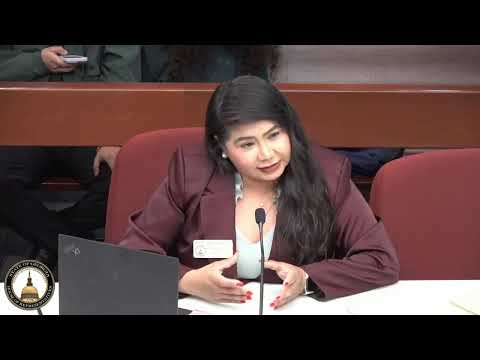
Representative Barry and supporters told the House Higher Education Committee on Thursday that HB 716, the Hunger Free Campus Act, would create a state-administered, need-based grant to help eligible postsecondary students pay for meals.
The bill would direct the Georgia Student Finance Commission to establish a financial aid program that provides grants to eligible students and participating institutions “for the purpose of combating food insecurity amongst post secondary students,” Representative Barry said during the hearing.
Committee members heard data and testimony from nonprofit and campus witnesses who described food insecurity among Georgia college students. Corinne Schooley of Achieve Atlanta told the committee that surveys show roughly one in four college students in Georgia experience food insecurity and recommended that state funds be structured so students can spend awards on “indirect expenses” such as groceries and not only institutional charges. Student witnesses described skipping meals, stretching a single meal across a day, and the difficulty of obtaining groceries when campus cafeterias are closed.
Representative Barry said eligibility in the bill tracks existing state definitions for “economically disadvantaged” and certain scholarship eligibility in code section 23-5-519.1, and would require completion of a FAFSA or evidence of a financial-aid gap. The bill caps the maximum award at an amount “equal to the highest cost meal plan at that school,” Barry said. He also noted the proposal would be “subject to appropriations” and asked for a fiscal note.
Supporters pointed to existing local efforts and similar state programs. Barry cited the University of Georgia’s Every Dog Eats program as a model and referenced other states: “This has also been introduced and passed in Louisiana and has cost Louisiana $2,500,000,” and “Oklahoma … $200,000 of state funds,” he said. Witnesses said institutions often distribute emergency or institutional grants to students and recommended routing funds through colleges to target students with the greatest need.
Committee members asked how awards would be delivered and whether funds would be distributed as part of a financial-aid package, a campus meal card, or a direct payment. Barry and witnesses said those implementation details would be developed during interim work with the Georgia Student Finance Commission and the University System of Georgia. Corinne Schooley recommended ensuring that funds be usable for indirect expenses and that allocations reflect institutions’ shares of Pell-eligible students so they reach campuses serving more students in need.
No vote was taken. Committee members said they would use the interim to work through logistics, including how to avoid over-awarding and how institutions would administer grants if the bill were enacted. Representative Barry said he will continue conversations with USG and the commission over the summer and fall to refine implementation.
If enacted as written, the commission would have discretion over some program details including how students receive awards and whether funds can be accessed outside campus dining services, stakeholders said.
The committee heard roughly a dozen speakers in support of the bill, including representatives of student groups, campus pantries, and nonprofit organizations; several speakers described personal experiences with campus food scarcity and urged the committee to move the bill forward.