Get Full Government Meeting Transcripts, Videos, & Alerts Forever!
Get email alerts on the State Budget topic
No spam. Unsubscribe anytime.
DeWine outlines education, childcare and mental-health priorities in proposed biennial budget
Summary
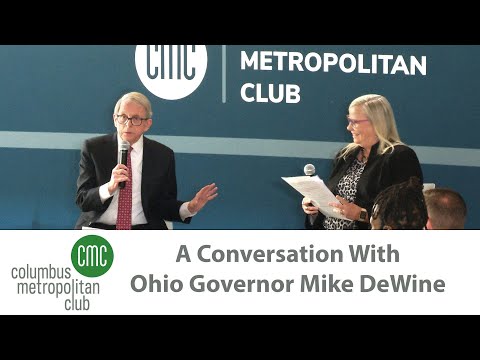
Ohio Gov. Mike DeWine told a Columbus Metropolitan Club audience that his proposed $218 billion, two-year budget emphasizes literacy, school-bus safety, mental health and expanded childcare supports, and would fund several programs with new tobacco and targeted tax revenue.
Governor Mike DeWine on Wednesday described key priorities in his proposed $218 billion biennial state budget, telling a Columbus Metropolitan Club audience his administration is focusing on literacy, school-bus safety, mental-health funding and expanded childcare support.
DeWine said the budget includes additional funding for literacy coaches tied to what he called the "science of reading," $30 million aimed at targeted school-bus safety improvements and a "significant amount of money" carved out for mental-health services. "Science of reading. We put additional funds in there for literacy coaches," DeWine said. "Two years ago, we asked the legislature to basically mandate the science of reading in every school in the state. They have done that. We are seeing great, great success."
Why it matters: DeWine framed those spending priorities as investments that advance children's readiness and remove barriers to students' success, part of a broader goal he repeatedly described as helping Ohioans "live up to their God given potential." The priorities could affect local school budgets, mental-health providers and counties that administer childcare and early-education programs.
What the budget would do: In addition to literacy and bus-safety funding, the governor said the budget expands childcare subsidies and proposes a $1,000-per-child tax credit for families with children under age 7. "We now, as of a year ago, and we continue it in this budget, I think we added an additional, five over 5,000 families, over 7,000 kids who are getting, subsidized, childcare," DeWine said. He said the family tax credit would be funded by raising the tobacco tax by $1.50 per pack and that the revenue would be directed to the program.
DeWine also described proposals to improve access to vision and dental care for schoolchildren. He said an existing requirement for early eye screenings identified many children who needed exams but that only about one-fourth subsequently received those exams. The budget, he said, would expand mobile eye clinics and a dental pilot in high-need counties so children could receive exams and glasses on site.
Local context and limits: DeWine repeatedly noted that the legislature controls the final budget and said some details may change during the House-Senate conference process. "We haven't seen the house budget yet, let alone the senate. And then there's a thing called a conference committee," he said. He urged lawmakers to retain the education and child-focused investments he presented.
Public programs mentioned: DeWine noted expansion of school-based clinics to reach underserved populations and cited ongoing outreach for the Dolly Parton Imagination Library effort led locally by the first lady, which he said delivers free monthly books to families with young children. "We now have, I think, 412,000 kids every month get a book, free book in the mail from children from birth until the age of 5," he said.
Next steps: The governor said his proposals now move to the General Assembly, where the House and Senate will produce their budget plans and ultimately resolve differences in conference committee negotiations. He did not promise which items the legislature will keep intact.