Get Full Government Meeting Transcripts, Videos, & Alerts Forever!
Get email alerts on the Cannabis Cultivation Limits topic
No spam. Unsubscribe anytime.
Mendocino committee forwards question of cannabis cultivation limits to full Board after extended public comment
Summary
After multiple hours of public comment from growers, residents and industry groups, Mendocino County’s General Government Committee voted unanimously to forward to the full Board of Supervisors the question of whether to change local cannabis cultivation limits, keeping the decision for the April 8 Board meeting.
The Mendocino County General Government Committee voted unanimously to forward to the full Board of Supervisors the question of whether the county should change local limits on commercial cannabis cultivation, following several hours of public comment that included sharply divided views on zoning, environmental risk, economic viability and county process.
The committee’s motion — as stated for the record — asks the Board to decide whether “the limits of cannabis cultivation should be changed from what is currently permissible.” The motion was seconded and approved on a roll call vote of 2‑0.
The item drew more than two dozen in‑person and remote public speakers. Commercial growers, farm owners and representatives of the Mendocino County Farmers and Cannabis Association urged loosening limits or clarifying that county code allows up to 22,000 square feet per parcel by permitting two cultivation site permits. Several speakers advocated for a one‑acre option or a two‑track permitting system that would preserve smaller legacy farms while enabling larger agricultural‑style operations on agricultural and rangeland. Kyle Greenalch, a farmer and dispensary owner, noted county land statistics and argued that many rural landowners on rangeland are excluded from full participation under current restrictions.
Opponents — including longtime residents and some municipal advisory committee members — urged preserving the smaller canopy cap, voiced environmental concerns (water use, runoff and visual impacts) and criticized what they called a staff “reinterpretation” of Mendocino County Code. Chris Boyd of Redwood Valley asked the county to keep “all commercial cannabis activities away from residential areas,” citing public‑safety and youth‑exposure concerns.
Several speakers focused on process. Multiple commenters told the committee they believed county staff had in some circumstances implemented an internal reinterpretation of Chapter 10A‑17 that changed how two local commercial cannabis cultivation business licenses (CCBLs) are read — a reinterpretation that some residents and advocates say should have been resolved by the Board. Ellen Drell and others urged the committee to recommend that the Board clarify the ordinance’s language by restating the Board’s prior 5‑0 position to cap mature canopy at 10,000 square feet per parcel unless the Board publicly amends the code.
Industry representatives presented different facts. Steven Amato, president of the Mendocino Cannabis Association, said county staff data showed zero conversions of nursery permits to cultivation permits in phase‑1 resource lands and identified 22 phase‑1 licenses with conversion potential, which Amato calculated would amount to roughly five acres of additional canopy countywide if all converted. Corinne Powell cited the cannabis department’s monthly report showing about 271 state annual and local licensees and urged the county to consider a two‑track permitting approach to protect small legacy farms while enabling larger operations.
County staff and committee members noted other work under way: an economic development sector meeting on the cannabis industry scheduled for the following day, and ongoing processing of provisional state applications. Anna Mackin of the county’s Economic Development Division told the committee the sector meeting was intended to gather business‑level needs and potential nonregulatory supports (marketing, workforce, collaboration) and that staff will include policy and regulatory concerns in a report back.
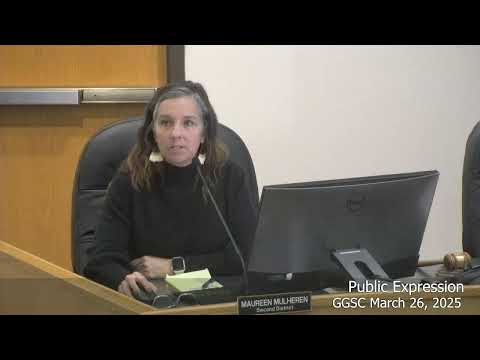
Committee action and roll call: Chair Mulhern moved to send the item to the Board asking the Board to decide whether cultivation limits should be changed; Supervisor Norville seconded. A roll call vote recorded Member Mulhern: yes; Member Norville: yes. The motion carried 2‑0. The committee also approved minutes from a prior meeting by unanimous roll call.
The committee referred the matter to the full Board for action on April 8 and encouraged Board members to review the meeting record before that date. No other formal regulatory amendments were enacted by the committee at this meeting.
Background and next steps: The dispute traces to differing readings of Mendocino County Code Chapter 10A‑17, which historically allowed two separate local commercial cannabis cultivation permits on a parcel in many zones (a cultivation permit and a nursery permit) with practical canopy limits commonly read as totaling up to 22,000 square feet in many districts. Some county staff have interpreted the secondary permit as restricted to nursery activity only, which opponents say would effectively limit mature canopy to 10,000 square feet per parcel unless the Board changes the ordinance. The committee’s referral leaves the legal standard and any ordinance change to the Board of Supervisors.
Public documents: speakers and written materials referenced at the meeting will be included in the Board package for the April 8 meeting and in the county’s public record for the item.