Get Full Government Meeting Transcripts, Videos, & Alerts Forever!
Get email alerts on the Traffic Safety topic
No spam. Unsubscribe anytime.
Council reviews traffic-management upgrades and school‑zone radar sign expansion
Summary
Public works staff described repairs and upgrades to the traffic management center, a multi‑year sidewalk program and a plan to add radar speed‑display signs in school zones; councilors asked for details on sign placement, school‑hour timing and how the displays relate to proposed enforcement cameras.
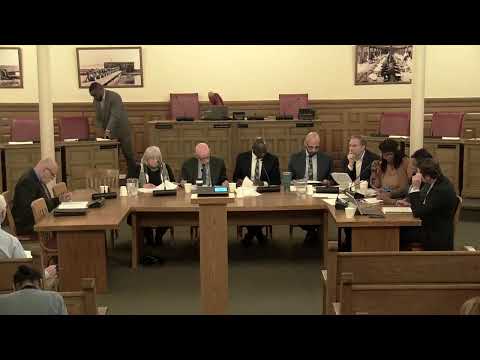
Public works and DPW staff briefed the Syracuse Common Council on a package of transportation and street-safety items, including maintenance of the traffic management center, sidewalk funding and expansion of radar speed‑display signs in school zones.
Anne Fordock, first deputy commissioner of DPW, said the agenda items include $3 million previously apportioned for sidewalk work last year and $3 million for the current year to support a citywide sidewalk program. She said the city will evaluate whether recently installed private sidewalks were permitted and up to code before including them in construction work.
Kent Towsley, street lighting manager, asked the council to amend the existing street-lighting maintenance contract from $900,000 to $1,200,000 for the year, citing winter-related outages, added contractor crews and a lineman rate increase effective May 1.
On radar signs and traffic signals, DPW staff described two related items to maintain the traffic management center (camera and signal network repairs) and two items to expand a radar sign program that displays drivers’ speeds in school zones. Staff emphasized the signs are informational — not enforcement devices — and said the signs are typically placed where an existing school-zone speed sign is already installed. “We’re replacing that sign with one that also tells you how fast you’re going,” a staffer said.
Councilors asked why school‑zone flashing signs sometimes operate when schools are not in session and about the distance of the signs from the school crossing points. Staff said many signs operate on schedules (for example, set times during the day) and that placement varies depending on existing signage and engineering review; staff said they would follow up with specifics on placement and timing and whether the radar displays would be coordinated with proposed enforcement cameras.
No final votes were recorded in the transcript; councilors asked staff for more detail about signal synchronization, sign timing and the relationship between informational displays and any camera-based enforcement program.
Speakers quoted in this article are listed in the meeting record.