Get Full Government Meeting Transcripts, Videos, & Alerts Forever!
Get email alerts on the Environmental Protection topic
No spam. Unsubscribe anytime.
Legislature approves bill to ban certain sunscreen chemicals; fines to fund Guam Environmental Trust Fund
Summary
Lawmakers advanced a bill that would bar importation of sunscreens containing oxybenzone, octinoxate and octocrylene and allow agencies to restrict other harmful chemicals; floor amendments directed civil fines into the Guam Environmental Trust Fund and adjusted timing for enforcement.
The Guam Legislature moved forward a measure to prohibit the importation of skin‑care products that contain chemicals federal and territorial authorities have identified as harmful to coral reefs and marine life.
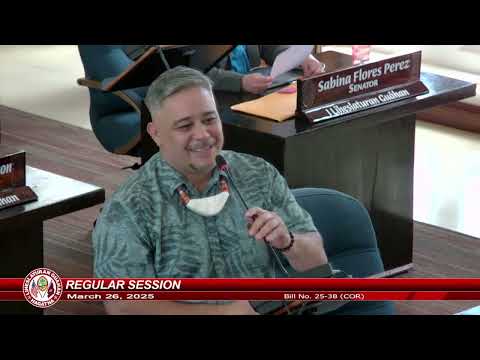
Vice Speaker Tonyotta, the bill’s author, said the measure targets specific sunscreen ingredients — oxybenzone, octinoxate and octocrylene — and does not ban sunscreen use. "This bill does not ban the use of sunscreen. It simply requires retailers to offer products that are safe for the environment," he said on the floor.
Supporters invoked scientific findings and actions taken in other U.S. jurisdictions. The bill follows ordinances in places such as Hawaii, Key West (Florida) and the U.S. Virgin Islands that limit sunscreen chemicals linked in studies to coral bleaching and harm to marine organisms. Senators urged that protecting reefs supports tourism, coastal protection and cultural fisheries.
During floor debate senators proposed and adopted an amendment to designate that civil fines collected under the law be deposited into the Guam Environmental Trust Fund for hazardous‑substance mitigation and environmental programs. Another technical floor amendment corrected an internal cross‑reference in the effective‑date language. The bill also sets most provisions effective on enactment but makes certain enforcement items effective 180 days after enactment so retailers can manage existing inventory.
The author said enforcement would be a joint effort among Guam EPA, the Department of Public Health and Social Services (Division of Environmental Health) and the Department of Agriculture, and customs enforcement was mentioned as a practical mechanism to block prohibited imports at the border.
Why it matters: Guam’s reefs are a keystone of the island’s environment, fisheries and visitor economy. Supporters said the measure is a precautionary public‑health and conservation policy that follows scientific concerns about specific UV filters; critics (not in the floor record) might raise trade or retail compliance questions.
Looking ahead: with floor amendments adopted, the bill was placed on the third‑reading voting file. Agencies were instructed to prepare rules and implementation plans and to coordinate on enforcement and customs control.