Get Full Government Meeting Transcripts, Videos, & Alerts Forever!
Get email alerts on the Workplace Drug Testing topic
No spam. Unsubscribe anytime.
Legislature advances bill requiring drug tests before reemployment to close perceived loophole
Summary
A bill that would require employees who resign within 30 days of a government drug‑testing announcement to submit to and pass drug screening before being eligible for reemployment was advanced to the third‑reading voting file after senators added clarifying language on random testing and cosponsors.
The Guam Legislature voted to advance a bill designed to close what backers called a loophole that lets employees resign to avoid mandatory drug screening and later seek reinstatement without testing.
The bill requires any person who resigns from government service within 30 days of an announced government‑sponsored drug testing to submit to and pass that drug screening to retain reemployment rights. The author told colleagues the measure is narrowly drawn to require testing prior to reemployment rather than post‑hire screening that had raised constitutional concerns in prior iterations.
Sponsor remarks recalled the measure’s history: an earlier near‑identical bill passed the 36th Guam Legislature but was vetoed by the governor because of a post‑employment testing provision. The current version was modified so testing would be completed prior to reemployment, which the author said addresses the prior veto rationale.
Floor debate included support from multiple senators who described the bill as a fairness and workplace‑safety measure and cautioned about potential corner cases — for example, employees who resign for legitimate personal reasons during the 30‑day window. One senator asked why the bill uses 30 days; the author said 30 days was chosen for policy reasons and agreed to discussion about alternative timeframes.
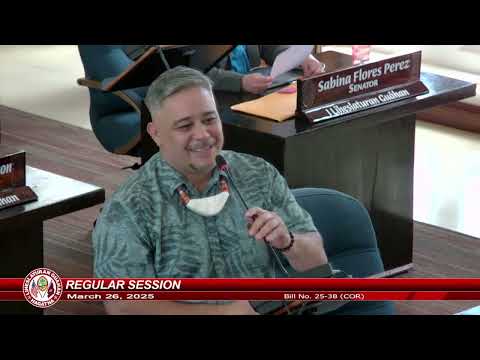
Members added a floor amendment changing the phrasing to cover situations where an employee resigns “within 30 days of an announced or random government‑sponsored drug testing.” The amendment was accepted without objection on the floor. The author also added multiple cosponsors on the record. The author then moved the bill to the third‑reading voting file; the motion carried.
Why it matters: the measure targets positions subject to drug testing and seeks to prevent employees from evading random or scheduled testing by resigning then later seeking reemployment without screening. Sponsors said the change balances constitutional limits on post‑hire testing with a mechanism to prevent evasion.
Looking ahead: the bill is on the third‑reading voting file. Senators requested attention to implementation details such as how the rule applies to agencies that do not publicly announce random tests and whether the 30‑day window is the appropriate standard.