Get Full Government Meeting Transcripts, Videos, & Alerts Forever!
Get email alerts on the Syria Humanitarian Response topic
No spam. Unsubscribe anytime.
UN official urges urgent funds and civilian protection as Syrian humanitarian needs deepen
Summary
Tom Fletcher, speaking to the Security Council, described expanded aid routes and some infrastructure repairs but warned that only 13% of a $2 billion humanitarian appeal has been funded and urged member states to convert pledges into cash to avoid life‑saving cuts.
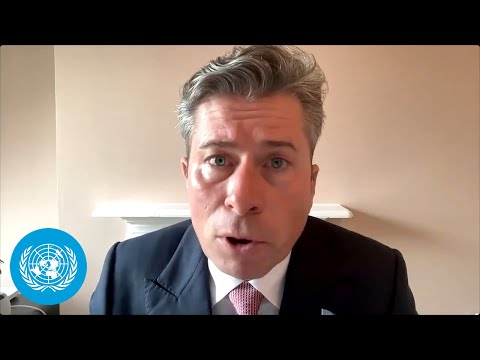
Tom Fletcher, United Nations official, told the United Nations Security Council that Syria faces an acute humanitarian crisis and appealed for $2 billion to reach 8 million of the most vulnerable people through June.
Fletcher said funding shortfalls and operational constraints risk scaling back life‑saving services, even as some security and access improvements have allowed a modest expansion of aid deliveries and repairs to essential infrastructure.
Fletcher said the United Nations has increased cross‑border deliveries since the start of the year, using Taqiyah and other routes and receiving extended permission from interim authorities to use the Baba Salam and Arayi crossings. He said the office is working with interim authorities to streamline procedures and address liquidity challenges to make deliveries more efficient.
“We are making progress with thanks to the teams on the ground and those who back us on a scaled up ambitious humanitarian response,” Fletcher said, citing expanded routes and operational adjustments.
He described specific relief and recovery steps: the Atare water station in Aleppo resumed operations on March 14 after being powered by solar installations and is now supporting about 40,000 people; dozens of nutrition centers and mobile teams are screening children and providing services for mothers and children; and more than 1,100 operations have cleared over 1,700 items of unexploded ordnance.
Despite those efforts, Fletcher warned of a deep funding gap. He said last year’s appeal was only 35% funded, forcing the United Nations to reduce its humanitarian response by more than half. For 2025 the appeal is $2 billion to reach 8 million people through June; Fletcher said the U.N. had received roughly $155 million so far — about 13% of that request.
“That’s just 13% of what we need,” he said. Fletcher added that an initial survey indicates nearly half of U.S.‑funded organizations have received full or partial stop orders and that humanitarian staff levels have fallen by about 40% across the country.
Fletcher outlined continuing security and protection concerns. He said clashes and attacks continue in coastal areas, parts of eastern Aleppo, northeast Syria and southern areas, and that tens of thousands have been displaced, including roughly 15,000 people who fled to Lebanon. He described more than 600 casualties from explosive remnants of war since December and noted the death of a U.N. colleague in recent coastal violence.
Fletcher welcomed what he described as an announced agreement between interim authorities and the Syrian Democratic Forces as offering hope for improved access in northeast Syria, but he emphasized that “all parties must, of course, take constant care to protect civilians and the critical infrastructure that they rely on.”
He pointed to returns tracked by UNHCR, saying that about 355,000 people have returned since December and that UNHCR estimates about 3.5 million internally displaced persons and refugees may be prepared to return in the coming year — but only if basic services such as shelter, electricity, water, sanitation, education and work are available.
Fletcher urged member states to convert recent pledges into timely funding. He thanked donors for $6.3 billion in pledges at the Brussels conference but said those pledged funds must materialize and be dispersed quickly to prevent further reductions in services.
“Let us be problem solvers rather than problem observers,” Fletcher said, adding that the “price of failure will far outweigh the investment that we are asking for.” He said the U.N. will continue to focus scarce resources on the most vulnerable while pressing for measures that ease sanctions and other restrictions that affect operations.
Fletcher said the humanitarian coordinator will visit the coastal area in the coming days to assess needs and that the U.N. is continuing work to transition to a new humanitarian coordination architecture and to increase funding directed to Syrian partners on the front lines.
The briefing ended with the meeting chair thanking Fletcher and giving the floor to Germanna Seif.