Get Full Government Meeting Transcripts, Videos, & Alerts Forever!
Get email alerts on the Family Law.grandparent Visitation topic
No spam. Unsubscribe anytime.
Committee advances narrower bill allowing limited modification of grandparent visitation orders
Summary
Senate Bill 245 was amended to narrow the circumstances under which grandparents who already hold visitation rights can seek modification: petitioning would be allowed only after a parent's death, incapacitation or incarceration. The committee voted to pass the substituted measure.
The House Judiciary Committee advanced a substitute to Senate Bill 245 that limits when grandparents with existing court-ordered visitation may petition to modify those rights.
Sponsor testimony and committee colloquy described the substitute as a narrowing: under the version the committee approved, a grandparent who has previously obtained visitation rights may seek a modification only if a parent dies, is incapacitated, or is incarcerated. The substitute was introduced after discussions in committee and with other members emphasizing the primacy of parental rights.
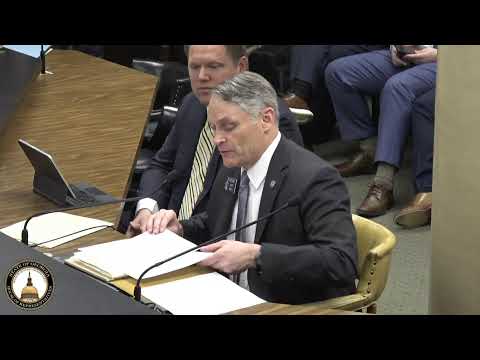
Senator Hodges, the bill sponsor, told the committee the substitute preserves the judge's existing criteria for deciding custody and visitation questions; the measure does not change the legal standards a judge must apply but creates an opportunity for grandparents to return to court in the limited circumstances listed. The sponsor and others said the bill also allows a parent to seek revocation of visitation rights under the same judicial process.
Committee members asked how the substitute would affect specific fact patterns discussed earlier in the session. A family-law attorney, Gary Graham, clarified that certain grandparents (identified in committee testimony as acquiring visitation by virtue of their son's death) would not be able to seek modification under the substitute. Committee members discussed hypotheticals such as parental alienation or out-of-state moves and confirmed those scenarios would not be covered by the narrowed language.
A motion to give the substitute favorable consideration was seconded and the committee voted in favor; the chair announced the bill passes the committee.