Get Full Government Meeting Transcripts, Videos, & Alerts Forever!
Get email alerts on the Municipal Finance topic
No spam. Unsubscribe anytime.
Cedar Park reports first-quarter FY25 revenues exceed budget; expenses on track
Summary
City budget staff told the board that first-quarter FY25 revenues were $8.9 million with sales tax contributing about $8.6 million; revenues are trending above budget while routine expense transfers left several line items at 100% early in the year.
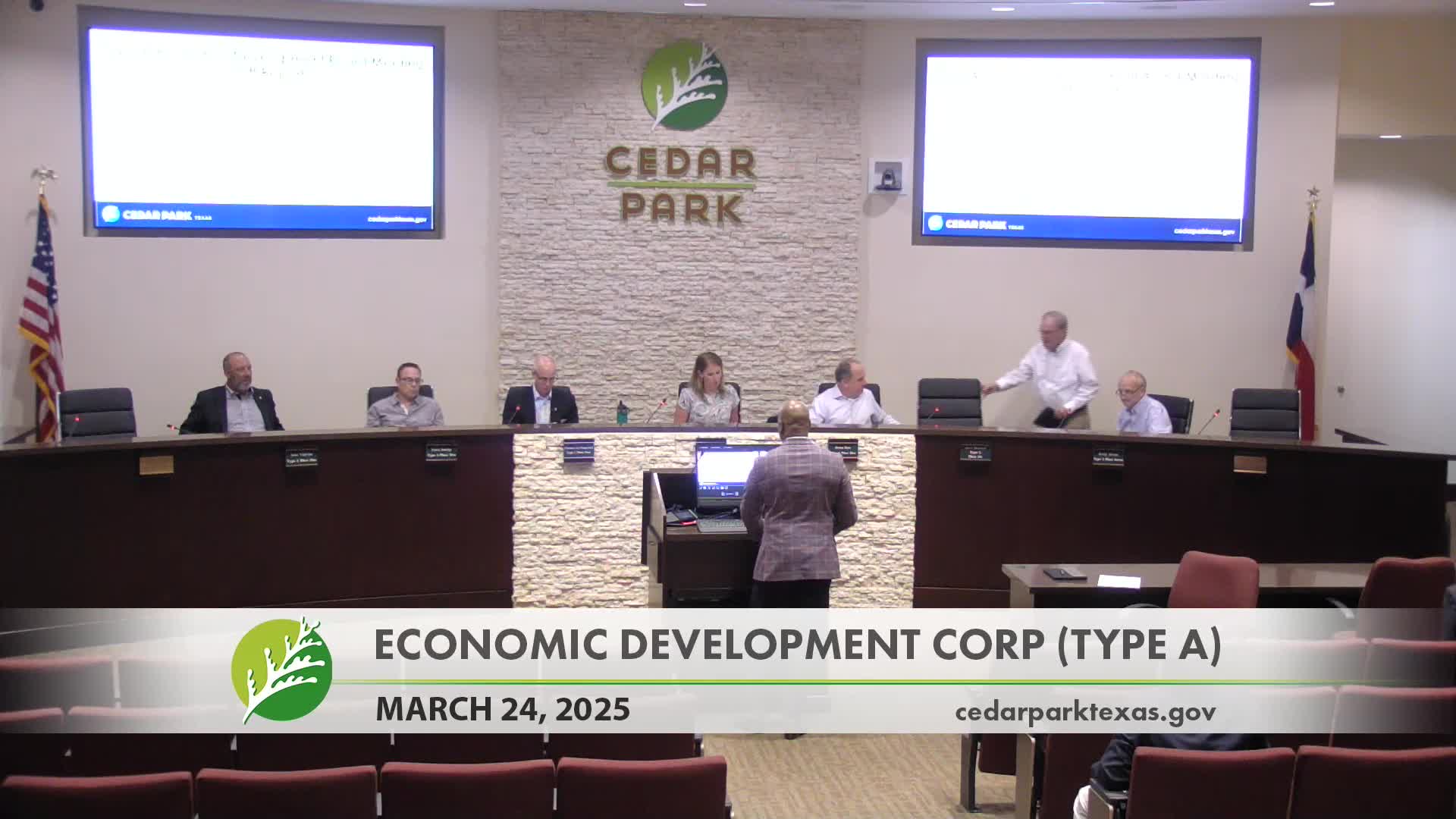
Paul Diaz, a budget office staff member, told the Cedar Park board that the city’s first-quarter financial position for fiscal year 2025 showed revenues of $8,900,000 and budgeted expenses of $7,600,000.
“At a high level, here's your type a budget. Revenues are $8,900,000. Of that, $8.6 million is sales tax. Expenses are budgeted at $7,600,000,” Diaz said. He reported sales-tax receipts were up 8.8% relative to budget through the quarter and that overall revenues were “trending about 5% above budget.”
Diaz said the city had a particularly strong December but noted collections dipped in January and that the board would see that change reflected at the next update. He also explained why several expense categories appear fully spent: debt service, staff support and the e-center are transferred at the start of the fiscal year, which is why those lines sit at 100% early in the year.
The report flagged one payment agreement processed during the quarter: a $500,000 agreement listed in the materials as associated with the Plug and Play program. Diaz summarized the quarter and invited questions; a board member responded, “Revenue up. I'm happy.”
The board did not take formal action on the financial report. Staff said they will return with the next monthly update that will include January collections and additional detail on quarterly variances.
Less critical details: Diaz said the quarter-to-date expense rates for two other categories were well above 100% because of timing differences in transfer and charges for the start of the fiscal year. He offered to answer follow-up questions outside the meeting.