Lifetime Citizen Portal Access — AI Briefings, Alerts & Unlimited Follows
South Africa outlines G20 priorities, defends ICJ filing and urges protection of multilateral institutions
Loading...
Summary
South Africaas G20 president highlighted four priorities including disaster resilience, debt sustainability, climate finance and critical minerals, defended its International Court of Justice filing on alleged genocide in Gaza, and called for strengthening—not dismantling—multilateral institutions during a United Nations press briefing.
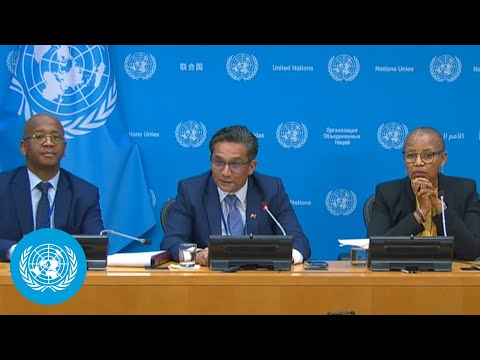
South Africaas incoming G20 president on Monday set out four headline priorities and urged nations to protect and reform multilateral institutions rather than weaken them. DG Zendango, South Africas G20 sherpa, delivered the statement in the United Nations Press Briefing Room and took questions from reporters.
South Africas sherpa summarized the presidencys four main priorities as strengthening disaster resilience and response; advancing debt sustainability for low-income countries; mobilizing finance for a just energy transition, with more and better climate finance for developing economies; and harnessing critical minerals for inclusive growth and resilient supply chains. "We believe that a fair, transparent, and inclusive international order is an essential requirement for economic stability and sustained growth," DG Zendango said.
The statement tied those priorities to broader multilateral cooperation, naming the United Nations, the World Trade Organization and global financial institutions as partners for addressing shared challenges. Zendango said South Africa intends to push a G20 agenda that emphasizes "solidarity, equality, and sustainability," and to press for reforms without dismantling existing institutions: "The EcoSoc needs to be revitalized, but reform does not mean destroy."
Zendango also addressed South Africas recent decision to bring a case to the International Court of Justice (ICJ). He described that move as a legal obligation under the Convention on the Prevention and Punishment of the Crime of Genocide, saying the country submitted evidence to the court to establish whether the legal standard of intent is met. "If you believe that special intent is not present and therefore it's not genocide, put facts on the table. Use the court," he said, adding that South Africa had asked the International Criminal Court to investigate alleged crimes by nonstate actors where appropriate.
Reporters pressed Zendango on whether the ICJ filing and public criticism from some U.S. politicians had strained relations with the United States. Stan McAllister of the BBC referenced recent comments by U.S. officials and reports that an ambassador had been expelled; Zendango framed those complaints as part of a misinformation campaign by actors "who are losing privilege," and said South Africa would engage with the United States to set out what is fact and what is fiction. He emphasized the principle that international institutions must be available to smaller and middle-income countries as platforms for accountability.
The sherpa described plans for the South African presidency to convene a second G20 foreign ministers meeting on the margins of the U.N. General Assembly high-level week and said the presidency would build on agenda items advanced by recent Global South presidencies (Indonesia 2022, India 2023, Brazil 2024). He also flagged support for Brazils hosting of COP30 and said South Africa will promote green industrialization, value addition to critical minerals near extraction, and international tax cooperation.
In response to questions about the security and viability of the U.N. headquarters in New York, Zendango said South Africa did not support moving the U.N. headquarters and pointed to the existing hosting agreement and the citys institutional capacity to host the organization. On reports of alleged threats or harassment of U.N. staff near the headquarters, the panel said they had not "seen anything as yet."
The briefing included a short question-and-answer period with journalists from outlets including South African Broadcasting, the BBC and the New York Sun and a question from a virtual participant. No formal votes or formal G20 decisions were taken at the briefing; Zendango presented priorities and planned engagements for the presidency.
Background details cited in the briefing include South Africas emphasis on Africas natural resource endowments (the statement said the continent holds about 30% of the world's mineral reserves and large shares of specific minerals such as chromium and platinum) and the presidencys aim to improve climate finance flows to developing economies. The sherpa linked those economic priorities to long-term goals of inclusive growth, employment, reduced inequality, and food security.
The briefing concluded after roughly 24 minutes of remarks and questions; the delegation thanked UN Media for hosting the event and said they would follow up with additional engagements during U.N. high-level week.