
Leavenworth commission says CoreCivic must seek special-use permit to reopen facility
Get AI-powered insights, summaries, and transcripts
Sign Up Free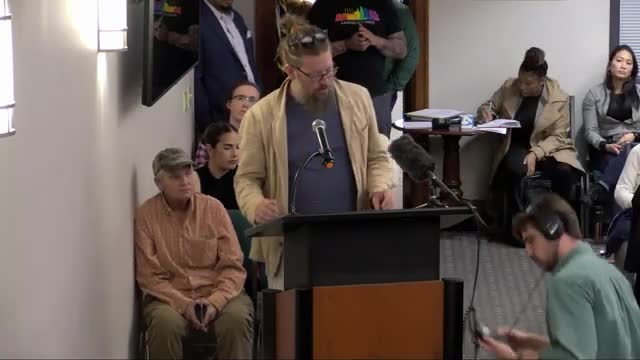
Summary
After extensive public comment opposing a proposed ICE detention center, the Leavenworth City Commission adopted Resolution B-2394, saying the CoreCivic site ceased to be a legal nonconforming use and must obtain a special-use permit to reopen.
The Leavenworth City Commission adopted Resolution B-2394, formally finding that the CoreCivic facility’s reopening would require a special-use permit because the site was closed and abandoned for more than 36 months and cannot be treated as a continuous, legal nonconforming use. The motion passed by voice vote after public comment from residents and advocacy groups.
The resolution states the commission’s position that CoreCivic must follow the city’s development regulations and the special-use process before resuming operations. The city attorney presented the resolution, saying it “affirms the city’s rights and obligations to protect the public health, safety, and welfare through its zoning powers” and that the facility’s operations “require the issuance of a special use permit under the city’s development regulations.”
The vote followed more than an hour of public comment focused on CoreCivic and a proposed ICE detention center. Dozens of residents and representatives of local and regional nonprofits urged the commission to prevent CoreCivic from reopening the facility without full municipal review and to pursue legal action if the company attempts to operate without a permit. Speakers detailed past problems at the site and criticized private detention operations for lack of transparency and oversight.
Marcia Leveren, who identified herself as a former corrections officer at the Leavenworth facility, described staffing and safety problems she said occurred while she worked there and said, “CoreCivic should never be allowed to open again, not without serious protocols to prevent a repeat of their blatant negligence and utmost disregard for human safety, inmate and staff alike.”
Azmit Zahn, communications director for the American Civil Liberties Union of Kansas, told commissioners the ACLU and public defender offices had documented problems at the site and urged officials to “declare to CoreCivic that Leavenworth and your community are not disposable.” Ashley Hernandez, speaking for the Office of Justice, Peace, and Integrity of Creation of the Sisters of Charity of Leavenworth, asked the commission to “stand for people, say no to CoreCivic, and say no to this ICE detention center.”
City staff had earlier held an executive session to consult with the city attorney on a zoning matter. After returning to public session, the commission voted to approve Resolution B-2394; meeting minutes record a voice vote with ayes and the chair announcing the motion passed. The attorney described the resolution as a formal statement that reopening requires compliance with Kansas and municipal law.
The commission did not adopt additional enforcement steps in the public meeting; city leaders said staff would follow up on legal options and intergovernmental coordination as needed. County and city coordination was discussed later in the meeting as staff said they would explore a potential joint meeting with county commissioners.
The commission’s action does not itself block a federal contract or prevent CoreCivic from pursuing approvals; it is a municipal zoning position and, according to the city attorney’s statement, is intended to require CoreCivic to apply for and obtain a special-use permit before resuming operations.