District outlines goals to expand advanced-learning participation in elementary, middle and high schools
Loading...
Summary
District staff presented an academic spotlight on advanced-learning programs, setting targets to increase enrollment in gifted, honors, AP, IB and dual-enrollment courses over the next two academic years and proposing local teacher endorsements and training to expand capacity.
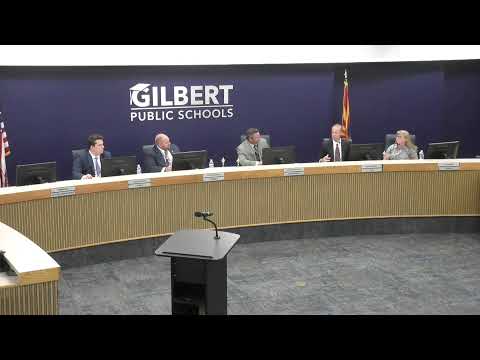
District teaching-and-learning staff presented an academic spotlight March 25 describing current participation in advanced-learning programs and setting targets to expand enrollment and teacher capacity across elementary, junior high and high schools.
Jared Ryan, assistant superintendent of teaching and learning, introduced Brent Gardner, the district's coordinator of advanced learning. Gardner described program categories that include gifted services, accelerated/traditional honors classes, International Baccalaureate (IB), Advanced Placement (AP) and dual-enrollment/dual-credit offerings. He told the board that the district's goals (based on a 2023 baseline) include raising elementary advanced-program participation to 30 percent by 2026, junior high to 40 percent and high school to 70 percent.
Gardner said the district currently has roughly 20 percent of elementary students in one or more advanced programs, about 38 percent in junior high and about 63 percent in high school. He highlighted growth in AP participation: 6,620 AP course enrollments in 2025 representing 3,319 students (a 6 percent increase year over year) and an increase in AP exam takers and a 77 percent rate of 3-or-better on AP exams for the previous year.
To expand capacity the district proposes several actions: (1) increase gifted identification through current-request testing rounds and a planned universal screener of second graders in May; (2) endorse an additional 25 teachers (in addition to 64 current gifted-endorsed teachers) through district-provided coursework or endorsement pathways so more classrooms can offer gifted services; (3) add a section to the Highland Junior High gifted academy to serve an additional approximately 25 students; and (4) host an AP Summer Institute (APSI) locally to grow teacher capacity and collaboration.
Board members asked about the mechanics of gifted identification and the state's role in defining gifted status. Gardner explained the district primarily uses the CogAT (Cogap) assessment in the three domains (verbal, nonverbal and quantitative) and that Arizona defines gifted as students meeting the 97th percentile threshold in one or more categories; the district may also use lower percentiles operationally to identify candidates for services. Staff discussed expanding district-run testing events to reach students who are not currently enrolled in GPS and building more formal pathways for students who show potential but fall below the strict percentile cutoffs.
Board discussion explored capacity limits and tradeoffs (for example, how many gifted-endorsed teachers the district can train and whether accelerated classrooms can coexist with conventional classrooms on campuses with constrained room). Gardner said the district currently offers a provisional 90-hour endorsement and will provide in-district endorsement pathways for teachers (90 hours provisional; an additional 90 hours required for full endorsement). The district identified 25 priority teachers for endorsement next year and said that building internal mentor capacity will enable further growth.
Board members praised the plan but also cautioned the district to be intentional about capacity, to monitor impacts and to ensure students who try accelerated placements and struggle have clear supports and pathways back to conventional classrooms when appropriate. Gardner and Ryan emphasized the district's stated commitment to expand access without "watering down" academic expectations and to monitor results.
No board action was required; the presentation was informational and will inform staffing and program decisions in the upcoming budget and school-year planning cycles.