
Garden Grove Housing Authority adopts 2025–29 PHA plan after discussion of long voucher waitlist
Get AI-powered insights, summaries, and transcripts
Sign Up Free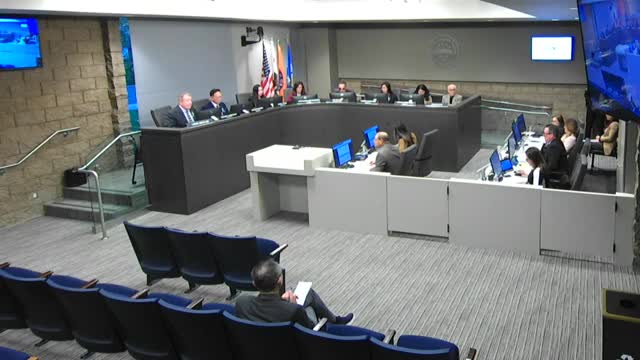
Summary
The Garden Grove Housing Authority adopted its 2025–2029 five‑year and annual PHA plan and authorized the executive director to certify it. Staff said the agency remains a HUD high‑performing housing authority but noted long voucher wait times driven by limited federal funding and low annual turnover.
The Garden Grove Housing Authority on Monday adopted its five‑year PHA plan for 2025–2029 and the annual public housing agency plan, authorizing the executive director to certify the documents after a staff presentation and public hearing.
Division Manager Tiana told commissioners the plan is a required submission to the U.S. Department of Housing and Urban Development and that Garden Grove earned a high performing rating under HUD’s assessment program. She said the plan documents the authority’s operations, goals and strategies for meeting local housing needs and must be filed with HUD prior to April 17.
The presentation explained why voucher wait times remain long despite steady work by staff. Tiana said the housing authority receives roughly $40,000,000 annually from HUD and that HUD’s assumed average housing assistance payment (HAP) in its formula is about $1,411 per month. Local HAPs in Orange County average closer to $1,600, she said, which reduces the number of vouchers the agency can issue against its allocation. Using HUD’s assumptions the agency’s allocation would equate to about 2,362 vouchers, but the authority currently issues roughly 2,200 because actual HAPs are higher.
Tiana also described turnover and wait‑list dynamics: the authority’s turnover is approximately 3% per year — about 66 vouchers becoming available annually — and the wait list was created in 2010 with about 17,000 names; at the end of 2024 roughly 1,550 applicants remained. She said staff estimates roughly 600 of those remaining applicants qualify for a Garden Grove local preference (veterans, domestic‑violence survivors, city residents or workers) and that, because many entries on the old list no longer respond, the list would take about three years to work through at current turnover rates.
Commissioners pressed staff on whether the authority could reduce wait times and whether alternate funding sources exist. Tiana said HUD is the primary source for the tenant‑based voucher program and that other federal or state programs either carry different time limits or different rules that generally prevent them from substituting for HUD vouchers. Commissioners noted the long waits reported by residents — including individual cases of people who had waited a decade or more — and several asked that the plan include a goal to seek ways to shorten the list.
After discussion, commissioners adopted the five‑year and annual PHA plan and authorized certification by voice/roll call. The recorded action was an approval with eight yes votes.
The plan documents the authority’s program accomplishments from 2020–2024, including maintaining high performance under HUD’s management assessment, streamlining inspections and landlord payments, and participation in Family Self‑Sufficiency and other voucher programs. The adopted goals for the next five years include maintaining high CMAP/SEMAP performance, applying for additional funding opportunities, expanding outreach to landlords and participants, promoting Family Self‑Sufficiency, and continuing collaboration with regional partners. Commissioners asked staff to add attention to reducing wait times as a stated goal so staff could pursue creative options and external funding opportunities.
The authority closed its public hearing after receiving no public comments and proceeded to the vote.