Get Full Government Meeting Transcripts, Videos, & Alerts Forever!
Get email alerts on the Community Gardens topic
No spam. Unsubscribe anytime.
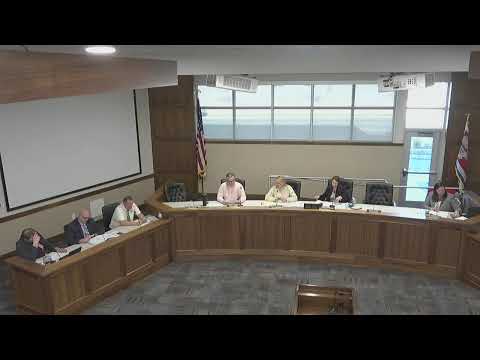
Bountiful council backs facilitation model for community garden, directs staff to install irrigation and refine details
Summary
The Bountiful City Council on March 25 directed staff to proceed under a facilitation model for a proposed community garden on city-owned cemetery property, with volunteers responsible for day-to-day management, insurance and fee collection.
The Bountiful City Council on March 25 directed staff to proceed under a facilitation model for a proposed community garden on city-owned cemetery property, with volunteers responsible for day-to-day management, insurance and fee collection.
Council members and staff discussed options for city involvement after parks staff and volunteers met with Centerville representatives and city leaders in February. Gary Hill, a city staff member, told the council the staff assumption following an earlier work session was that the city would act primarily as landlord — supplying property and installing irrigation — while an organized volunteer group would handle maintenance, sign-ups and money. Hill also noted that if the city were to collect and hold fees, the Utah Money Management Act would apply because those funds would be public money.
The volunteer leadership team attending the meeting—identified in the discussion as Lori Partridge, Joy Ames and Caitlin Reich—described experience running or supporting community gardens and said they were prepared to take primary responsibility for operations. A volunteer representative told the council an independent liability policy for a comparable group would likely cost about $500–$700 a year and that 40 plots at $40 each would generate roughly $1,600, enough to cover insurance costs at that level.
Several council members said they were sympathetic to the group but expressed concern about overburdening the Parks Department, which the council was told is short‑staffed and has a pending crew lead vacancy. Council members discussed the timing for site preparation and planting, noting that some preparatory work would need to happen before seasonal park employees start and that a phased approach could allow staff and volunteers to prepare in the off‑season.
After discussion, the mayor summarized what the council majority favored: a facilitation model in which the city provides land and installs irrigation but does not collect fees; the volunteer operator would obtain liability insurance, handle complaints and manage plots. Council members also agreed that staff should move forward to install irrigation and that the parties should refine water‑cost information during the city’s budget process. Staff said they could determine the precise plot location on the cemetery’s east side within approximately two weeks and that they could follow up with Bountiful Irrigation about allotments and billing.
Council members and staff discussed alternative models: under a city‑operated model the garden would become a formal city function and require broader budget and staffing commitments, while a facilitation model would leave the volunteer group as the operator with limited city support. Several members proposed treating 2025 as a planning or “building” year and launching full operations in 2026 to avoid spring staffing conflicts.
What the council directed and next steps - Council direction: majority support for the facilitation model (city provides land and irrigation; volunteer group operates garden, obtains insurance and collects fees). This direction was recorded as the council’s consensus during the March 25 work session. - Staff tasks: identify and confirm the precise plot on the cemetery east side (staff said this could be done in about two weeks); install irrigation as directed; gather and report water‑cost estimates and billing options (including whether a government rate or an agricultural allotment applies) during the budget process. - Volunteer tasks: secure liability insurance (estimated by volunteers at $500–$700 annually for a comparable policy), develop rules and procedures for plot management, and proceed with organizing and outreach during 2025 if they choose to use the year as a building year for a full launch in 2026.
Council members said they were comfortable allowing the volunteer group to use the roles-and-responsibilities draft in the staff packet as a working document for planning and outreach. Staff and volunteers also discussed interlocal equipment sharing with Centerville (Centerville staff said tilling the identified area takes less than two hours) and the possibility of borrowing Centerville’s tiller or arranging rental if needed.
The council did not take a formal, recorded vote on an ordinance or resolution. The outcome recorded in the meeting was a council consensus to move forward under the facilitation model and for staff to return with water‑cost details during the budget process.
Ending Council members suggested the group use 2025 to organize and build interest, then aim for a fuller launch in 2026 if timing and staffing allow. Staff will follow up with the volunteer group, determine the final plot location, begin irrigation planning and report water cost options to council during the budget cycle.