Get Full Government Meeting Transcripts, Videos, & Alerts Forever!
Get email alerts on the Seasonal Sales Code Amendment topic
No spam. Unsubscribe anytime.
Riverdale planning commission tables proposed rewrite of temporary seasonal‑sales rules
Summary
The Planning Commission opened a public hearing on amending Riverdale City Code 10‑19‑9 (temporary structures for seasonal sales) but voted to table the item after staff explained the proposed changes and commissioners raised concerns about sales‑tax treatment and competition with existing retailers.
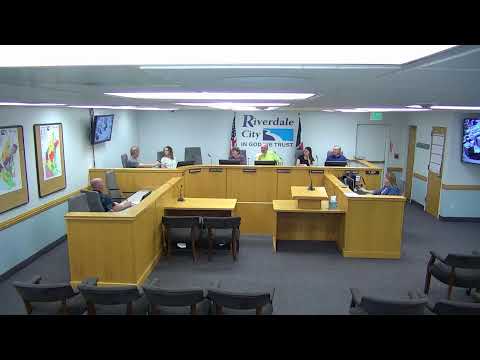
The Riverdale Planning Commission on March 25 opened a public hearing and then voted to table consideration of an amendment to Riverdale City Code 10‑19‑9, the section that governs temporary structures used for seasonal sales such as farm stands, Christmas tree lots and fireworks stands.
City staff described the draft ordinance as a cleanup and clarification of current rules. Jared Cooper, Riverdale’s director of community development, said the existing section is “a little bit clumsy and confusing” and that the proposed language would permit temporary seasonal sales in C‑3 commercial zones (in addition to the existing on‑premise allowance in A‑1 agricultural zones) while setting clear standards for temporary use permits, site plans, hours, size and health/fire compliance. Cooper also said a prior change in 2013 had limited sales of fruits and vegetables to products grown on the same property, effectively barring some roadside stands.
Why it matters: The change would allow out‑of‑city farms that sell produce at roadside stands to operate in parts of Riverdale Road where C‑3 zoning applies, subject to conditions. Commissioners said the issue touches local retailers, sales‑tax fairness and public health oversight because some seasonal vendors are exempt from sales tax under Utah law.
Cooper told the commission the staff draft initially included a requirement that applicants provide a state sales‑tax certificate, but staff discovered the state exempts certain agricultural sales. “The state does have that exemption, so we would remove that,” Cooper said, explaining the inconsistency in the draft. He also noted that health inspections and food‑safety permits are handled by the Weber‑Morgan Health Department, not the city.
Commissioners questioned whether allowing off‑site farm stands would harm grocery and retail stores on Riverdale Road and whether major retail managers should be consulted before changing the city code. Commissioners discussed a series of practical standards in the draft: a 200‑square‑foot size cap (to avoid building‑code triggers), hours commonly between 8 a.m. and 9 p.m., a self‑contained requirement for utilities, a limit on the number of temporary uses per site and proximity restrictions (roughly 500 feet) to avoid clustering of stands. Several commissioners suggested extending the proposed maximum duration from 15 weeks to about 20 weeks to better match growing seasons for some produce.
No members of the public spoke during the hearing. After discussion, a commissioner moved to table the item so the petitioner, McFarland Family Farms, could appear in person and staff could contact major retailers on Riverdale Road for feedback. The motion to table carried on a roll call vote; commissioners answering “yes” in the roll call included Knowlant, Henstra, Borthore, Nye, Anderson and Paulson. The item was tabled to the commission’s next meeting (the commission set an April 8 return date during discussion).
The commission also approved routine meeting minutes earlier in the session by voice vote.
Next steps: Staff said it will remove the contradictory sales‑tax language from the draft, reach out to major Riverdale Road retail managers for input during the tabling period, and return the item for further deliberation when McFarland Family Farms can attend.
Details recorded from the meeting are limited to the transcript and staff packet; no final legislative action was taken on the ordinance change.