Get Full Government Meeting Transcripts, Videos, & Alerts Forever!
Get email alerts on the Sewer Impact Fees topic
No spam. Unsubscribe anytime.
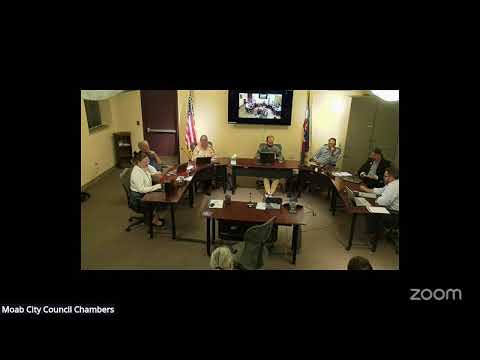
Council approves higher sewer impact fees after public hearing; vote 4–1
Summary
After a public hearing with no public comments, the council adopted Resolution 01-2025 to raise sewer impact fees for 2025–2027; council recorded a 4–1 vote with Councilmember Jason opposed. The increase becomes effective after a 90-day waiting period.
The Moab City Council adopted Resolution 01-2025 on March 25 after a public hearing to update sewer impact fees that had not been revised since 2017.
Staff explained the update reflects increased construction and project costs and that the revised schedule covers 2025 through 2027. Mark (staff member) said the updated single-family impact fee would be $33,526 when the new schedule takes effect. After opening the public hearing, staff reported no members of the public spoke; the public hearing was closed prior to the adoption motion.
Councilmember Colin moved to adopt Resolution 01-2025 and Councilmember Caitlin seconded. During discussion, council members expressed concern about the size of the increase and the effect on housing and development. Councilmember Caitlin said the jump will be “a shock to a lot of people” and suggested the council consider transitional policies for timing of payments. Staff noted a 90-day waiting period before the new fees become effective and that building permits submitted before the effective date are normally assessed at the prior fee rate.
The council voted to adopt the resolution 4–1 with Councilmember Jason voting no. The mayor then called a roll-call to finalize the record: Caitlin—aye; Colin—aye; Tawny—aye; Luke—aye; Jason—nay. Staff said the new fees will take effect 90 days after adoption unless council takes additional action before that date.
Staff and council discussed options other than immediate adoption—such as phasing increases or revisiting the sewer master plan—but members who voted in favor said delaying risks leaving necessary capital projects underfunded. Staff also noted that not charging fees that match the study’s assumptions shifts costs to other funds or future users.