Get Full Government Meeting Transcripts, Videos, & Alerts Forever!
Get email alerts on the Historic Preservation topic
No spam. Unsubscribe anytime.
Council creates Historic Preservation Committee, expands council seats and sets two‑year terms
Summary
The Bee Cave City Council adopted Resolution 2025‑14 March 25 to create a Historic Preservation Committee of up to five residents and up to three council members, with two‑year terms for appointed members; the council directed staff to solicit applications and return for appointments in May.
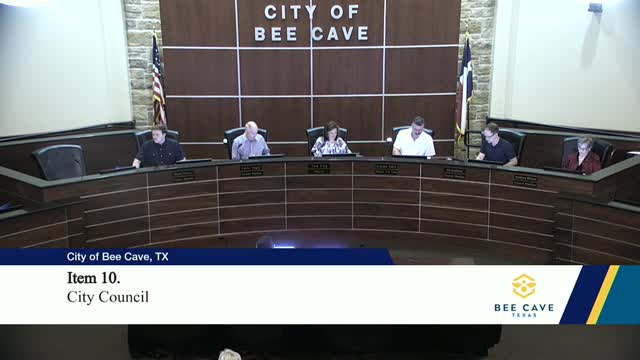
The Bee Cave City Council on March 25 approved Resolution 2025‑14 formally creating a Historic Preservation Committee to advise on preservation of structures, early settlers’ stories and other city‑historic efforts.
City Manager Julie Oakley said the resolution establishes up to five resident members and initially allowed up to two council members; the council amended the resolution to permit up to three council members for flexibility. Councilmembers also asked to give appointed members two‑year terms rather than open‑ended appointments. Oakley and other staff said they would solicit applications through April and return with appointments at the first May council meeting.
Oakley said the resolution was intended to facilitate preservation of structures and capture local historical material and “intellectual property” — early‑settler narratives and similar records — for the city’s records. Council asked staff to use communications channels and the city secretary’s experience to broaden the applicant pool.
Public comment: Paula Boyd, a resident at 4408 Tambray Bend, suggested the manager of Austin Shoe Hospital on U.S. 620 as a source of historical information.
Action: Motion to approve Resolution 2025‑14 (with edits to allow up to three council members and two‑year terms) carried unanimously (6–0). Council instructed staff to open the application window and return in May for appointments.
Why it matters: the committee is intended to centralize and coordinate local preservation work and community oral‑history projects, and to provide a formal forum for residents and council members to advise city policy on preservation matters.