Get Full Government Meeting Transcripts, Videos, & Alerts Forever!
Get email alerts on the Workforce Plan topic
No spam. Unsubscribe anytime.
Workforce Solutions presents 2025–28 local plan; committee approves forwarding to Texas Workforce Commission
Summary
Workforce Solutions staff briefed the committee on the required four‑year local workforce plan for the 13‑county region, proposing a $19/hour target wage and expanding target occupations to 74; the committee approved sending the plan forward and staff will submit it to the Texas Workforce Commission after remaining local approvals.
Workforce Solutions presented its 2025–2028 local workforce plan to the Economic & Workforce Committee and the committee approved forwarding the plan toward final local approvals and submission to the Texas Workforce Commission.
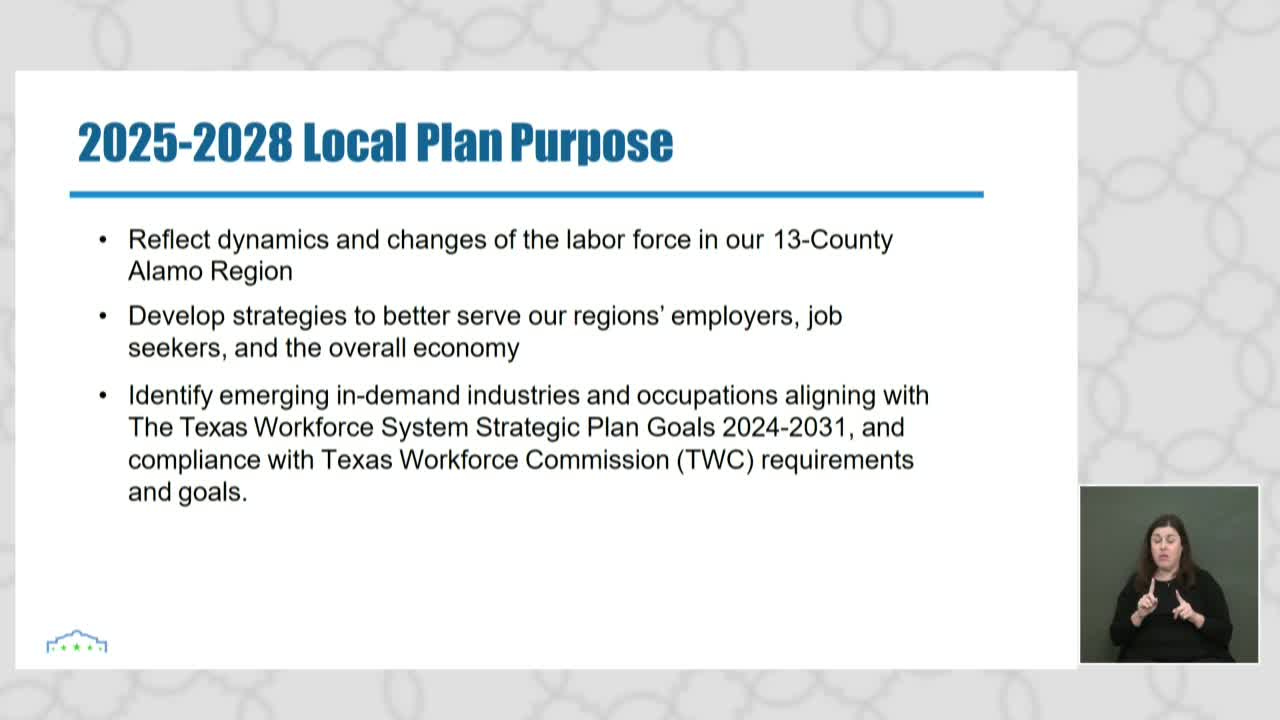
Nut graf: The local plan updates regional priorities for training and industry alignment across 13 counties, sets a target average wage of $19 per hour, expands target occupations from 57 to 74 and keeps six industry clusters; the plan will be submitted to the Texas Workforce Commission after local approvals.
Adrian (presenting for Workforce Solutions) described the plan as the statutory local plan required by federal and state rules and said staff solicited feedback from numerous stakeholders across the 13‑county region. He said the plan retains six clusters (including aerospace/manufacturing, health care, construction and logistics), eight industry sectors and 16 in‑demand industries while increasing the count of target occupations to 74 to reflect employer feedback and emerging needs. Adrian said the plan proposes a new target average wage of $19 per hour (up from $17 in the 2022 update) and pointed to investments such as a $2 million Department of Labor grant that align with the plan’s priorities.
Committee members asked how the board will measure success beyond compliance with Texas Workforce Commission requirements and whether funds can be redirected if performance targets are missed. Adrian said the agency uses return‑on‑investment measures and employer outcomes — placements, training completions and hiring fairs — and noted that failure to meet federal/state performance obligations can trigger corrective actions from the Texas Workforce Commission. Members requested more granular employer and occupation demand data and cited childcare and elder‑care workforce shortfalls and construction apprenticeship successes as priorities for outreach and messaging.
Committee of 6 and the Workforce Solutions board had already approved the plan in earlier steps; the presenter said Bexar County had approved it and staff planned to complete remaining local approvals and submit the plan to the Texas Workforce Commission. Committee members asked for additional materials showing projected job counts, education requirements and wage ranges for priority occupations; the presenter pointed to plan pages that list occupations with current job counts, projected growth and typical education requirements and salary ranges and agreed to provide targeted extracts on request.
The committee voted to forward the local plan for the next stage of local approvals and submission to state authorities. Staff said they would provide the committee with the full plan materials and follow‑up extracts requested by council members.