Get Full Government Meeting Transcripts, Videos, & Alerts Forever!
Get email alerts on the Lateral Connection Assistance topic
No spam. Unsubscribe anytime.
Committee hears plan for lateral-connection assistance, discusses expanding eligibility and funding
Summary
The committee reviewed a proposed program to assist homeowners with lateral water and sewer connections, discussed funding sources including impact fees and reserves, and asked staff for legal and eligibility clarifications before broader rollout.
City staff presented a draft program to subsidize or reimburse residential property owners for repairs or installation of lateral service lines that connect homes to city water and sewer systems.
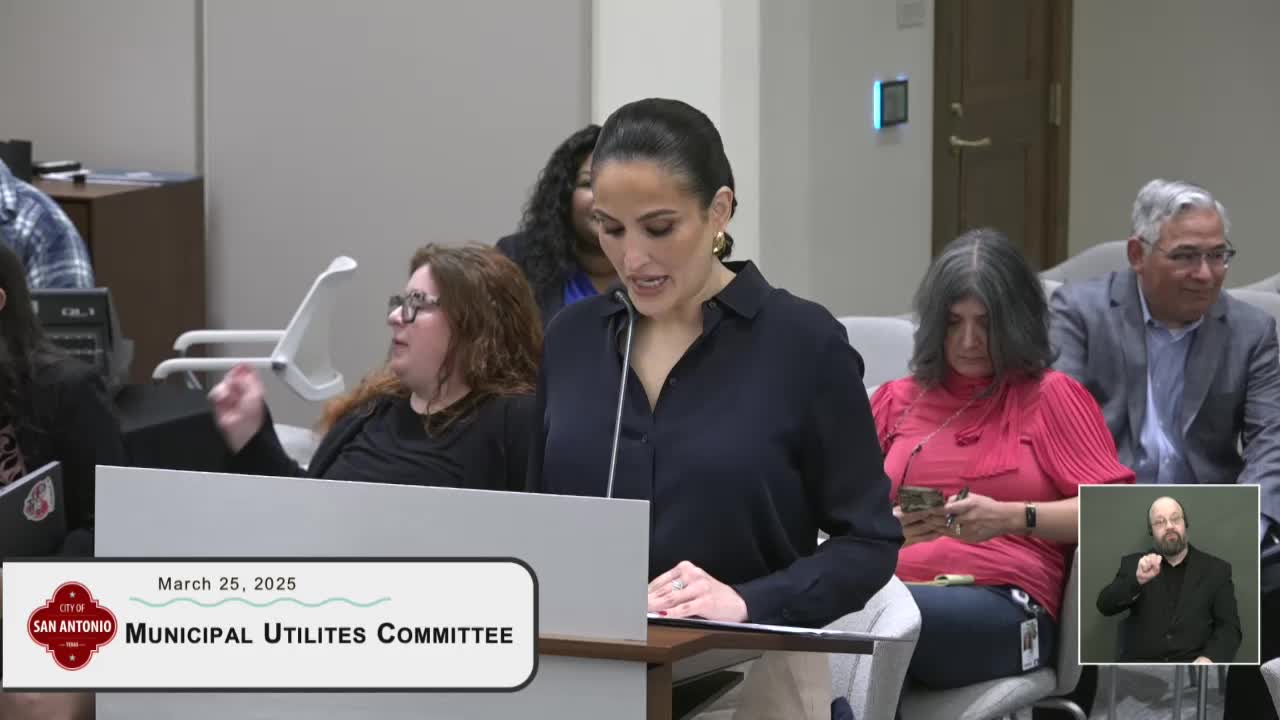
Verónica González, identified as Assistant Director with Development Services, briefed the committee on the program and associated rebate and repair options for low-income households. González said eligible repairs vary widely in cost, from roughly $3,000 to more than $20,000 per home, and that existing annual program budgets are limited; staff described current assistance at about $32,000 per year for one component and noted other funding streams that could be coordinated.
Why it matters: Many older homes in San Antonio lack direct lateral connections or have damaged laterals. Repair costs can be prohibitive for low- and moderate-income homeowners, creating public-health concerns and barriers to safe occupancy.
González said the program would cover laterals in the public right-of-way directly paid by the utility partner, while property owners would be responsible for the portion on private property. She also explained seller-disclosure requirements under city practice: sellers must inform prospective buyers of known lateral issues; sellers may be asked to provide plumber inspections or photographs during transactions.
Committee members pressed staff on eligibility thresholds and contractor selection. Staff said the city posts requests for proposals and selects plumbing contractors (the current contractor identified in the meeting was "JRs Plumings"). The committee asked whether the current income threshold (described in discussion as 125 percent of poverty) should be raised to 150 percent to include more households; staff said they would review the eligibility bands and explore whether unused impact-fee or other municipal funds could be reallocated to support expansion.
The financing discussion referenced several funding pools: a recurring annual allocation of about $3 million for impact-related infrastructure, an observed surplus of roughly $2.5 million in prior years that could be reviewed for reallocation, and an example figure staff cited that a $200,000 fund could serve about 10 households depending on repair costs. One committee member said the city could reexamine committed but unused funds and impact-fee balances to expand the pilot.
Members also discussed how impact fees are calculated and applied under city practice; staff described variability by topography and service area and said the city currently allows deferment of impact fees until service connection in some cases. A staff presentation summarized that impact-fee collections totaled roughly $128 million in 2024 and that the impact-fee program is reviewed periodically to plan capital improvements.
Councilmembers requested more detailed legal analysis about program expansion and whether state rules could limit some elements. Staff agreed to return with legal review and to clarify the availability of prior-year surpluses and their eligibility for the lateral-assistance pilot. A staff speaker said some money for a pilot was already designated in another project and could fund the initial work, and committee members signaled support to move forward with a pilot while staff returns with follow-up details.
The meeting closed after the lateral and impact-fee discussion.