Get Full Government Meeting Transcripts, Videos, & Alerts Forever!
Get email alerts on the Antimicrobial Regulation topic
No spam. Unsubscribe anytime.
Committee advances Safer Soap Act (AB 916) to ban three antibacterial ingredients in consumer washes
Summary
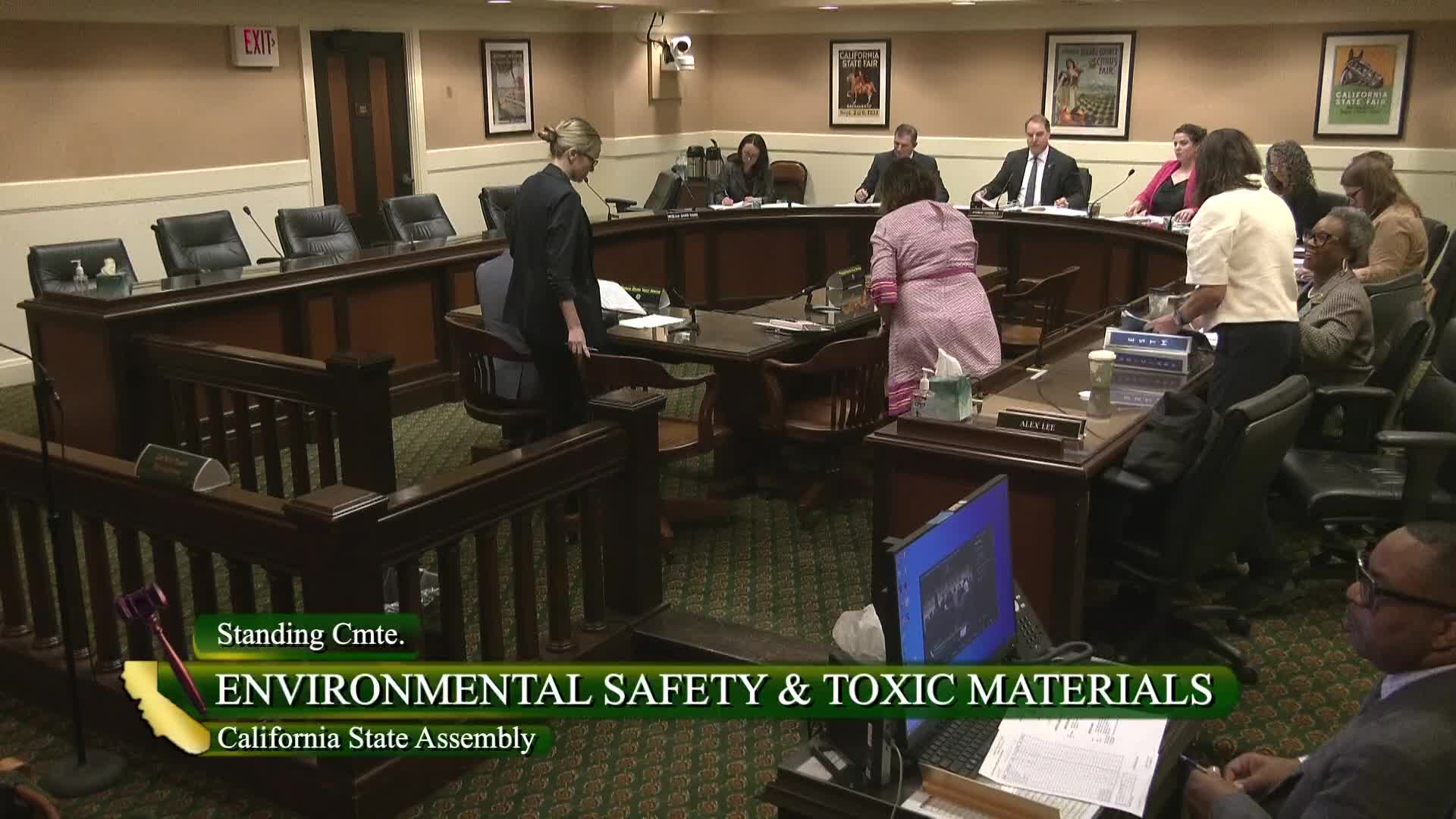
Assemblymember Lee introduced AB 916, which would ban three specified antimicrobial ingredients in consumer hand soaps and body washes; after testimony from public‑health groups and industry, the committee advanced the bill to the Committee on Health.
Assemblymember Lee presented AB 916, the Safer Soap Act, which would prohibit the sale of consumer hand soaps and body washes containing three specified antimicrobial ingredients: benzalkonium chloride (BAC), benzethonium chloride (BZT) and chloroxylenol (PCMX). The Assembly Environmental Safety and Toxic Materials Committee voted to forward the bill to the Committee on Health.
Lee argued that the U.S. Food and Drug Administration deferred formal rulemaking on the three ingredients after banning other antimicrobials in 2016, and that subsequent industry submissions did not provide conclusive safety and efficacy evidence. “The science shows that regular soap and water, when used properly, remove 99.9% of pathogens without any unnecessary health risks,” Lee said, calling the bill a “science‑backed, common‑sense measure.”
Several public‑health and environmental witnesses spoke in support. Rebecca Fuoco of the Green Science Policy Institute summarized peer‑reviewed research and noted CDC and FDA cautions that antibacterial soaps have not shown added benefit over plain soap; Nora Angelis of Children Now emphasized risks to children and supported the healthcare‑setting exemption in the bill.
Industry witnesses spoke in opposition. James Kim of the American Cleaning Institute said the association is “not in favor of this bill,” and raised points that industry groups say justify more study, including ongoing testing and data submissions to the FDA. Dan Shaw of the Personal Care Products Council argued the bill could conflict with other regulatory processes and with federal law governing over‑the‑counter drugs; he said industry is conducting multi‑year studies to address FDA requests.
Committee debate focused on scientific evidence, regulatory overlap with FDA and the Department of Toxic Substances Control (DTSC), and practical exceptions for healthcare, food‑handling and agricultural contexts. Members pressed for clarity about whether the bill would affect food handlers, veterinary settings, and other non‑consumer uses. Witnesses for the bill said FDA’s food code allows plain soap for food‑handling and that cumulative exposure for workers who wash hands multiple times per shift is a concern.
On the roll call, the committee recorded five ayes and two no votes; the bill was advanced to the Committee on Health. The committee record includes requests from members for continued stakeholder engagement, additional scientific citations, and monitoring of DTSC and FDA actions as the bill moves forward.