Get Full Government Meeting Transcripts, Videos, & Alerts Forever!
Get email alerts on the Electoral College And National Popular Vote topic
No spam. Unsubscribe anytime.
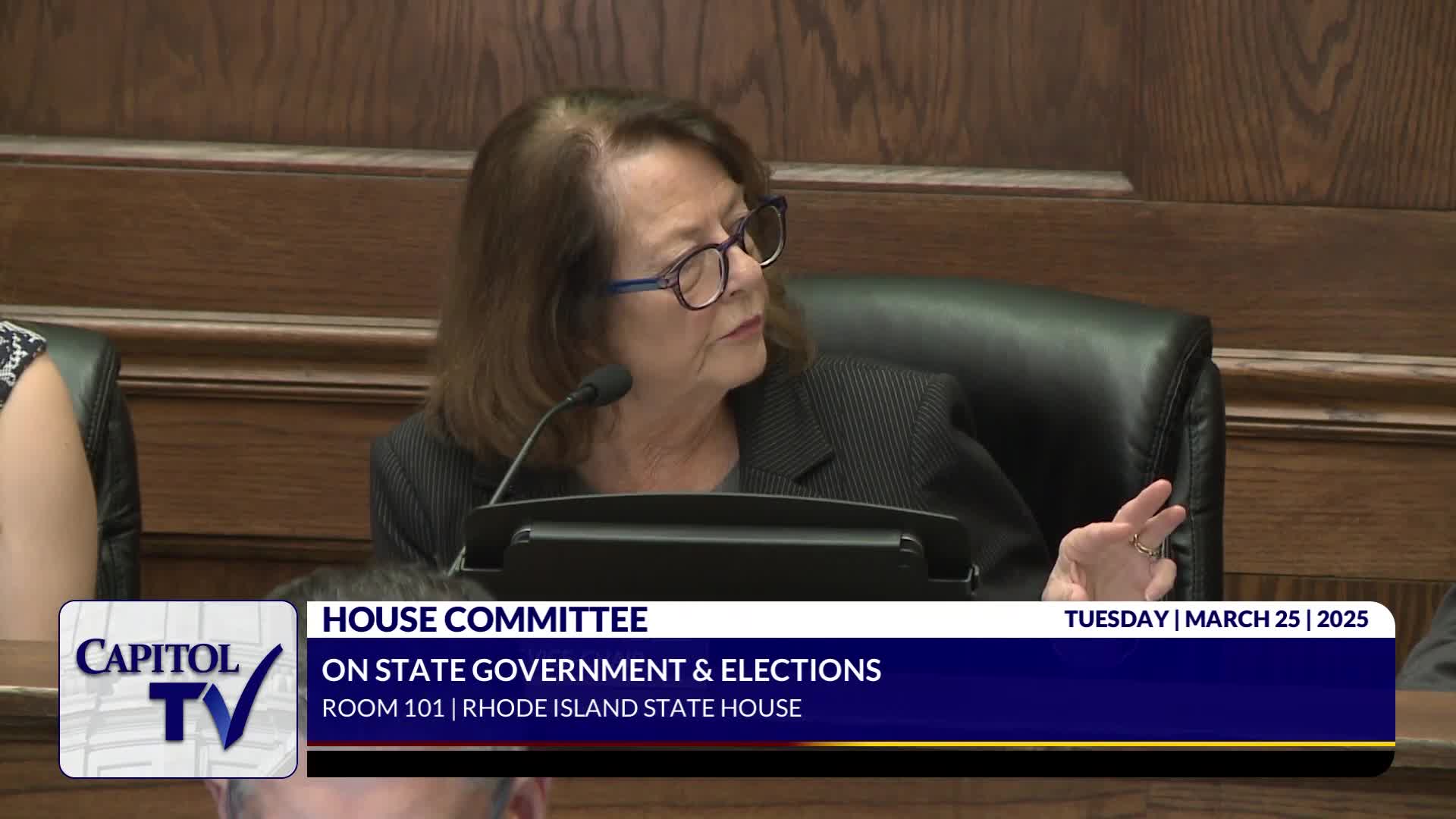
Rhode Island committee hears bill to withdraw from National Popular Vote and separate measure to split state’s electors
Summary
Representative David Newberry introduced H 5519 to withdraw Rhode Island from the National Popular Vote Interstate Compact and H 5520 to divide the state's four presidential electors into four elector districts, prompting divided testimony from national and local witnesses at a March 25 House committee hearing.
Representative David Newberry introduced two related bills to the House Committee on State Government and Elections on March 25, 2025: H 5519 would withdraw Rhode Island from the National Popular Vote Interstate Compact (NPVIC), and H 5520 would change how Rhode Island’s four presidential electors are chosen by creating four elector districts.
Newberry said the bills “relate to the way we elect the president” and described H 5520 as a proposal to divide the state into four elector districts so each district elects one elector and the statewide winner receives two electors. He said the change aims to keep Rhode Island’s influence in presidential campaigns even if the state loses a U.S. House seat after the next census.
Supporters and opponents presented sharply divergent views. Sean Parnell, a witness who identified himself with Save Our States, told the committee that under the compact “Rhode Island’s 4 electors would no longer represent the people of Rhode Island.” Parnell and Representative Newberry argued the compact severs the link between Rhode Island voters and the state’s electors and raised practical concerns about recounts, ranked‑choice ballots, and inconsistent state procedures that could complicate a nationwide tally.
Chris Pearson, representing National Popular Vote, argued the compact makes every vote equal and said the current system sidelines most voters because presidential campaigns concentrate on a shrinking set of battleground states. Pearson told the committee that where NPVIC has been characterized as empowering coastal states, “California and New York combined have 18% of the population, so you don't control anything with 18% of the vote,” and that national vote rules would incentivize campaigns to compete more broadly.
Other witnesses focused on technical and fairness questions. Parnell warned about how ranked‑choice voting and some state ballot rules could leave ambiguous which totals would count for a national popular‑vote aggregate, and he cited the potential for “estimated vote totals” to be used if a state’s official results were delayed. Chris Pearson and other proponents said those problems are solvable and pointed to jurisdictions that use ranked‑choice ballots while still reporting a final tally for presidential contests.
Local testimony split along familiar lines. Michael Garman of Newport said “it is a pretty bedrock principle of democracy that the winner of an election should be the person who receives the most votes” and urged staying in the compact. John Marion of Common Cause Rhode Island said his organization opposes H 5519 and noted that more states have joined the compact since Rhode Island enacted it. Scott Schuler, a Providence resident, described the argument that Rhode Islanders are ignored by national campaigns but said he preferred a modification (such as H 5520) over withdrawing from the compact.
The secretary of state's office did not take a position on H 5520 but said, if the bill passed, it would “engage in a robust education campaign to ensure that all voters are understanding of how the electoral votes will be disseminated.”
Procedural note: at the start of the hearing the committee voted to hold all bills for further study. A motion to “hold all bills for further study” was made and the committee’s roll call subsequently recorded the motion as passed.
What’s next: Committee members asked technical questions and requested follow‑up information about recount procedures, interactions between ranked‑choice tabulation and national tallies, and how elector districts would be drawn. There was no final committee vote on either H 5519 or H 5520 during the hearing; the bills remain under study.
Ending: The hearing drew repeated focus on balancing competing democratic values — the principle of “one person, one vote” versus constitutional federalism and state protection — and on practical questions about how any national popular‑vote mechanism would operate alongside varied state election rules.