Get Full Government Meeting Transcripts, Videos, & Alerts Forever!
Get email alerts on the Special Education Advocacy topic
No spam. Unsubscribe anytime.
CCRI's Sherlock Center and advocates oppose transfer of surrogate‑parent program to Office of Child Advocate
Summary
Senators heard opposition March 25 to a proposed transfer of the surrogate‑parent program for children in state custody from Rhode Island College—s Sherlock Center to the Office of the Child Advocate.
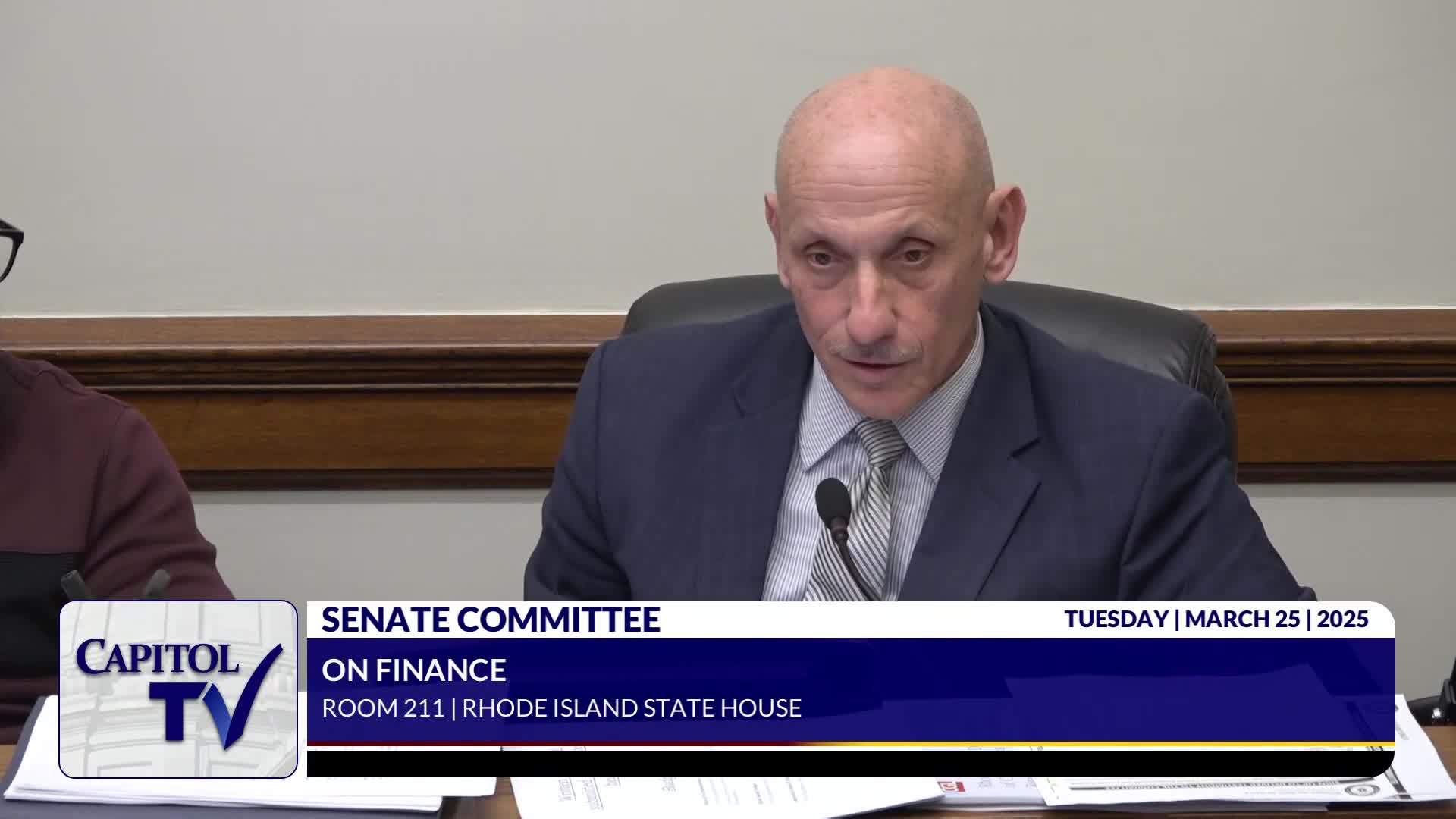
The Senate Finance Committee on March 25 received competing testimony over a proposed administrative move of Rhode Island—s surrogate parent program, which assigns conflict‑free surrogates to make special‑education decisions for children in state custody.
Bob Marshall, who submitted written questions and testified, said he only recently learned that a request had been made to relocate the surrogate parent program from Rhode Island College—s (RIC) budget into the Office of the Child Advocate (OCA) budget. "We became aware after a recent meeting that you had this month regarding the Office for Child Advocates budget, that there was a request to, remove, the surrogate parent program from the RIC budget and put it into the child advocate's budget," Marshall said.
Amy Gratton, who leads RIC—s Sherlock Center for Disabilities, told senators the center has long administered the surrogate parent program and that it is trained, experienced and court‑ordered for many children in custody. "Under IDEA law, every child is entitled to have a parent who is the authority on making the decision for that child's special education services," Gratton said, explaining the surrogate role is distinct from legal representation and must be conflict‑free. She said the center—s surrogates include parents and people with social‑work and education experience, and that the center—s access to college resources bolsters training and supports.
CCRI President and Sherlock Center leadership told the committee they oppose the unilateral move and said the program meets key performance measures; CCRI said it had been awarded a multi‑year contract in part because of the program—s track record. Both CCRI and the Sherlock Center asked for more transparent communication and for opportunity to respond to the OCA proposal with data.
Committee members expressed interest in reviewing empirical outcomes and the historical reasons the program shifted administrations, and urged the parties to provide multi‑year data so the committee can evaluate whether a move would improve services for children.
Why it matters: The surrogate parent program serves children in state custody with special‑education needs; any administrative transfer would affect who trains and appoints surrogates and how the program is staffed and resourced.