Get Full Government Meeting Transcripts, Videos, & Alerts Forever!
Get email alerts on the Pandas Pans Treatment topic
No spam. Unsubscribe anytime.
Committee unanimously advances bill to clarify insurance coverage for PANS/PANDAS treatments after parent testimony
Summary
Senate Bill 14‑26, which would add coverage parameters for pediatric acute neuropsychiatric disorders (PANS/PANDAS) and make certain treatments permissive or subject to medical necessity standards, passed the Commerce and Labor Committee after mother’s testimony describing her daughter's diagnosis and out‑of‑pocket treatment costs.
The Senate Commerce and Labor Committee unanimously advanced Senate Bill 14‑26 following personal testimony from a Tennessee parent describing the effects of PANS/PANDAS on her child and the cost of medically necessary treatments that had been denied by insurance.
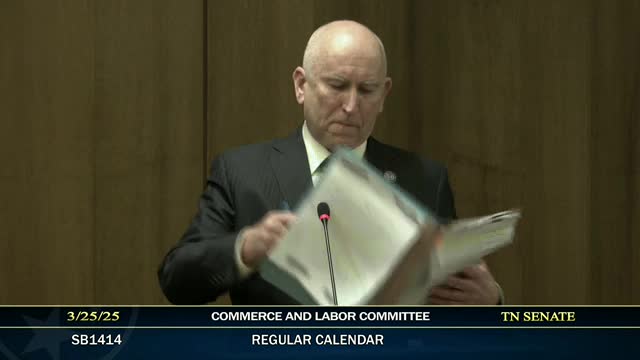
Sponsor Senator Watson explained the amendment before the committee and said it adjusts language to make coverage of certain treatments permissive and to add medical necessity language for PANDAS treatment recommendations. The sponsor said the amendment also removed language limiting lifetime or duration constraints so the committee would consider medical necessity in coverage decisions.
Lauren Wilson of the sponsor’s district told the committee about her daughter’s sudden onset of severe obsessive‑compulsive disorder and related symptoms at age 11. Ms. Wilson said her daughter required inpatient care, IVIG and plasma exchange that were denied by their insurer and cost the family more than $150,000 out of pocket; she said timely, specialized treatment helped her daughter recover and urged committee members to support SB 14‑26. "Early effective treatment will reduce the long term burden and prevent permanent cognitive, behavioral, and physical impairment," Wilson told the committee.
Committee members asked procedural questions about amendments and then voted; the clerk recorded nine ayes. The bill was moved to the committee on calendar.
The hearing included no additional witness opposition at the committee level; the sponsor and family representatives emphasized clinical urgency and the high cost of out‑of‑pocket therapeutic interventions.