Get Full Government Meeting Transcripts, Videos, & Alerts Forever!
Get email alerts on the Data Governance topic
No spam. Unsubscribe anytime.
Senate Finance Committee hears proposal to codify Rhode Island integrated data system governance
Summary
The Senate Committee on Finance on March 25 heard testimony on budget provisions to codify a federated Rhode Island integrated data system, adding six FTEs across multiple agencies and opening some deidentified data access to external researchers under MOUs.
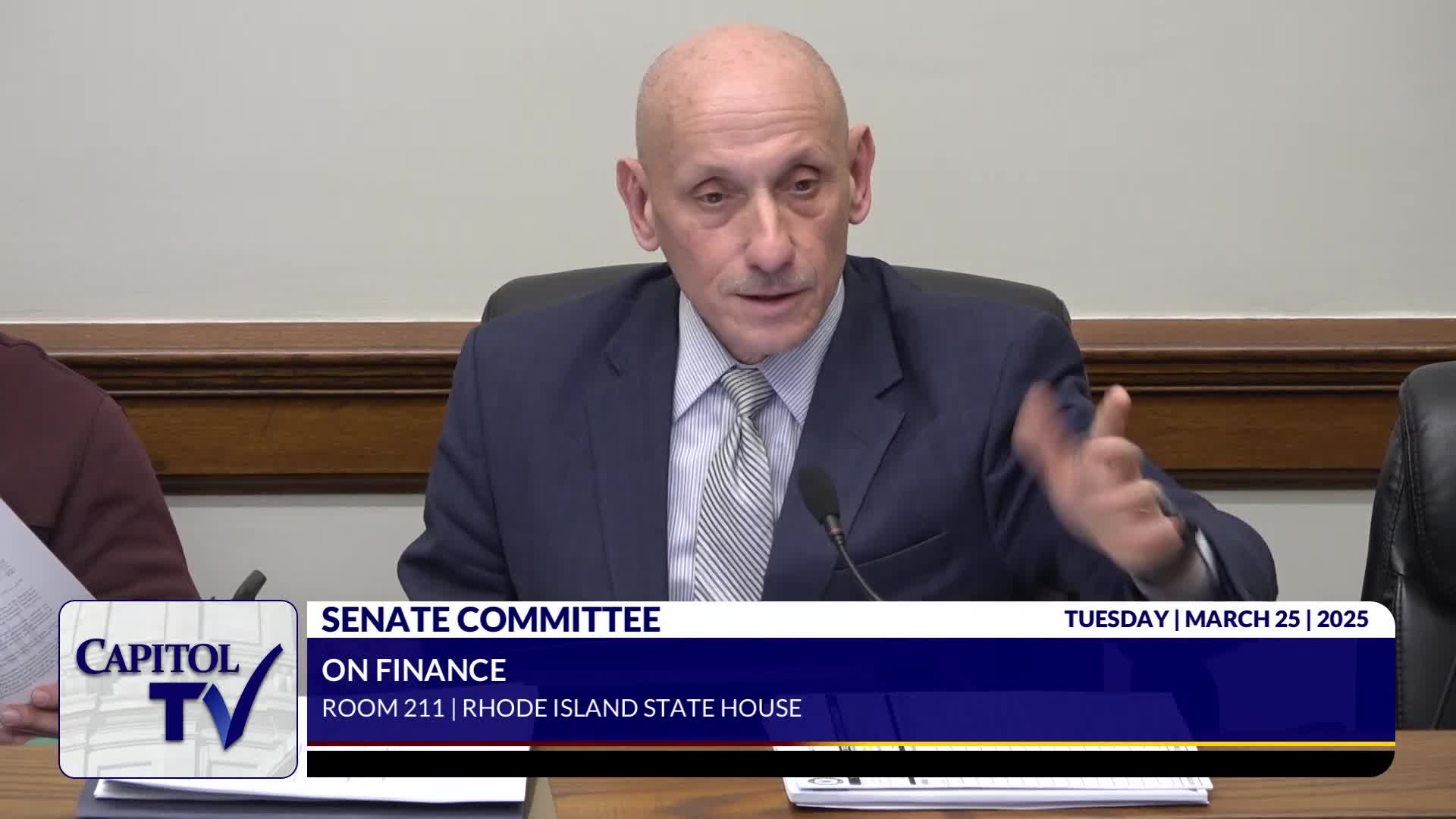
The Senate Committee on Finance on Tuesday, March 25, 2025, heard testimony on budget language that would codify governance of a federated Rhode Island integrated data system and provide staff capacity for ongoing integration and operations.
State Budget Officer Joe Kadega told the committee the proposal would place the Executive Office of Health and Human Services— (EOHHS) ecosystem and the Rhode Island Longitudinal Data System (education/workforce data managed by the Office of the Postsecondary Commissioner) under a single co‑chaired board and would fund six full‑time equivalent (FTE) positions across the Department of Administration, EOHHS and the Office of the Postsecondary Commissioner to support migration, security, governance and operations.
Kadega described the change as a codification of governance developed over several years and referenced a November 2023 executive legislative report and the governor—s subsequent executive order as foundations for the work. He said the proposal reflects a federated model, co‑chaired by the secretary of health and human services and the postsecondary commissioner or their designees, and is meant to preserve agency authorities while improving data management.
"The board is co chaired by the secretary of health and human services and also the post secondary commissioner or their designees representing the federated nature of this governance structure," Kadega said.
Kadega and commissioner Shannon Gilkey said the six requested positions would not require net new general revenue in the governor—s recommendation because the proposal anticipates converting existing contractor roles into state FTEs or drawing on other non‑general sources. Senator Chacon pressed whether converting contractor roles truly imposes no new cost, asking whether the state would then pay benefits that previously were contractor responsibilities. Kadega said the budget is neutral overall but acknowledged that hiring a state FTE can require a different compensation package than contractor pay.
The committee also discussed who would be allowed to query or analyze the federated dataset. Kadega and Gilkey said that, with appropriate memorandums of understanding, external researchers could access deidentified data for outside analysis. "It enhances data availability for external researchers," the committee chair said while emphasizing MOUs and privacy safeguards. Senator Azurier asked whether the longitudinal data are all deidentified; committee staff replied that the longitudinal component is deidentified. Concerns cited in written testimony from a Mr. Brown about a separate proposed financial‑institution data match for tax collection were described as walled off from the longitudinal system.
Committee members asked for follow‑up details on specific job titles, salary ranges and the mechanics of shifting contractor work into state employment. Kadega said he would provide job descriptions and titles after the hearing. He described the integrated system as intended to reduce duplicated queries across agencies and to streamline fiscal notes and policy analysis.
Why it matters: Lawmakers said a more integrated approach could improve policymaking and program management across health, human services, education and workforce development, while senators flagged privacy and cost questions the administration must answer.
Provenance: Chair introduction and Kadega—s opening remarks were recorded in committee testimony on March 25, 2025. The committee—s questions about deidentification and external access occurred later in the hearing.