Get Full Government Meeting Transcripts, Videos, & Alerts Forever!
Get email alerts on the Impact Fees topic
No spam. Unsubscribe anytime.
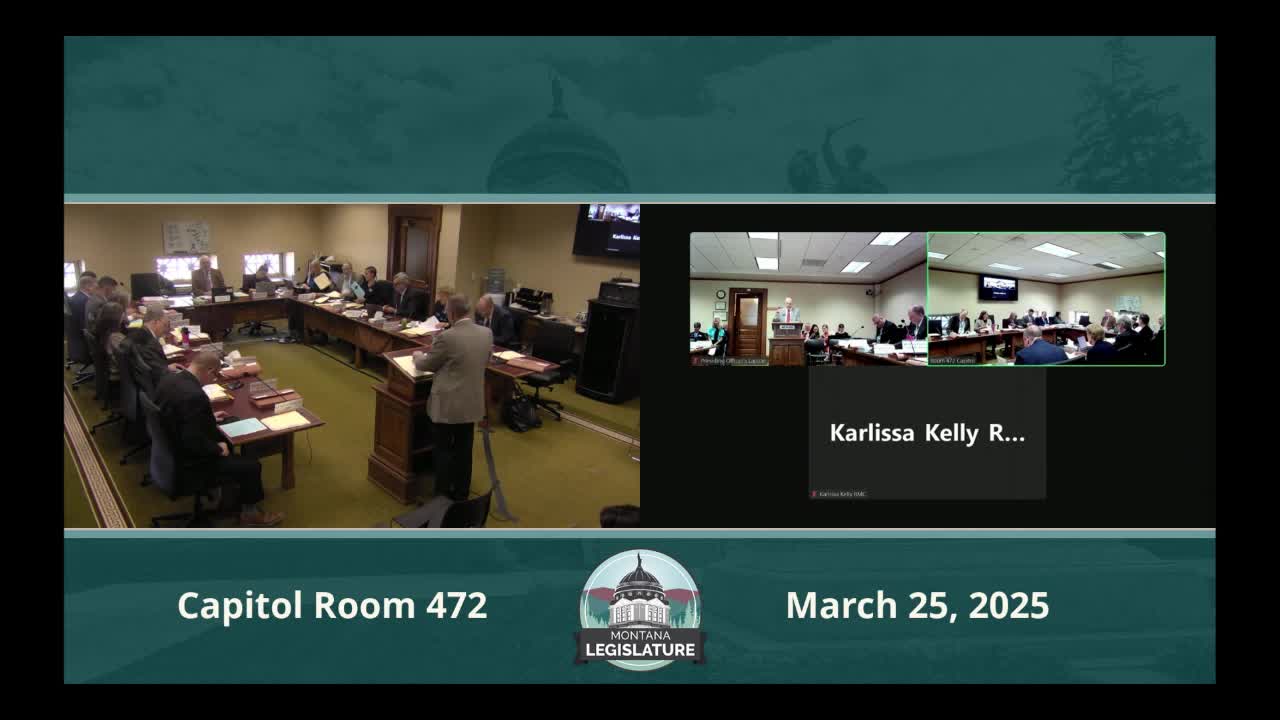
Committee hears bill to cap some impact-fee uses and tie fee growth to an inflation index; cities urge no-pass
Summary
Sen. Greg Hertz told the House Local Government Committee that Senate Bill 133 would remove a 5% administrative allowance on impact fees, narrow allowable impact-fee uses, and tie future fee increases to the Producer Price Index by commodity.
Sen. Greg Hertz, sponsor of Senate Bill 133, told the House Local Government Committee the measure would limit the uses of impact fees, remove a 5% administrative allowance, and set an inflation adjustment tied to the Producer Price Index (PPI) by commodity. “On page 1, line 24, it eliminates the allowance to have a, impact 5% administration fee,” Hertz said. He said the bill also narrows the statutory list of public facilities that impact fees may fund and applies an inflation adjustment using the PPI.
Proponents from the building industry argued the changes would provide predictability. Ashley Martinez, speaking for the Montana Building Industry Association, testified that capping fee growth to the rate of inflation “provides more predictability for home builders, allowing them to better forecast development costs.” Adrienne Cotton (testifying earlier on a different bill) and other industry advocates urged legislative support for predictability.
Municipal officials and local-government groups strongly opposed the bill in committee. Kelly Lynch, executive director of the Montana League of Cities and Towns, recounted the statute’s development and its requirement for a service-area report prepared under the law’s proportionality standards: “The impact fee law that we have right now was created in 02/2005…service area reports…have to meet…Nolan Dolan requirements.” Lynch warned that reducing allowable fee collections or linking fees to an index that undercounts local construction cost increases would shift costs to existing residents.
Chris Saunders, community development manager for the city of Bozeman and a member of the stakeholder group that drafted the 2005 act, told the committee that local construction costs have risen far faster than some national indices. Saunders said Bozeman saw a 100% increase in fire-station construction costs in two years and recommended municipalities use local construction-inflation measures when making adjustments.
Committee members asked practical questions about how indexing would work and whether the bill would change vote thresholds or approval standards tied to specific categories. The sponsor said the bill does not eliminate impact fees but narrows allowable uses and adds an inflation adjustment; he said he remained open to changes in the choice of inflation index.
Why it matters: Impact fees are charged to developers to pay for infrastructure capacity required by new development. Changes to administrative caps, eligible uses, or the inflation index that updates fees could affect the timing and cost of infrastructure construction; opponents argued reductions or index choices could shift costs to taxpayers or slow infrastructure delivery.
Outcome: The hearing included extensive testimony both for and against. There was no final committee vote recorded during the hearing.