Get Full Government Meeting Transcripts, Videos, & Alerts Forever!
Get email alerts on the Vaping Regulation Tax topic
No spam. Unsubscribe anytime.
Debate over vape-product registry divides Montana committee as sponsor seeks to strip tax
Summary
Supporters told the Appropriations Committee a manufacturer-paid registry is needed to keep illicit disposable vapes off Montana shelves; opponents, largely independent vape-shop owners, said a 50% wholesale tax and federal PMTA burden would crush local businesses and hand the market to tobacco companies.
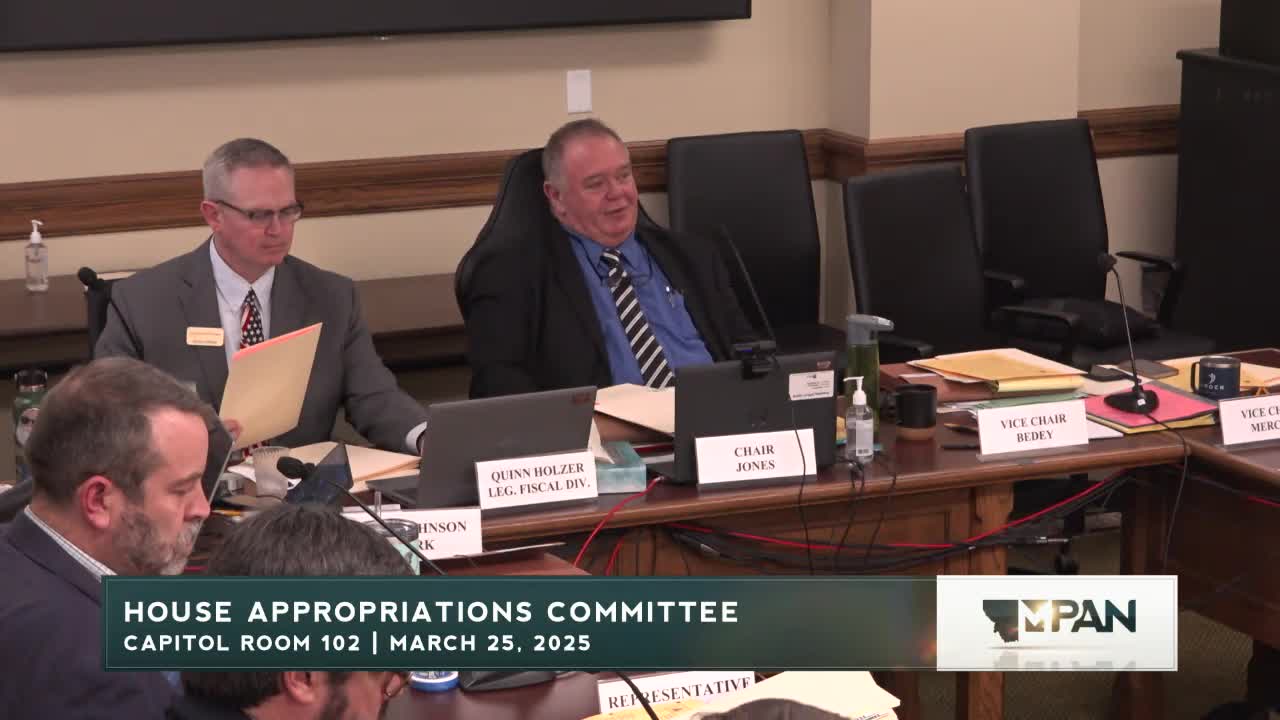
Representative Amy Regier (R-Whitefish) told the House Appropriations Committee she brought House Bill 525 to create a vapor product registry similar to other states' tobacco-product directories and to require manufacturers selling vapor products into Montana to certify federal compliance.
Regier also offered a sponsor amendment to remove a punitive wholesale tax imposed on vapor products; she said the tax was added in House Taxation without consulting her and that manufacturers, not retailers, would pay registration fees and renewal costs. Under the bill's current language, manufacturers would pay a $2,500 initial registration per product SKU and a $1,000 annual renewal, while penalties for selling unregistered products would be imposed on retailers.
Proponents argued the registry is a proven regulatory approach and that illicit, unregulated products, many from overseas, are harming legitimate businesses and public health. Mark Baker, representing Altria, described the approach as one already adopted in other states and said the $2,500/$1,000 fee design was deliberate to create a self-sustaining special revenue account. Brad Longcake of the Montana Petroleum Marketers and Convenience Store Association said the fees are paid by manufacturers, not retailers, and that illicit products create an unfair competitive advantage for bad actors.
Opponents, primarily owners of independent vape shops, pressed the committee to reject the bill as written. Tom Jacobson and multiple shop owners said the bill's 50% wholesale-equivalent tax would disproportionately harm small retailers and push customers to convenience stores stocked by major tobacco companies. Owners described the FDA premarket tobacco product application (PMTA) process as prohibitively expensive and time-consuming, citing examples of thousands of SKUs and seven- or eight-figure compliance costs for small operators who manufacture e-liquids in-state.
“Most vape shops in Montana are small family-run operations, not subsidiaries of multinational corporations,” Tom Jacobson testified. Several retailers said the PMTA process has already produced marketing denials for many independent products while a narrow set of products from major tobacco companies remain available.
Department of Justice and Department of Revenue staff were present to answer fiscal and implementation questions. Witnesses flagged the risk of litigation costs in year one (the fiscal note references potential initial legal expenses), and proponents said the special revenue account would reimburse the general fund for those costs if litigation occurs.
The committee took testimony and questions but did not record a final action during this hearing. The sponsor closed asking that her amendment removing the tax be adopted and that the committee give the bill a due pass recommendation.