Get Full Government Meeting Transcripts, Videos, & Alerts Forever!
Get email alerts on the School Choice Tuition Transport topic
No spam. Unsubscribe anytime.
Committee Hears Cleanup Bill On Tuition, Transport and Remote Instruction; Witnesses Ask for Clarifying Amendment
Summary
Representative Beatty said House Bill 250 consolidates out‑of‑district attendance, tuition, transportation and remote instruction rules scattered through statute; supporters said the changes increase transparency and protect taxpayers while preserving parent choice, and several witnesses requested committee consideration of a clarifying amendment
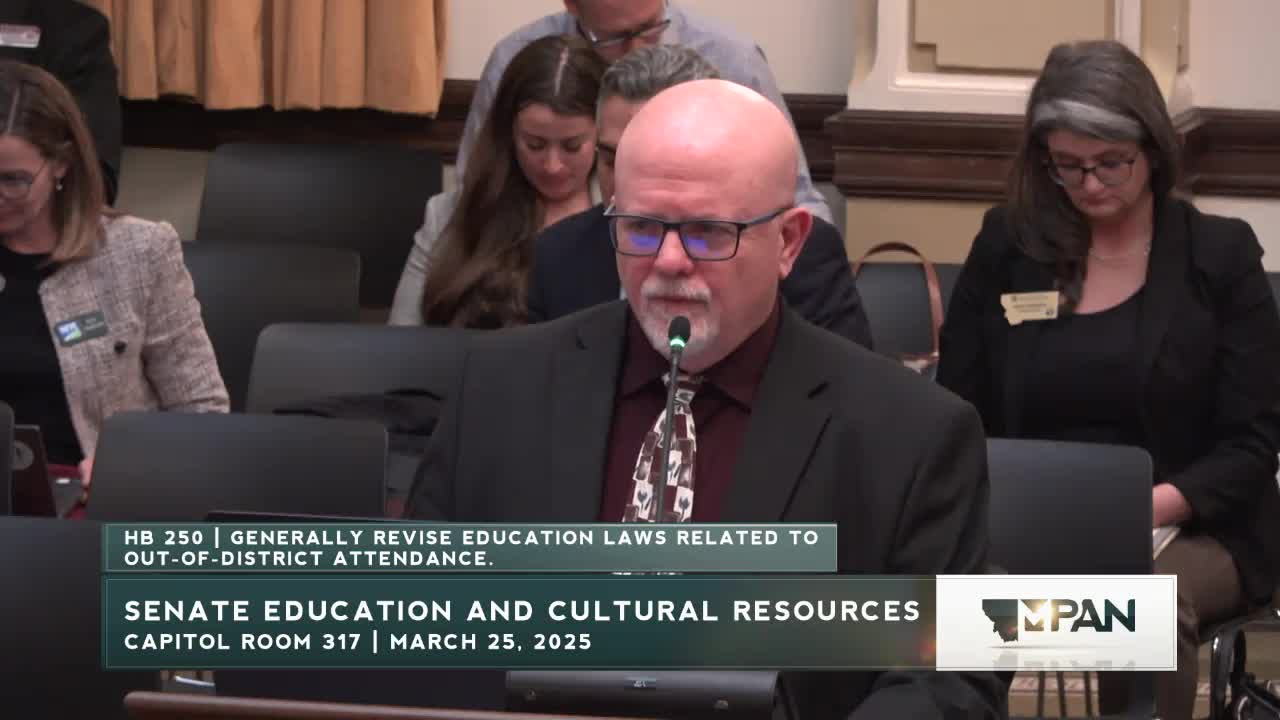
Representative David Beatty described House Bill 250 as a ‘‘cleanup’’ measure that consolidates statutory provisions governing out‑of‑district attendance, tuition responsibilities, transportation and remote instruction into a single chapter for easier reference.
‘‘These laws define the conditions under which out of district attendance is allowed, as well as the financial responsibilities of all involved parties, including the school district where the child resides, the school district where that child attends school, and the office of public instruction,’’ Beatty said during his opening.
Lance Melton (MSBA) told the committee the bill increases transparency around tuition and transportation obligations and preserves taxpayer protections. He said the testimony and the consolidation better expose funding obligations that sometimes are not visible to taxpayers in districts where their students attend elsewhere.
Todd Hanson, managing partner at Fort Folds Educational Consulting, asked the committee to allow an amendment on section 5 (remote instruction) to clarify terms such as ‘‘course of study’’ versus a ‘‘single course equivalent’’ to ease implementation for remote and rural districts.
Witnesses and committee members discussed transportation responsibilities when students attend out of district. Melton and other witnesses said current law treats transportation obligations differently depending on whether attendance is discretionary or mandatory, and children with disabilities who have transportation as a related service in their IEP remain the responsibility of the district of residence. Committee discussion noted that invoice timing—identified in testimony as being due to the resident district by early summer so it can be incorporated in levy planning—must be clear; staff and witnesses discussed July 1 and mid‑July deadlines in the course of questioning.
Proponents emphasized the bill does not change tuition formula amounts but consolidates and clarifies existing law. Several committee members asked for time to work with proponents and staff on an amendment to the remote instruction section; the sponsor said he would work with stakeholders. No formal committee vote was recorded in the supplied transcript.