Get Full Government Meeting Transcripts, Videos, & Alerts Forever!
Get email alerts on the Charter Schools topic
No spam. Unsubscribe anytime.
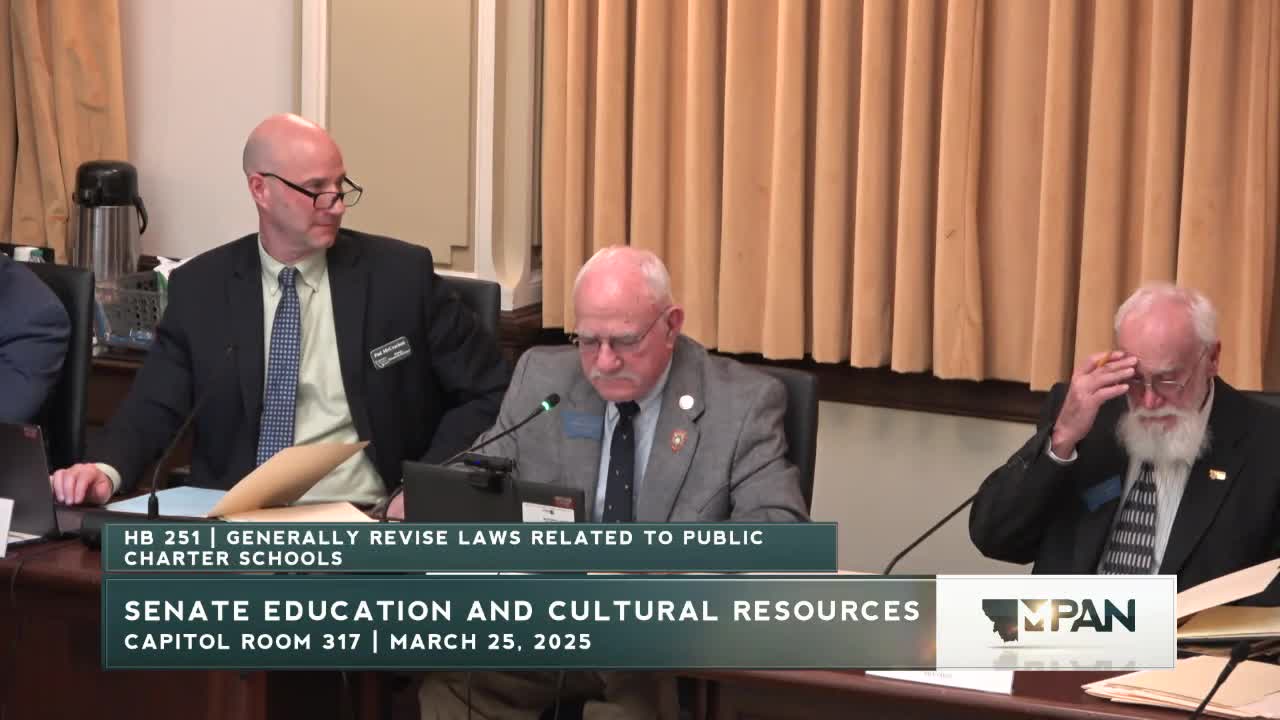
Senate Committee Hears Fixes to Charter School District Law; Bill Adds Funding and Reporting Controls
Summary
House Bill 251 would clarify the statutory definition and financial limits for public charter school districts, allow tuition payments to address extraordinary special‑education costs, and require reporting tied to legislative appropriations.
Representative David Beatty opened the hearing on House Bill 251 by describing the bill as statutory cleanup intended to clarify provisions created in earlier legislation governing public charter schools and to add definitions and financial safeguards for the newer form of charter school districts.
Beatty said the bill defines ‘‘public charter school district’’ and limits the cumulative number of charter schools approved by the Board of Public Education to the funds appropriated by the legislature. The bill would also allow a public charter school district to receive supplemental funding for educating children with disabilities (page 10) and make charter districts eligible to receive donations through the innovative education program (page 11). The sponsor said the changes are meant to protect taxpayers and ensure the Board of Public Education can assess and report the fiscal impacts of charter expansion.
Lance Melton (Montana School Boards Association) testified in support and said the bill corrects an oversight that left children with disabilities without a clear tuition path when choosing a charter school district. Melton said the bill ‘‘puts those children on a level playing field’’ by enabling tuition payments to be assessed so a charter school district can cover extraordinary special education costs.
Paul Taylor (fiscal staff) told the committee that the bill contains technical cleanups and that a fiscal note was not required because the bill does not change the funding formula; instead, it clarifies how charter districts will be limited by appropriated funds. McCall Flynn, director of the Board of Public Education, appeared as an informational witness and offered to answer operational questions about implementation.
Proponents said HB 251 seeks to close gaps that could create territory transfer or funding problems if the program expands rapidly; the bill also removes language that implied the Board of Public Education might broadly waive general statutory requirements instead of adhering to contract contents.
No opponents appeared at the hearing in the supplied transcript. The committee received proponent and informational testimony and had substantive questions about fiscal impacts and special education tuition; no committee vote is recorded in the provided transcript.