Get Full Government Meeting Transcripts, Videos, & Alerts Forever!
Get email alerts on the Lobbying Transparency topic
No spam. Unsubscribe anytime.
House approves law creating register of lobbyists that expands coverage to executive and judicial branches
Summary
The Puerto Rico House of Representatives on March 25 approved Proyecto de la Cámara 42 to create a public register of lobbyists and entities that conduct lobbying, extend registration to the executive and judicial branches, require periodic updates and impose penalties; the measure passed unanimously, 53-0.
The Puerto Rico House of Representatives on March 25 approved Proyecto de la Cámara 42, a bill to create a public register of lobbyists and entities that conduct lobbying, and to extend registration requirements beyond the Legislature to the executive and judicial branches. The measure passed 53-0 on a final vote.
Sponsors and committee leaders described the bill as a transparency measure that requires entities and paid representatives who carry out lobbying to register with the Department of State, keep their records current and pay an annual registration charge. "Hoy... de la palabra a la acción," said Víctor Paredes, president of the House Government Commission, as he presented the committee's report. "Esta medida... dará herramientas, facultad para que cualquier cabildero que incumpla... deberá responder a la justicia." ("Today... from words to action. This measure... will give tools and authority so any lobbyist who fails to comply... must answer to the law.")
Why it matters: supporters said the registry fills a transparency gap by documenting who is paid to influence public decisions, what entities hire them, and which officials they meet. The bill, as amended on the floor, also restricts certain former public officials from lobbying for a period after leaving office and specifies exceptions, recordkeeping rules and enforcement mechanisms.
Key provisions and debate: the bill creates a new, publicly accessible registry to be maintained by the Department of State. It requires any person or entity that performs lobbying to register and to update their filings regularly; the measure includes penalties and, according to presenters, criminal sanctions for serious violations. The floor debate produced multiple clarifying amendments that (according to floor reading) clarified terms such as how to describe common procurement solicitations (RFI, RFQ, RFP) in Spanish, altered reporting timelines and added clarifications about the scope of subjects that must be reported.
Sponsors and other speakers repeatedly emphasized that the registry is not intended to bar citizens or nonprofits from communicating with government, but to capture paid lobbying activity. Representative Carlos Johnny Me9ndez, the bill's author, said the measure 22se' busca transparencia total en el gobierno de Puerto Rico22 (is intended to seek total transparency in Puerto Rico's government). Representative Márquez LeBrf3n and members of other delegations said they would support the bill and pointed to prior efforts and executive orders aimed at similar transparency goals.
The bill explicitly excludes certain offices and entities from the register, as presented on the floor: municipalities, the Puerto Rico National Guard, the Office of the Comptroller of Puerto Rico (contador), the Office of Government Ethics (Oficina de Ética Gubernamental), the Electoral Comptroller and the Office of the Inspector General. The measure also clarifies that, for the judicial branch, the register applies to administrative offices (for example, the Office of Administration of the Courts) and not to judicial decision-making on cases, a point stressed by several speakers during debate.
The bill places a one-year restriction on former elected or senior officials (executive, legislative or judicial) engaging in lobbying in matters they handled while in office. Presenters said the registration will be free for public search and that registered entities must keep filings current. During floor proceedings a presenter described an "annual registration charge of 'dos y medio'"; the transcript does not specify the currency or exact units for that amount.
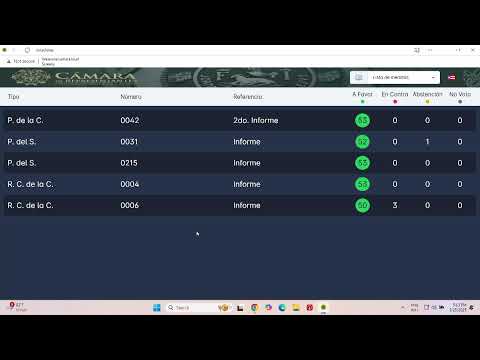
Votes at a glance: - Proyecto de la Ce1mara 42 (Ley de registro de cabilderos): approved 53-0. - Proyecto del Senado 31 (employment/reintegration measure discussed earlier): approved 52-0 with 1 abstention. - Proyecto del Senado 215 (designation/commemoration): approved 53-0. - Resolucif3n conjunta de la Ce1mara 4: approved 53-0. - Resolucif3n conjunta de la Ce1mara 6: approved 50-3.
What happens next: with approval by the House on March 25, the bill proceeds under standard enactment processes for final publication and implementation. The House record shows the Government Commission had recommended the measure unanimously.
Ending note: Floor presenters framed the bill as closing a transparency gap that previously left the executive and some administrative judicial offices outside formal registration requirements. Supporters said the registry will let citizens see who is paid to lobby and for what purposes; amendments on the floor clarified the scope and technical reporting requirements before the final 53-0 vote.