
Advocates urge creation of special revenue fund to stabilize FIG program funding
Get AI-powered insights, summaries, and transcripts
Sign Up Free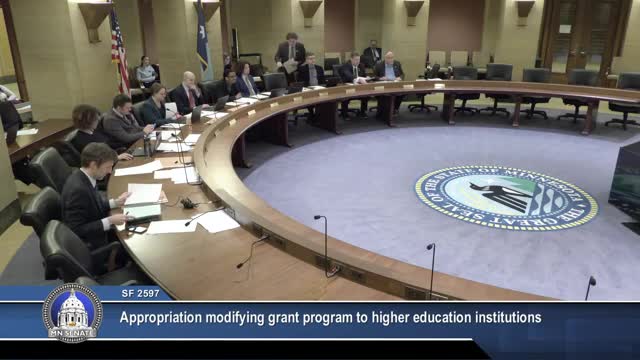
Summary
Witnesses and advocates told the committee that the Fostering Independence Grants (FIG) program faces a projected $3.7 million shortfall for the next academic year and urged creation of a special revenue account to prevent future annual deficiencies.
Advocates for youth in foster care urged the committee to create a dedicated revenue account to stabilize funding for the Fostering Independence Grants (FIG) program, which pays the full cost of attendance for eligible foster youth.
Ariana Shamone, interim executive director at Foster Advocates, told senators that FIG has significantly expanded enrollment and that the Office of Higher Education projects an $8.1 million total need to cover FIG recipients next academic year, leaving a projected shortfall of about $3.7 million. “If we do not meet that increase this session, we anticipate 45% of current students will be wait listed,” Shamone said.
Why it matters: FIG covers tuition and supports for foster youth who often lack stable educational resources; advocates say the program has demonstrably increased college access for this population but requires a more predictable funding mechanism.
Committee action: Senate File 2,597 was laid over. Senators expressed support for the program and interest in securing long‑term funding to honor the state’s commitment to foster students.
Program details: Testimony described FIG as the state’s largest targeted investment in foster youth postsecondary access; advocates stressed that periodic shortfalls harm continuity for enrolled students and that a special revenue fund would reduce the need for repeated one‑time fixes.
Next steps: Sponsors and advocates asked the committee to advance a special revenue structure and to work with the Office of Higher Education to refine cost estimates and fund mechanics.