Get Full Government Meeting Transcripts, Videos, & Alerts Forever!
Get email alerts on the Lobbying Exemption Rfp topic
No spam. Unsubscribe anytime.
Bill would clarify that submitting RFPs and grant proposals is not lobbying
Summary
Senate File 16‑62 would codify Campaign Finance Board guidance to exempt submission of grant proposals or responses to requests for proposals from the statutory definition of lobbying; proponents said the change prevents routine procurement and grant responses from triggering registration requirements, and the bill was laid over.
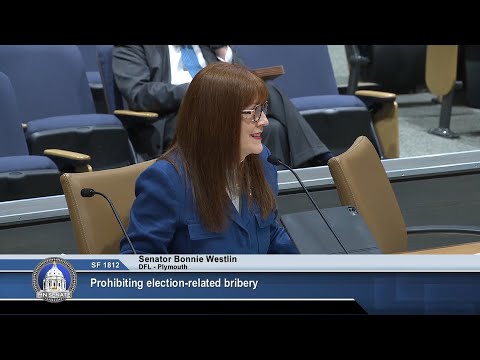
Senator Bonnie Wesselen told the Senate Elections Committee that Senate File 16‑62 codifies Campaign Finance and Public Disclosure Board guidance to clarify that submitting a grant application or responding to a request for proposals (RFP) is not lobbying.
The bill aims to resolve uncertainty raised after 2023 changes to the statutory definitions of lobbying and "legislative action." Senator Wesselen explained the measure clarifies that the mere act of submitting an RFP or grant proposal, or engaging in purely administrative or technical communications about those processes, should not be treated as attempting to influence a public subdivision's official action.
Marie Ellis of the Minnesota Council of Nonprofits testified in support, saying organizations frequently respond to local government RFPs to provide services and that such responses are partnerships, not lobbying. "Responding to state and federal RFPs is not currently considered lobbying, and there's no reason why local government RFPs should be viewed any differently," Ellis told the committee.
Jeff Sigurdsson of the Campaign Finance and Public Disclosure Board answered member questions about the boundary between advocating for budget items and responding to procurements. Sigurdsson said the distinction in practice is that asking a local government to add an item to its operating or capital budget (for example, funding a new fire station) can be lobbying, whereas pitching goods or services for purchase under an existing budget appropriation is not. He also noted existing exclusions for employees of political subdivisions and that lobbying registration generally requires compensation above statutory thresholds.
Committee members sought clarification on scenarios such as neighborhood groups asking for a new park or a fire chief requesting a new engine. Sigurdsson explained those scenarios depend on compensation triggers, employee status and whether the communication seeks changes to an overall budget versus responding to a procurement.
Senator Wesselen said the bill includes a repealer to avoid conflict with the CFB rule being codified. The committee laid the bill over for possible inclusion in the omnibus package and asked the CFB to continue to provide guidance to stakeholders.