Get Full Government Meeting Transcripts, Videos, & Alerts Forever!
Get email alerts on the Lobbying Regulation topic
No spam. Unsubscribe anytime.
Committee hears bill to require plain‑language lobbying handbook for nonprofits and small advocates
Summary
Senate File 2021 would require the Campaign Finance and Public Disclosure Board to publish a plain‑language lobbying handbook, updated when statutes change, and the committee heard support from nonprofits and grassroots groups; the bill was laid over for possible inclusion in the omnibus bill.
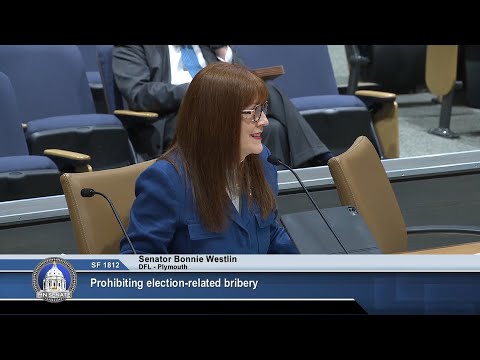
Senator Westland presented Senate File 2021 to the Senate Elections Committee on March 25, directing the Campaign Finance and Public Disclosure Board (CFB) to publish a plain‑language lobbying handbook on its website.
The bill responds to confusion since recent changes to lobbying rules about who must register and report. "Lobbying rules and procedures should be clear so that nonprofit staff can easily understand if they need to register," Marie Ellis of the Minnesota Council of Nonprofits told the committee. She said clear guidance would help nonprofits participate in the legislative process without inadvertently violating reporting rules.
E. Lily Abeyso of Clean Elections Minnesota testified in support, saying the handbook would help small nonprofits and grassroots advocates who lack the resources of established firms: "This bill ensures that all Minnesotans, regardless of their background, can engage in the legislative process with clarity and confidence," Abeyso said. Kate Klosner of the Minnesota Government Relations Council (MGRC) and other professional lobbyists said members also support clearer guidance; MGRC volunteers and other professionals said the handbook would reduce confusion caused by expanded definitions of lobbying adopted in 2023.
Key provisions require the CFB to explain registration triggers, what activities count as lobbying, which expenditures do and do not count toward thresholds, and differences among lobbying at the legislature, executive branch, political subdivisions and the Public Utilities Commission. The bill requires the CFB to consult with registered lobbyists who are not full‑time professionals, and specifically with nonprofits, small organizations and organizations led by people who are Black, Indigenous, or people of color, when creating and updating the handbook.
Committee members asked questions about the consultation language and whether singling out organizations led by BIPOC individuals raises discrimination concerns. Senator Westland and witnesses said the intent is inclusive: the provision is meant to ensure perspectives from smaller and underrepresented organizations are included, not to exclude other stakeholders.
Senators thanked the CFB for indicating it would absorb the work and asked that the board be pragmatic about update timing; Westland said the handbook should be updated when statutes change. Senator Kranz and others suggested the language may be refined, and the bill was laid over for possible inclusion in the omnibus bill.