Get Full Government Meeting Transcripts, Videos, & Alerts Forever!
Get email alerts on the Legacy Funding Hearing topic
No spam. Unsubscribe anytime.
Senate legacy committee hears wide slate of arts, culture and heritage funding requests and lays them over for possible inclusion
Summary
The Minnesota Senate Environment, Climate and Legacy Committee on March 25 heard testimony on more than a dozen requests for appropriations from legacy funds, with advocates stressing cultural preservation, arts education and community access.
The Minnesota Senate Environment, Climate and Legacy Committee on March 25 heard testimony on more than a dozen requests for appropriations from legacy funds, with advocates stressing cultural preservation, arts education and community access.
Chair Senator Kari Herr convened the meeting and moved through a long agenda that included presentations from the Minnesota Indian Affairs Council and representatives of dozens of cultural and community organizations. ‘‘Miigwech, Pedamia. Thank you for allowing us to talk about the exciting work we have done in protecting and revitalizing the Dakota and Ojibwe languages here in Minnesota,’’ Shannon Gizik of the Minnesota Indian Affairs Council told the panel during opening testimony on language grants.
Why it matters: Committee members emphasized that legacy funding supports community-based education, cultural preservation and local economic activity — from language work in tribal communities to small-business sales at a downtown festival. Most presenters asked the committee to include their projects in the omnibus legacy appropriations bill; the committee “laid over” each senate file for possible inclusion rather than taking final votes during the hearing.
Key testimony and requests
- Indigenous languages: Shannon Gizik and testifiers from Dakota and Ojibwe language programs described grant-funded work to document, teach and expand Dakota (Dakota Iyapi) and Ojibwe (Ojibwe) instruction in schools and community settings. ‘‘If you don’t know, Dakota Iyapi, or the Dakota language, is the first language of Minnesota,’’ testified Ethan Neardels of Dakota Language Society, noting the language’s long history in the region and its current endangerment status. David Sutherland of the Minneapolis American Indian Center said moving classes online during the pandemic expanded participation ‘‘to thousands per year’’ and warned that some programs would disappear without continued funding.
- Community arts and small programs: Several nonprofit cultural groups asked for legacy support. Rose McGee, founder of Sweet Potato Comfort Pie, solicited an appropriation in Senate File 1973 and described outreach and volunteer-driven events that her group uses to build civic engagement; McGee said the organization has made and gifted more than 5,000 pies and works with over 250 volunteers. The committee laid SF 1973 over for possible inclusion.
- Performing arts and youth programs: Lundstrom Performing Arts (Senate File 2398) and Capri Theater / PCYC (Senate File 2424) urged funding for youth instruction, after-school arts opportunities and facility operations. Amy Ellis, Lundstrom’s executive director, said the organization served 655 students last year and expects to expand to about 800 students in coming years. Kevin D. West, interim director of the Capri Theater, said PCYC has invested tens of millions in neighborhood facilities and asked for funds to expand human capacity.
- Community radio (AMPERS): Joel Glaser, president and CEO of Ampers, requested $4.5 million for AMPERS (Senate File 2573) to support 17 independent public educational radio stations across the state. Glaser told the committee AMPERS ‘‘represents 17 community radio stations’’ and said the majority of stations are outside the Twin Cities; committee members discussed how most of the money would flow to individual stations through the Department of Administration and that AMPERS administers some group projects.
- Youth debate: The Minnesota Urban Debate League (Senate File 2790) described research showing improvements in attendance, critical thinking and reading scores for participants. Student witness Sai Yang said debate ‘‘is the reason that my life has turned around so much’’ and coaches noted recent growth and a national tournament invitation.
- Lake Superior Zoo and Living Museum proposal: The Lake Superior Zoo sought $750,000 over two fiscal years (Senate File 2834) to develop interactive exhibits, nature-based play areas and conservation-focused programming. Executive Director Haley Hedstrom said the project would expand access for preschools and school field trips and support the zoo’s nature-based preschool.
- Horse racing and Canterbury Park: Senator Pratt presented a request (Senate File 2812) for grants to support Minnesota’s horse-racing industry, including breeder incentives and retired-horse grants; testimony cited a $400 million statewide economic impact from the racing industry and noted Canterbury Park’s seasonal employment of as many as 1,500 people. The bill proposed roughly $1 million per fiscal year for the program and was laid over.
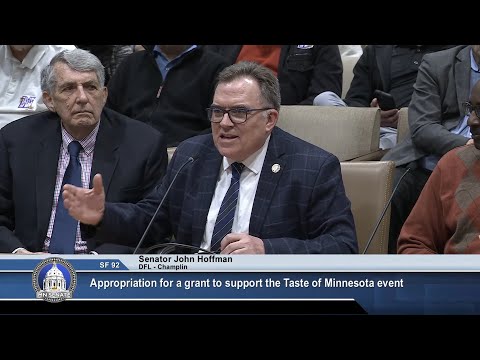
- Festivals and community events: Testimony supported festival and public-event funding: Taste of Minnesota organizers and vendors described economic and community benefits following the festival’s recent return downtown; United Hmong Family (Senate File 2590) requested $350,000 for expansion of the Hmong New Year programs that drew more than 31,000 attendees in a recent year; organizers of a Southeast Asian music festival (amendment to Senate File 2543) described anticipated attendance and local economic impact.
- Additional requests: Other items the committee laid over included requests for the Lake Superior Zoo Living Museum (SF 2834), Asian Economic Development Association’s youth environmental stewardship initiative (SF 2785), a Tujashong memorial at Phelan Lake (SF 2656), and a proposal to reintroduce winter activities and an ice castle at Phelan Regional Park timed with the Saint Paul Winter Carnival (SF 1763).
Actions and process
Committee members did not take final funding votes during the hearing. For each bill presented the committee ‘‘laid over’’ the item for possible inclusion in the omnibus legacy package; in committee parlance that means the bill is deferred for later consideration as the larger budget and package are negotiated. Testimony was largely supportive and aimed at placing projects into the omnibus legacy bill; members asked clarifying questions about budgets, program reach and how requested funds would be distributed.
Looking ahead
Committee members indicated staff will assemble the legacy package and members may negotiate inclusions and amounts before the omnibus bill is finalized. Several presenters emphasized workforce impacts, youth programming and the role of legacy funds in sustaining smaller, community-based cultural work.
Ending
The committee adjourned after laying over all presented senate files for possible inclusion; no recorded roll-call votes were taken on any of the items during the March 25 hearing.