Get Full Government Meeting Transcripts, Videos, & Alerts Forever!
Get email alerts on the Dnr Budget topic
No spam. Unsubscribe anytime.
DNR outlines $1.6 billion FY26-27 budget, proposes fee increases and new gas permitting staff
Summary
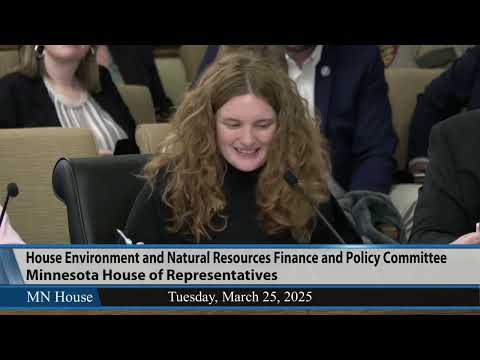
Commissioner Sarah Stroman, commissioner of the Minnesota Department of Natural Resources, told the House Environment, Natural Resources Policy and Finance Committee on March 20 that the governor's proposed fiscal year 2026-27 budget for the agency totals roughly $1.6 billion across all DNR funds.
Commissioner Sarah Stroman, commissioner of the Minnesota Department of Natural Resources, told the House Environment, Natural Resources Policy and Finance Committee on March 20 that the governor's proposed fiscal year 2026-27 budget for the agency totals roughly $1.6 billion across all DNR funds.
The proposal, Stroman said, combines limited new general-fund requests with a set of targeted fee increases and one-time appropriations intended to cover rising operating costs, legal expenses and new regulatory duties tied to gas permitting and leasing. "This budget represents a total budget of $1,600,000,000 across all DNR funds," Stroman said during the presentation.
The package is aimed at keeping core services running amid a tight state budget while shifting some ongoing program costs to user fees. Stroman and agency budget staff described the measures as a narrowly prioritized response to the state's fiscal constraints and said the agency minimized new general-fund requests where possible.
Key budget items and numbers - Fee proposals: The governor's recommendations include a sliding-scale increase to the aquatic invasive species (AIS) surcharge that the DNR estimates will generate $5.7 million; as an example, the surcharge for pleasure craft under 17 feet would rise to $25 per three-year registration from $10.60. A groundwater fee proposal would raise water-use permit fees (the first tier example rises from $140 to $200 per permit) and is estimated to generate $4.4 million. State park vehicle permit increases (daily permit from $7 to $10; annual from $35 to $45) are projected to generate $850,000 to help sustain operations. - Gas permitting and leasing: The governor's budget requests $1.3 million to establish permitting for hydrogen and helium and other gas resources (four permitting positions), plus $660,000 for a new gas-leasing program (two positions, including an attorney and a production site inspector). Those proposals follow legislatively directed recommendations from the Gas Resources Technical Advisory Committee (GTAC), Stroman said. - One-time and operating requests: A one-time $4 million general-fund request would address escalated legal costs tied to contested resource and land-management decisions. The budget also proposes $840,000 from the general fund for ongoing public-safety training and equipment for conservation officers when they assist in broader public-safety responses. An operating-cost package includes $5.4 million general-fund and $11.5 million across other funds for inflation and increased operating costs; the department noted this only partially covers expected cost increases. - Program-specific shifts: DNR intends to cover some existing AIS activities and reduce a structural deficit in the AIS account, which the agency estimates will reduce general-fund expenditures by $660,000. The groundwater fee proposal also is projected to reduce general-fund support by $3.36 million by shifting costs into the natural resources fund.
Officials said some large one-time appropriations from the last biennium remain in active use. The "Get Out More" infrastructure investment was highlighted as a $150 million appropriation ($110 million one-time general fund plus $40 million in bonding) programmed for projects across the state; the department reported that about $35.5 million is expected to be spent by August of next year, with another $31.3 million encumbered, and that most projects are in early phases such as planning and design.
Questions from committee members Committee members pressed the DNR on several items, including the rationale for fee increases, the use of one-time funds versus ongoing needs, and the department's plans to prioritize maintenance over new construction. Representative Schultz asked whether the recent increase in the Ecological and Water Resources division budget reflected ongoing funding or one-time appropriations; Mary Robinson, DNR chief financial officer, said much of the prior increase included a number of one-time appropriations and that only limited ongoing additions were made previously (an operating adjustment for inflation and ongoing CWD response funds).
On parks and trails fees, several members voiced concern about affordability and equity; Stroman said fees do not fully cover park operating costs and that the proposed increases are intended to be a partial, ongoing funding source to avoid using one-time dollars for continuing expenses. Representative Jacob asked how fee increases square with the agency's stated goal of connecting more people to the outdoors; Stroman reiterated that legacy and trust funds cannot be used for basic operations and thus cannot substitute for revenues that sustain routine park maintenance.
Wildlife and public safety Committee members asked about chronic wasting disease (CWD) surveillance and deer-farm testing. Assistant Commissioner Bob Meyer described expanded testing, including partnerships with taxidermists and mail-in kits, and said the department uses a 15-mile radius testing and management zone after a new detection. The committee also asked about bird flu outreach; Meyer said DNR is coordinating with the Board of Animal Health and other partners on public outreach and testing guidance.
Staffing and implementation risk CFO Mary Robinson said the budget proposal adds 16 full-time equivalent positions agency-wide, most paid for by proposed fee increases; four positions would be supported by the general-fund gas-related request. She said the operating-adjustment request assumes step increases for current staff but does not include potential future collective-bargaining increases.
Why it matters The package would shift some recurring program costs away from the general fund onto user fees and other funds, while creating new regulatory capacity for gas leasing and permitting. If adopted, the changes would affect boat owners, park visitors, groundwater permit applicants and local AIS partners, and could change how DNR finances routine operations and legal risks.
What comes next DNR staff said they will provide committee follow-up on specific budget details (for example, the composition of prior funding increases in EWR and the full AIS surcharge table) and are prepared to work with the committee as the department and legislature finalize budgets. The agency emphasized it had narrowed new ongoing requests given statewide fiscal constraints and expects to continue prioritizing maintenance and critical work across divisions.