Get Full Government Meeting Transcripts, Videos, & Alerts Forever!
Get email alerts on the State Budget Tax Policy topic
No spam. Unsubscribe anytime.
Maryland House debates and rejects a string of BRFAA amendments on tech taxes, combined reporting and county cost shifts
Summary
The Maryland House of Representatives debated several amendments to the Budget Reconciliation and Financing Act (BRFAA) during a lengthy floor session and rejected each of the contested proposals, returning the bill for further work.
The Maryland House of Representatives debated several amendments to the Budget Reconciliation and Financing Act (BRFAA) during a lengthy floor session and rejected each of the contested proposals, returning the bill for further work.
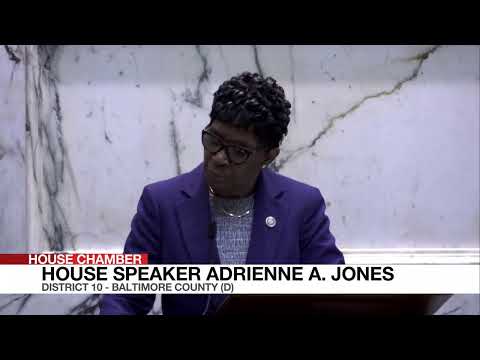
Lawmakers spent hours arguing changes that would have altered tax treatment for technology services, delayed or rescinded scheduled tax and fee increases, and shifted administrative expenses to county governments. Speakers included the presiding officer (Madam Speaker), the floor leader and multiple delegates who identified county or committee affiliations during floor remarks.
Why it matters: The BRFAA contains revenue and technical changes that lawmakers said either raise or protect revenue for transportation, education and other statewide programs or would shift costs to local governments and businesses. Delegates framed the votes around competing priorities: raising predictable revenue for the Transportation Trust Fund and other initiatives versus protecting small businesses, county budgets and consumers from new or accelerated charges.
Floor debate and key details
Tech tax and SaaS: A delegate offered an amendment to remove software-as-a-service (SaaS) from the bill’s new tech tax, listing common SaaS examples (Mailchimp, Dropbox, Zoom, Google Drive/Workspace, Netflix, Salesforce, Microsoft Teams, Spotify, DocuSign, PayPal and others) and arguing vendors will pass the tax to consumers. The floor leader responded that SaaS and similar services are already taxed under Maryland’s digital-products tax and pointed to language in the BRFAA reprint referencing Tax-General Article §11-104 to prevent double taxation. The amendment failed when the clerk announced 85 votes in the negative.
Combined reporting (corporate tax): A sizable floor debate centered on a separate amendment to remove the bill’s move to combined reporting (a corporate tax filing system that treats related entities as a single taxpayer). Proponents of the amendment warned combined reporting would increase volatility, administrative costs and litigation, and cited business groups and past commissions (the 2010 Maryland Business Tax Reform Commission and the 2016 Augustine Commission) that recommended caution. Supporters of combined reporting, including the floor leader and Ways and Means members, cited national comparisons and Department of Legislative Services (DLS) analysis, saying combined reporting addresses profit-shifting and could raise an estimated $173,000,000 annually after implementation. The House rejected the amendment (clerk announced 92 votes in the negative).
County cost shifting and SDAT administrative fees: One amendment would have rolled back a change that increases counties’ share of administrative costs tied to property assessments performed by the Department of Assessments and Taxation (SDAT). The sponsor said the amendment would have prevented moving large sums onto county budgets immediately, citing DLS outreach and an associated bill (HB 6) that the sponsor said would add about $1,000,000 in costs for oblique aerial studies. The sponsor provided figures for several counties: Montgomery County $3,120,000; Prince George’s County $2,750,000; Baltimore County $2,000,711; and smaller counties (Somerset $158,176; Caroline $139,000; Kent $112,000). The amendment failed (clerk announced 87 votes in the negative).
Sports-betting tax increase: A delegate proposed an amendment to prevent an increase in the mobile sports-betting tax from 15% to 20% (the proposal applied only to mobile wagers; in-person casino wagers would remain at 15%). Supporters of keeping the 15% rate argued casinos and licensed betting operators are taxed and regulated and that raising the mobile rate would push bettors to untaxed, illegal operators. The amendment failed (clerk announced 96 votes in the negative).
Motor-vehicle registration fees: A proposal sought to reverse an acceleration of scheduled registration-fee increases for heavier passenger and multipurpose vehicles (over 3,700 pounds), which the sponsor said would otherwise bring $52,000,000 into the Transportation Trust Fund. Lawmakers discussing the amendment argued the fees were previously enacted and that accelerating the schedule was needed to fund transportation projects; the amendment failed (clerk announced 88 votes in the negative).
Gas tax inflation adjustment (CPI): An amendment attempted to block an inflation-based adjustment to the motor-fuel tax. Committee supporters said the CPI adjustment was expected to generate about $25,000,000 for transportation projects and noted many other states use similar automatic adjustments. The amendment failed (clerk announced 87 votes in the negative).
Procedural outcome: After the floor debate and roll calls, the bill was ordered printed for third reading and the House continued to the committee announcements and adjournment business.
What delegates emphasized
- Revenue and implementation: proponents of the BRFAA amendments and those opposing them repeatedly referenced DLS analyses and the comptroller’s office technical capacity. Supporters of the bill said some changes (combined reporting, registration-fee timing, CPI adjustments) provide predictable revenue for the Transportation Trust Fund and other programs; opponents said implementation is complex, may be regressive or could drive businesses and federal contractors to other states.
- Local impacts: the county-cost-shift debate focused on how state-level decisions change local budgets and services, with specific dollar amounts given for county impacts and concern voiced for towns and residents on fixed incomes.
- Business climate: opponents of combined reporting and some tax increases argued Maryland could lose competitiveness to neighboring states such as Virginia; proponents said many states successfully use combined reporting and that it curbs profit shifting.
Votes and formal actions discussed in this article were conducted on the House floor and announced by the clerk; full roll-call records were not included in the transcript excerpts provided.