Get Full Government Meeting Transcripts, Videos, & Alerts Forever!
Get email alerts on the Rv Parks topic
No spam. Unsubscribe anytime.
Commissioners direct staff to remove recreational-vehicle parks from rural residential and agricultural zoning tables
Summary
After public comment and board debate, Bonner County commissioners directed planning staff to prepare a zoning-code amendment to disallow RV parks and campgrounds in agricultural forest, rural residential and rural service-center zoning districts.
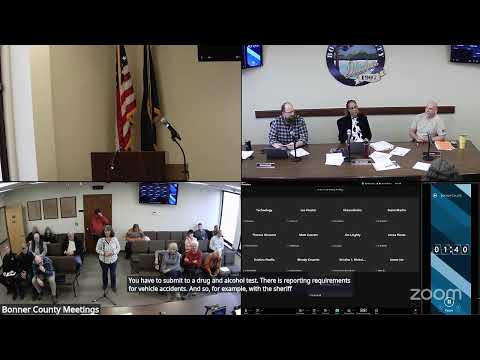
After a public hearing with dozens of residents and business owners, the Bonner County Board of Commissioners voted to direct planning staff to draft a code amendment that would remove recreational-vehicle parks and campgrounds from the county's residential and agricultural use tables.
The motion directs staff to amend Bonner County zoning code so RV parks and campgrounds are no longer permitted uses (including by conditional-use permit) in Agriculture-Forest, Rural Residential (R-5) and Rural Service Center zoning districts. Planning staff and speakers at the hearing said the change is intended to preserve rural character and prevent campground and RV-park-style density in areas without sewer, fire mitigation, and other infrastructure.
Speakers for the amendment included landowners and long-time rural residents who said RV parks introduce noise, traffic, generator use and wastewater risks to residential areas. Several residents described recent permit applications and existing small RV developments they said had produced higher-density occupancy, road impacts and pressure on emergency services. Planning consultant and public commenters urged the board to consider the Highway 95 corridor as an appropriate place for destination parks and recommended that any comprehensive update distinguish appropriate corridors from residential countryside.
At the meeting, Susan Bowman (land-use consultant speaking for local citizens) recounted the history of a prior code change that—she said—allowed RV parks into rural zones; she requested that the county reverse that allowance. Jeremy Grimm of Whiskey Rock Planning and other professional planners said a peer review and comprehensive approach would be preferable, but many residents said immediate action to remove campground uses from rural zones was necessary to prevent additional approvals while the county completes its broader code update.
Commissioner discussion touched on whether the motion was too broad, with one commissioner urging more specificity (for example, limited allowances near major corridors). Planning director Jake Gabel noted that removing the use from certain zones would shift demand toward other zones and that staff would need to consider density, buffering and standards when drafting the amendment. The board agreed to proceed with a code amendment and told staff to return with proposed text for Planning Commission review and public hearings.
The motion as directed does not affect existing, lawfully approved RV parks or applications already vested under existing rules; the board and staff repeatedly told residents that the change would affect future permitting and would be implemented through the standard code-amendment process with Planning Commission hearings.
Why it matters: Residents argued that RV parks function like commercial, higher-density developments that can be incompatible with rural residential lots lacking road, water, and firefighting infrastructure. The board's direction is intended to keep commercial campground density in areas the county determines are appropriate when it finalizes the comprehensive-plan and zoning updates.
What comes next: Planning staff will draft a proposed amendment removing RV parks and campgrounds from the identified rural-use tables, include any recommended density/buffer adjustments, and return to the Planning Commission and the Board for formal hearings and adoption.