Get Full Government Meeting Transcripts, Videos, & Alerts Forever!
Get email alerts on the Electricity Sale Levy topic
No spam. Unsubscribe anytime.
Committee reconsiders and passes amended tax measure after two amendments, 12–9
Summary
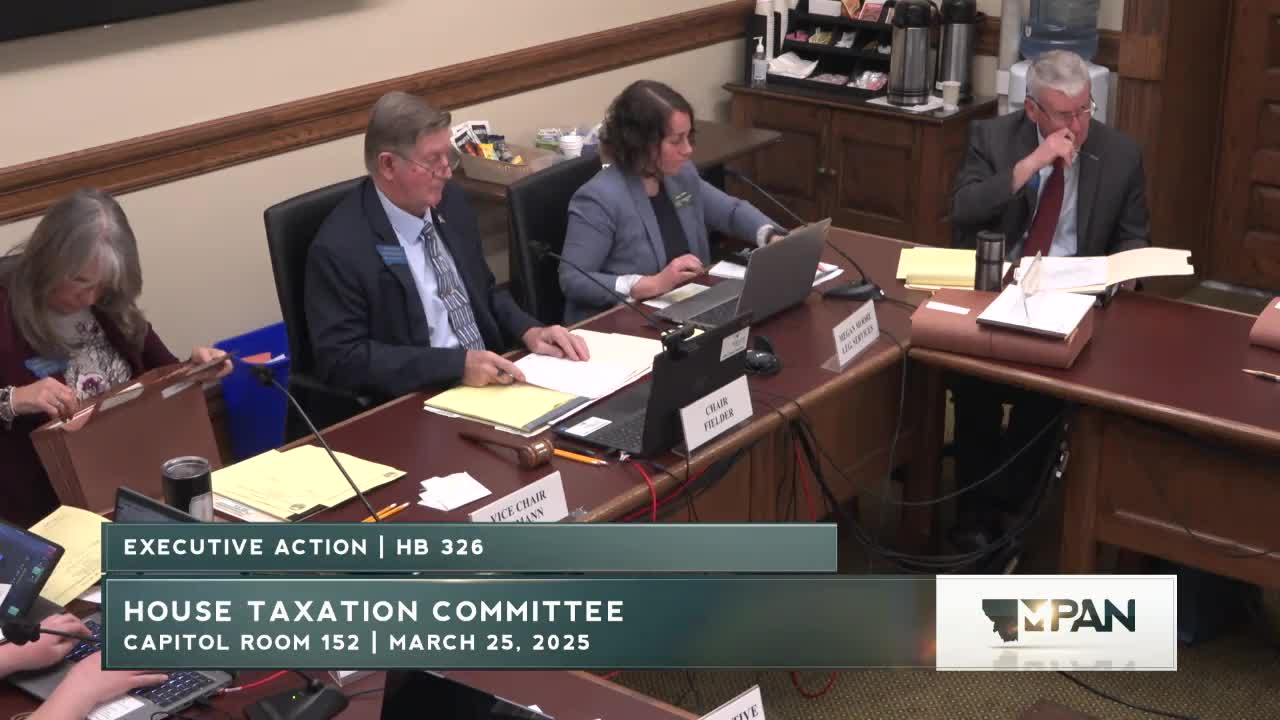
The House Taxation Committee reconsidered House Bill 326, adopted amendments removing proposed coal severance tax reductions and adding a new 2% levy on electricity sales for new contracts, and passed the bill as twice amended on a 12–9 roll call.
During executive action the House Taxation Committee voted to reconsider prior tabling and then moved on House Bill 326. The committee adopted amendments that removed language reducing the coal severance tax and instead applied a 2% tax provision on the sale price of electricity by certain electrical energy producers for new contracts, per sponsor description.
Committee discussion focused on which electrical generation sources would be affected, possible effects on utility customers, and the need for revised fiscal notes. Representative Thain and others sought clarification whether the amendment would tax electricity from coal‑fired steam turbines; the sponsor and amendment proponents said the bill excludes coal‑generated electricity from the new 2% addition because coal remains subject to severance tax when extracted.
After discussion the committee held a roll call vote on the twice‑amended bill. The clerk announced the result: 12 ayes and 9 nays, and the record states "House Bill 3 26, twice amended, has passed by a vote of 12 to 9." The committee then concluded business for the day and set scheduling expectations for fiscal notes and future executive actions.
Why it matters: The amendments shifted the bill's effect away from reducing the coal severance tax and toward a new levy on electricity sales tied to new contracts, an outcome with potential revenue and sectoral implications. Several members sought updated fiscal analysis before additional actions and some members expressed concern about shifting costs to ratepayers.