Get Full Government Meeting Transcripts, Videos, & Alerts Forever!
Get email alerts on the Income Tax Credit Longtime Residents topic
No spam. Unsubscribe anytime.
Sponsor outlines $500 income tax credit for long‑time Montana residents; CPAs and policy center oppose
Summary
House Bill 8 39 would provide a $500 nonrefundable income tax credit to Montanans who have lived in the state at least 10 years and earn under $100,000; the sponsor framed it as fairness, while the Montana Society of CPAs and Montana Budget and Policy Center testified in opposition citing complexity and equity concerns.
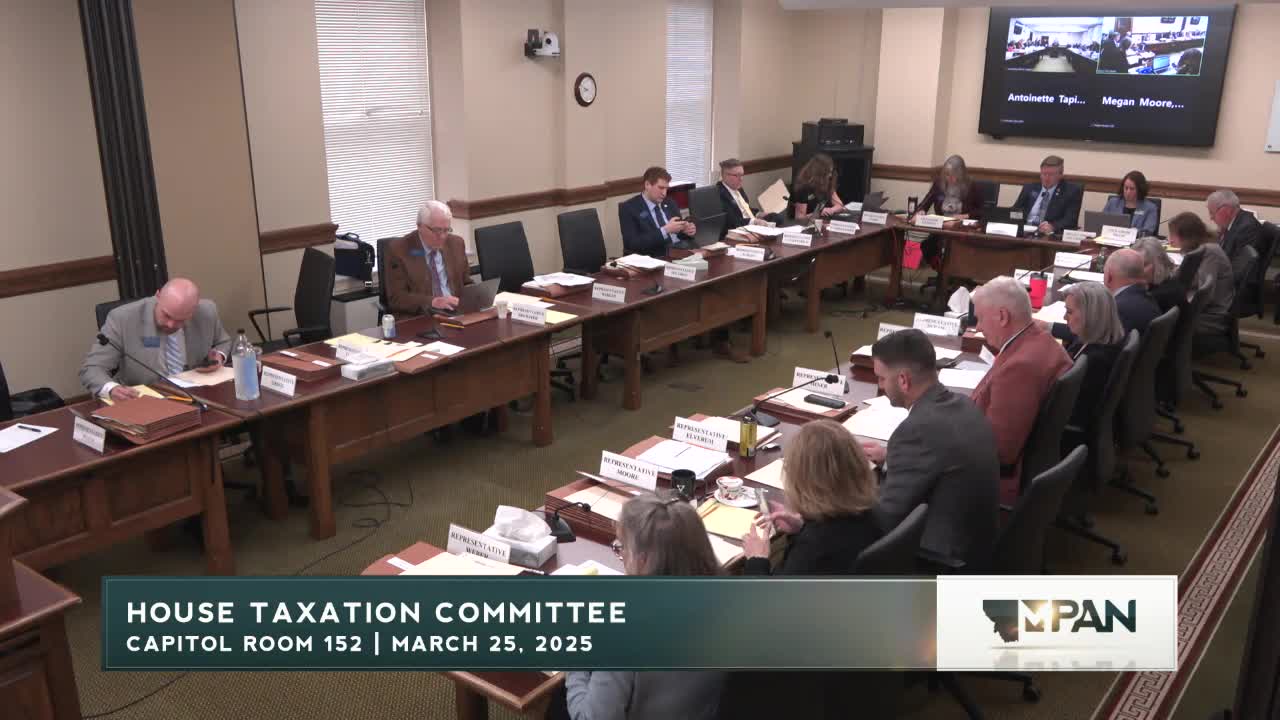
Representative Lucas Schubert opened the hearing on House Bill 8 39 by framing the legislation as a modest, conservative income tax credit for longtime residents. "This bill is about fairness. It's about rewarding the folks who've stuck with Montana through thick and thin," Schubert said. The proposed credit would be $500 for Montanans who have lived in the state at least 10 years and have income under $100,000.
Opponents told the committee the credit would complicate a tax system that had been recently simplified and raised equal‑protection concerns. Allen Lloyd, executive director of the Montana Society of CPAs, said his group opposes tax credits generally and argued the proposal would treat similarly situated taxpayers differently based solely on residency tenure. "We define that as similarly situated taxpayers should be taxed similarly. This bill would provide a benefit to 1 group of taxpayers where similar taxpayers, just by virtue of not being here quite long enough, would receive a different, treatment," Lloyd said.
Rose Bender of the Montana Budget and Policy Center also testified in opposition, urging the committee to prioritize property tax relief and structural changes rather than a broad income tax credit. "This income tax credit is not the solution," Bender said.
Sponsor responses and follow‑up: Schubert acknowledged a fiscal note would be required and told the committee the sponsor expected a substantial fiscal impact, saying it would "probably be in the hundreds of millions," though he said the number should not deter the committee because the measure reduces taxes. He said he would work on an amendment to ensure married filers filing jointly could receive the benefit consistent with the sponsor's intent.
Informational staff from the Department of Revenue were available for questions. Jake Ford, bureau chief in the Department's Income and Withholding Taxes Bureau, identified himself as available for committee inquiries.
No committee vote occurred on the bill during the hearing.