Get Full Government Meeting Transcripts, Videos, & Alerts Forever!
Get email alerts on the Drugged Driving topic
No spam. Unsubscribe anytime.
Senate committee backs per‑se drugged‑driving standards for multiple illicit drugs
Summary
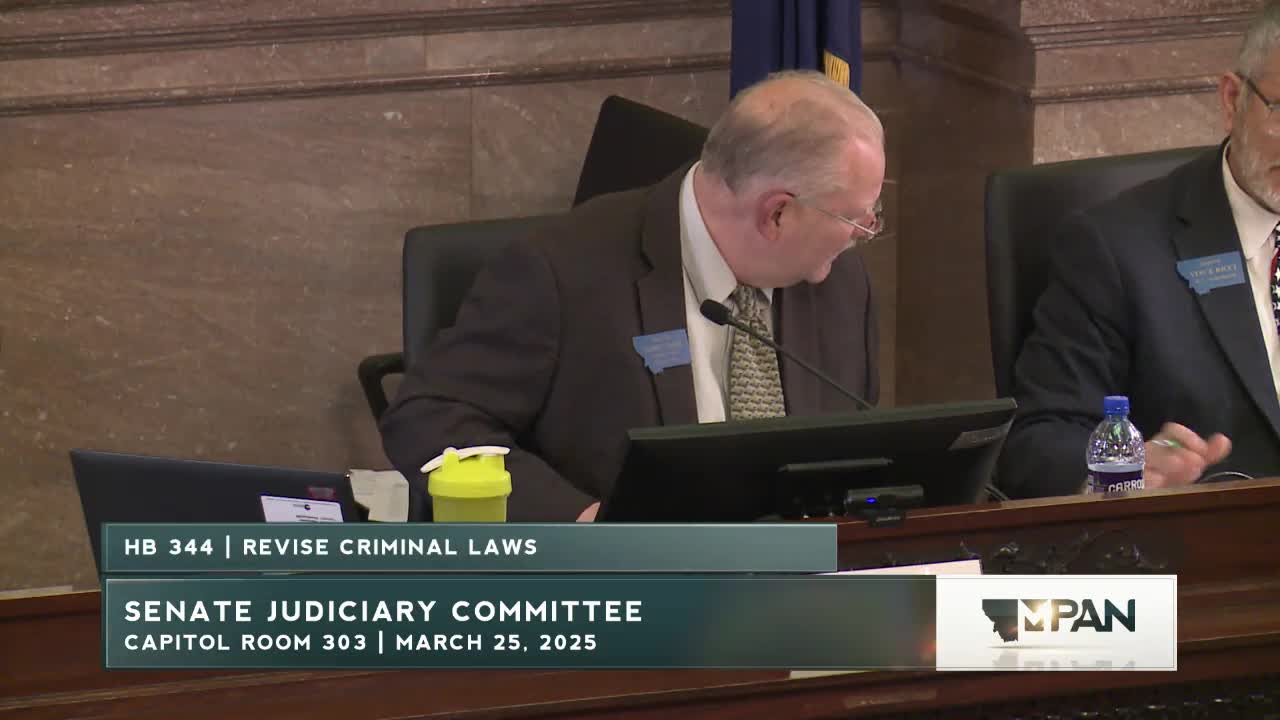
House Bill 344 would add per‑se blood concentration limits for several illicit drugs so prosecutors can charge drivers per se for drugged driving; the committee adopted a lab‑recommended amendment and concurred on the bill.
Representative Braxton Mitchell told the committee HB 344 would add per‑se DUI limits for non‑alcohol drugs and would not criminalize lawful prescription use. "Many other states have already implemented similar legislation to address drivers who drive on dangerous drugs," Mitchell said. He noted the House amended the bill to remove urine testing (the State Crime Lab does not perform routine urine testing) and to clarify that a per‑se offense only applies when the detected substance is not lawfully prescribed.
Proponents included the Montana County Attorneys Association, the Association of Montana Troopers and county attorneys who said drug‑involved driving causes serious crashes statewide. Brian Thompson for the county attorneys explained that Montana already has per‑se standards for alcohol and THC but not for other drugs; the bill adds a list of substances and blood nanograms‑per‑milliliter thresholds that, if reached, would constitute per‑se DUI. "We have per‑se DUI limits for alcohol. We do not, right now, have a similar structure per se DUI for drugged driving," Thompson said.
Law enforcement witnesses said the bill would provide clearer evidence for juries and prosecutors confronting polysubstance impairment and the varied physiological effects of drugs such as methamphetamine. Matt Jennings, Missoula County Attorney, emphasized that polysubstance impairment and methamphetamine‑related crashes have increased, and juries frequently ask for an objective threshold the way alcohol cases do.
Informational witnesses included a member of the state crime lab and Department of Justice staff; the lab requested technical changes to testing methods, which resulted in a committee amendment offered in executive action. During executive action the committee adopted the lab's amendment and concurred on the bill as amended. The sponsor urged passage to improve road safety and to provide prosecutors consistent tools to charge drugged driving.