Get Full Government Meeting Transcripts, Videos, & Alerts Forever!
Get email alerts on the Land Use Court Procedure topic
No spam. Unsubscribe anytime.
Bill would require courts to invite local governments to weigh in before land-use rulings
Summary
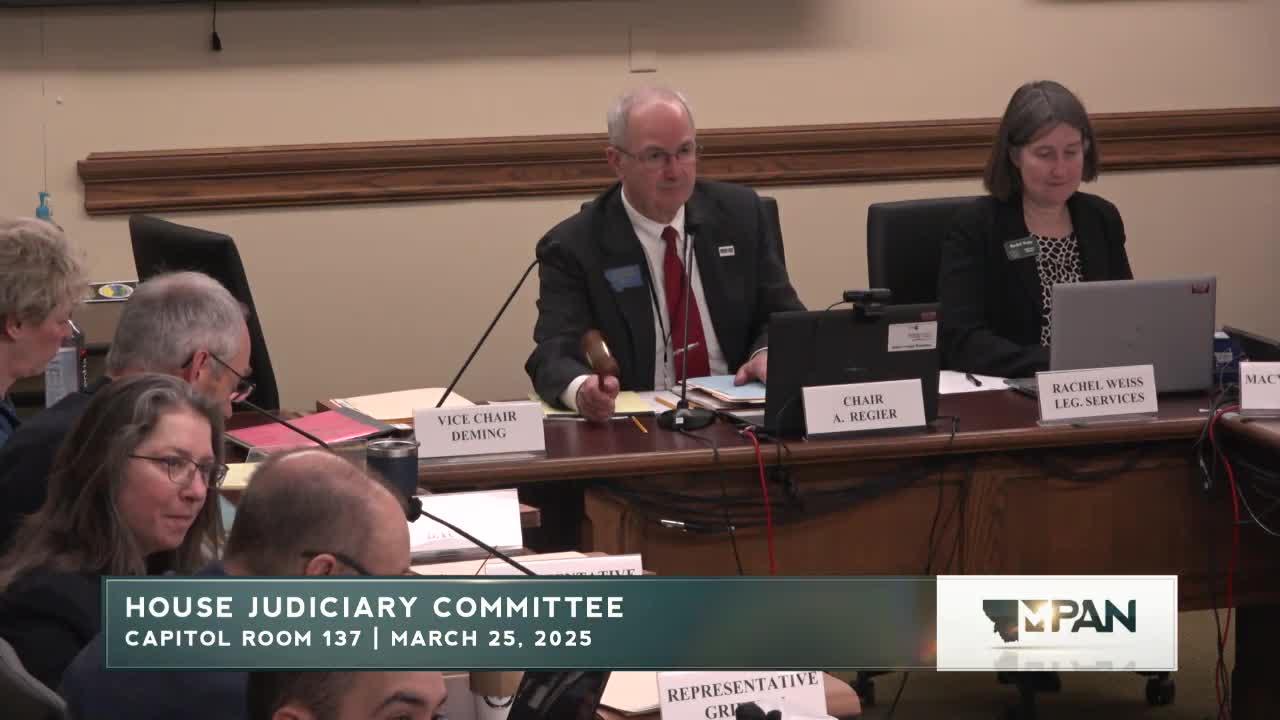
Sen. Forrest Mandeville told the House Judiciary Committee that Senate Bill 239 would require district courts to invite other governing bodies to submit amicus briefs before issuing orders that could change statewide land‑use interpretations.
Sen. Forrest Mandeville told the House Judiciary Committee that Senate Bill 239 would require courts to notify and invite governing bodies that administer land-use code when a court is considering an order that could change how that code is interpreted statewide.
Mandeville said the measure was prompted by decisions such as the Horse Creek Hills litigation, where a district court’s reading of subdivision law created uncertainty among counties about how to apply statutory review criteria. “This would allow governing bodies to have a little more warning before they end up with a court order telling them what to do,” he said.
Under the bill as drafted, language would be inserted into the land-use sections of state code (referred to in testimony as “76.3 part 5” and “part 6”) to require a court, before issuing an order, to invite similarly situated governing bodies to file amicus briefs and to allow an interested governing body an opportunity to intervene. The sponsor said the court should “wait a sufficient time after issuing the invitation to allow an interested governing body to file an amicus brief,” and he intentionally left the phrase “sufficient time” flexible to account for case complexity.
Committee members raised implementation concerns. Representative Griffith asked whether the sponsor had consulted the District Court Judges Association; Mandeville said he had not. Representative Griffith and Representative Baum expressed concern that the provision could impose heavy administrative burdens on courts, requiring notice to dozens or hundreds of local governing bodies, and asked what would happen if a governing body sought to participate long after the court’s decision. Mandeville said courts are capable of tailoring notice and that the opportunity would lapse after the court issues a decision; appeals could create later opportunities.
Representative Overstreet suggested parties could stipulate that they would send notices on behalf of the court. Representative Millett questioned the use of the subjective phrase “sufficient time” and whether a fixed day-count (15 or 30 days) would reduce uncertainty; the sponsor said he was open to a fixed time frame if the committee preferred.
Mandeville said the bill is intended not to second-guess judges but to provide judges with additional information and administration perspectives before they rule in ways that could ripple statewide. There was no formal opposition at the hearing; Mandeville closed by asking for a carrier and Representative Overstreet agreed to carry the bill forward.
The committee did not vote on the measure.