Get Full Government Meeting Transcripts, Videos, & Alerts Forever!
Get email alerts on the Criminal Justice Data topic
No spam. Unsubscribe anytime.
Lawmakers back funding to continue Montana criminal‑justice data warehouse work
Summary
Senators heard proponents for HB 117, a follow‑up to 2023’s SB 11, requesting appropriations and staff to continue building a statewide criminal justice data warehouse intended to break data silos and support evidence‑based policymaking.
Representative Amy Regier opened House Bill 117 as a continuation of 2023’s Senate Bill 11 and the work to build an integrated criminal justice data warehouse under the Board of Crime Control. "House Bill 117 builds on the hard work already done to create a database giving lawmakers empirical evidence for decision making," Regier said. The bill seeks appropriations for software, two FTEs and $500,000 to begin bringing court data into the warehouse.
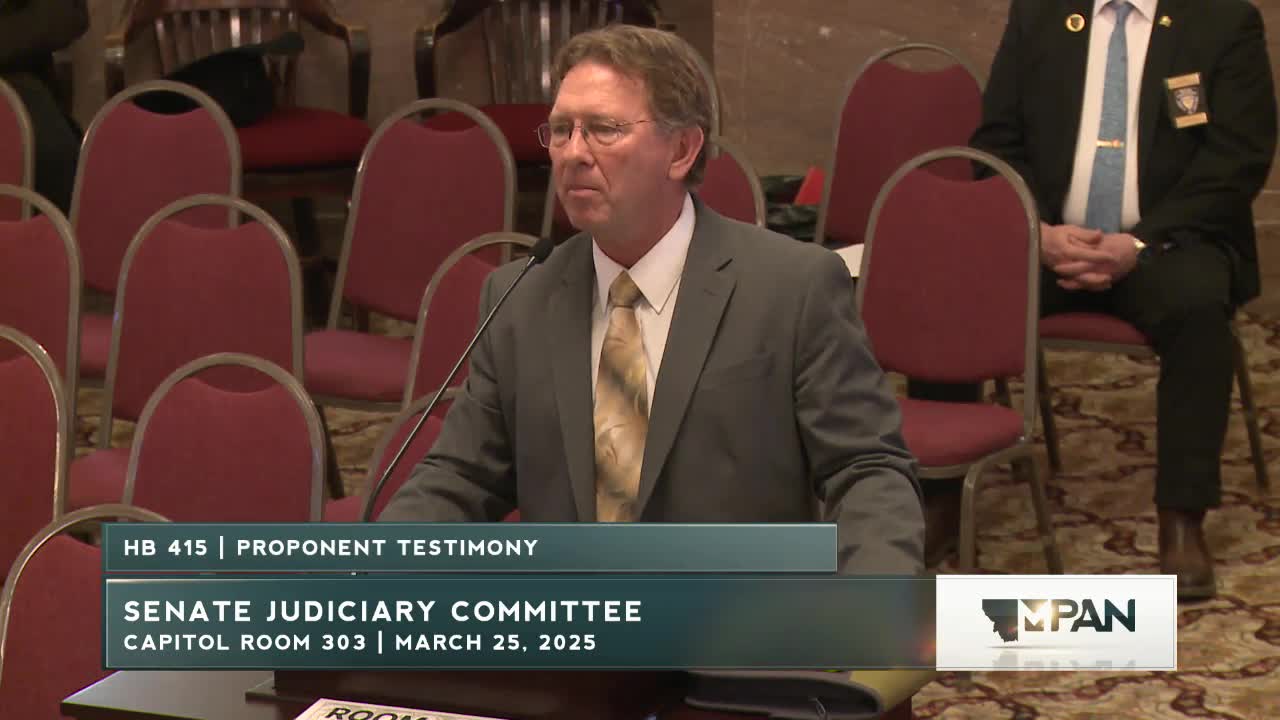
Janice Friess, director of the Statistical Analysis Center at the Board of Crime Control, described the warehouse project as essential to breaking down data silos among criminal justice agencies. "The data masterization and cataloguing applications will be essential in piecing together data that is similar but different coming from multiple data sources and systems," Friess testified. Brian Goodkin (Corrections) and representatives from county attorneys, the Office of State Public Defender and the Montana Police Protective Association all supported the bill.
Judicial branch and state IT officials appeared informationally. Ryan Davies, chief information officer for the judicial branch, said the courts had requested $500,000 in the bill to cover the cost of contributing data; Davies did not object to the money being appropriated through the Board of Crime Control instead, if that was the committee's preference. Adam Carpenter, the state's chief data officer, and other witnesses said part of the requested funds would help agencies build the underlying infrastructure to create ongoing automated data feeds rather than one‑time transfers.
Sponsor Regier said she would accept an amendment routing the $500,000 to the Board of Crime Control for distribution; she asked the committee for a due pass to continue implementation work. The committee closed the hearing and the sponsor asked for follow‑up coordination with the clerk’s office on amendment language.