Get Full Government Meeting Transcripts, Videos, & Alerts Forever!
Get email alerts on the K12 Local Aid topic
No spam. Unsubscribe anytime.
District leaders warn K‑12 budgets face cuts despite SOA gains; call for rural aid, circuit breaker boosts
Summary
Superintendents, school business officers and school committee members told a Joint Ways and Means hearing that many districts will face teacher layoffs, program cuts and even school closures in FY26 unless the Legislature increases minimum Chapter 70 aid, boosts special education circuit‑breaker funding, and expands rural and transportation reimbursements beyond House 1 levels.
Superintendents, school business officers and local elected school committee members told the Joint Committee on Ways and Means that Massachusetts school districts face a budget squeeze for fiscal 2026 that could trigger layoffs, program eliminations and even school closures unless the legislature increases key K‑12 aid lines beyond House 1.
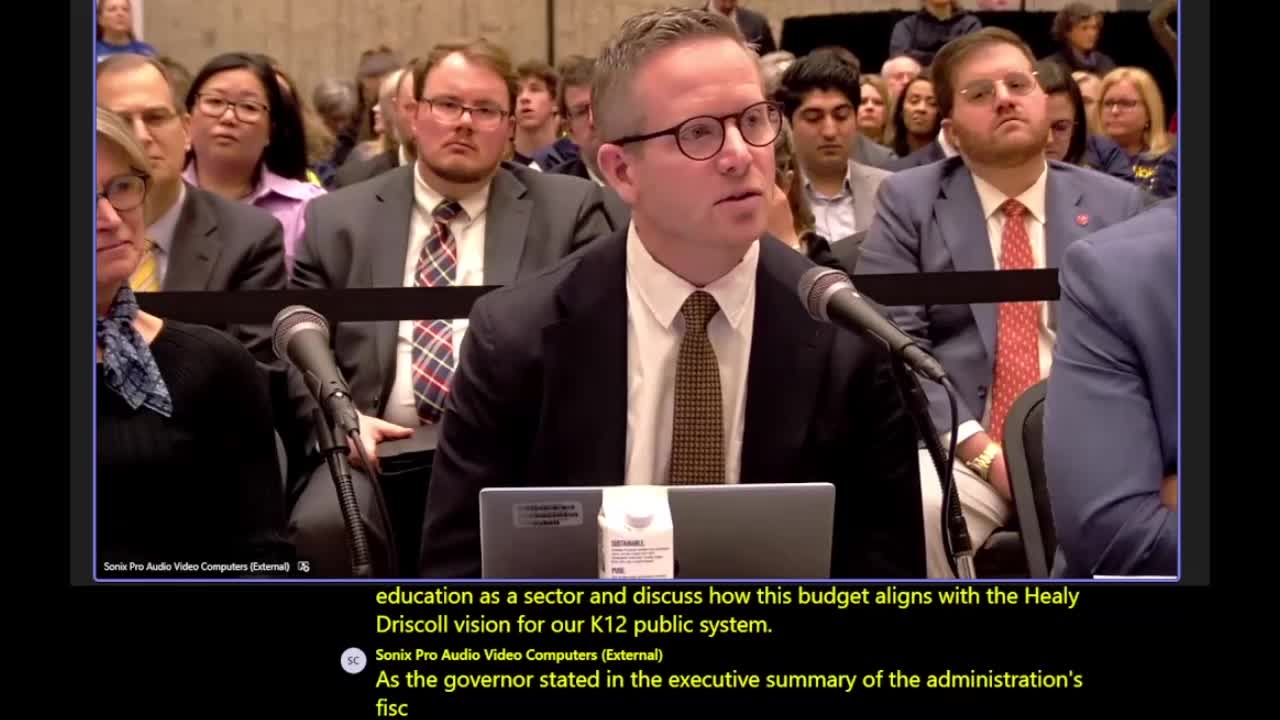
At a public hearing in Amherst, witnesses said the Student Opportunity Act’s added funding increased the state’s foundation budget but left many municipal budgets unable to keep pace with new obligations created by the formula and rising cost drivers such as special education, transportation and health insurance.
“Districts report significant cost increases in key areas, such as out of district special education tuition, transportation, utilities, and health insurance,” said Dr. Mary Bork, executive director of the Massachusetts Association of School Superintendents. She told members that “school committees nationally are proposing staff layoffs, reduction or elimination of programs and even school closures” to close projected FY26 budget gaps.
Why this matters: Many school districts and regional schools say they are caught between increased state formula obligations and local revenue limits under Proposition 2½. Witnesses warned that the current House 1 distribution will concentrate most new Chapter 70 dollars in a minority of districts and leave the majority receiving only a $75 per‑pupil increase or less. School officials urged the committee to adopt near‑term fixes while a longer foundation formula review proceeds.
Key asks from districts: Testimony from the Massachusetts Association of School Superintendents, the Massachusetts Association of School Business Officials (MASBO), and municipal representatives focused on four near‑term priorities for FY26:
- Increase special education circuit breaker funding so reimbursements meaningfully match eligible costs; several witnesses sought substantially higher reimbursement rates and timely payments rather than delayed supplements. MASBO noted special education out‑of‑district tuition and transportation have risen sharply, worsening local fiscal stress.
- Raise per‑pupil minimum aid. Advocates proposed raising the minimum aid per pupil to $150; witnesses said that would materially help many hold‑harmless districts that receive little additional aid under the current distribution.
- Fund rural school aid at higher levels. MASBO and superintendents pointed to a legislative commission recommendation for $60 million in rural school aid; House 1 maintains $16 million. They said the larger number is needed to address transportation and staffing pressures in small and regional districts.
- Increase transportation reimbursements and address a market failure in vendor capacity. Witnesses said regional transportation costs are rising 20–30% and in many rural areas only a single vendor bids; school officials urged higher reimbursement rates to move regional school transportation toward a sustainable level and to protect students and programs.
Voices from the field: Amherst Pelham School Committee Vice Chair Bridget Hines described public hearings that drew hundreds of parents upset about proposed staff reductions, including cuts to instrumental music, reading support and library positions. “Position after position of very meaningful things to our families are at risk this year,” she said. Margaret Raymond Driscoll, MASBO executive director, warned that school districts are being forced to “do less with less” and said “the ripple effects of underfunding aren’t temporary.”
What lawmakers asked: Committee members pressed for more data on geographic distributions of impacts and for specific dollar figures tied to the asks (for example, the incremental dollars to reach a $150 per‑pupil minimum). Several members supported an “early agreement” on UGA and Chapter 70 so municipal and school leaders can finalize budgets and town meeting materials.
Ending: Witnesses urged the Legislature to approve a short list of targeted increases to avoid service cuts this spring and summer, while lawmakers and administrators said they will continue conversations about whether to reconvene a foundation budget review commission to reexamine the Chapter 70 municipal contribution and wealth measures on a broader timetable.