Get Full Government Meeting Transcripts, Videos, & Alerts Forever!
Get email alerts on the Early Childhood Education topic
No spam. Unsubscribe anytime.
Bill to create a statewide pre‑K seat finder draws support from providers, researchers and a national tech vendor
Summary
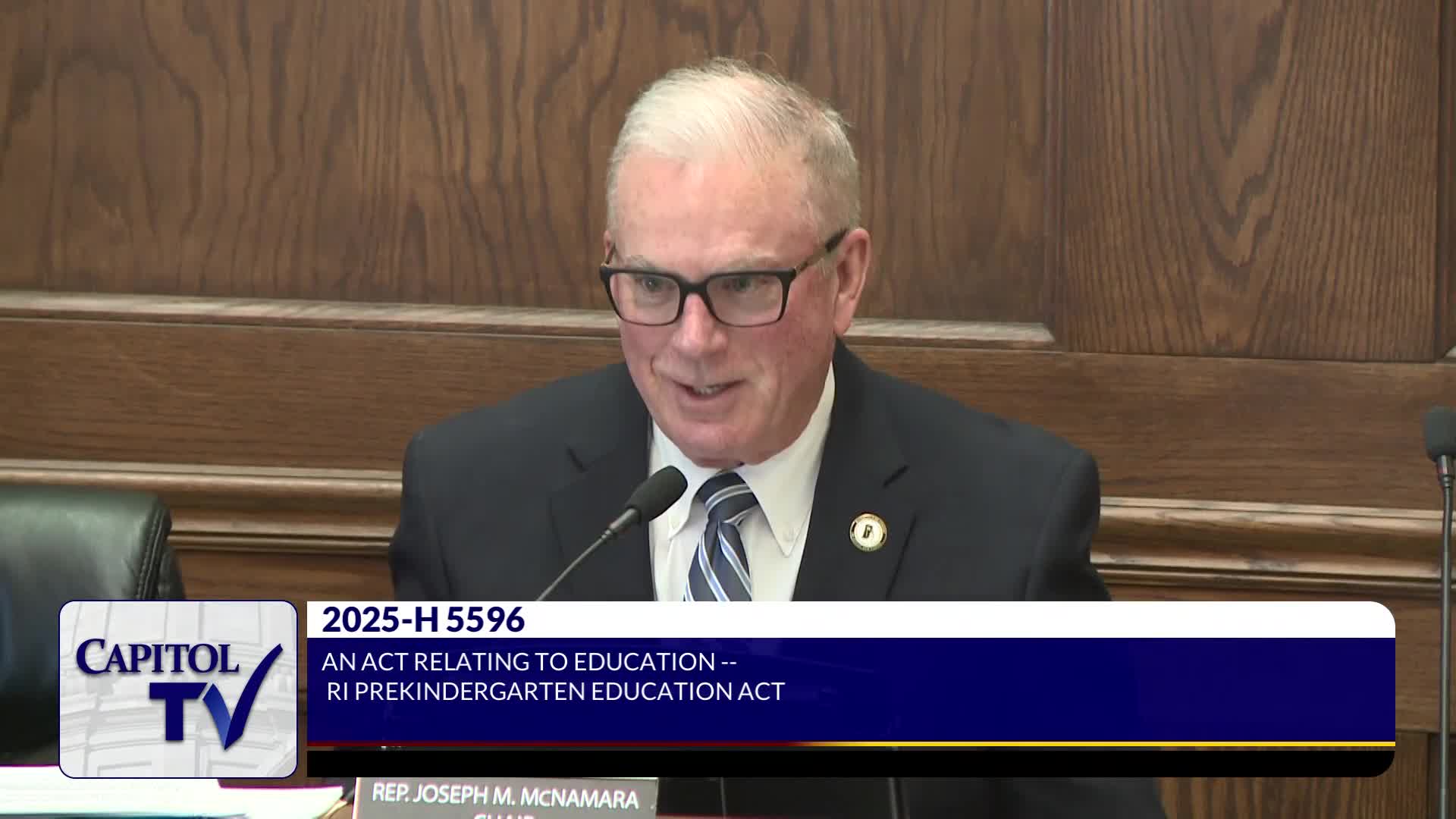
Representative Michelle Cross Smith introduced House Bill 5,596, a measure to create a statewide pre‑K seat finder to help families locate available state‑funded pre‑K seats, and witnesses from WonderSchool and academic public‑health researchers supported the concept.
Representative Michelle Cross Smith, sponsor of House Bill 5,596, told the House Education Committee the bill would create a centralized pre‑K "finder" to help families locate available public pre‑kindergarten seats across Rhode Island.
"At times around, families often struggle to find availability of high quality pre k programs for their children," Representative Michelle Cross Smith said as she introduced the bill. She said the tool would "streamline the search process, ensuring parents can easily locate and enroll their children in high quality learning programs."
Jonathan Adler, vice president of government relations for WonderSchool, testified the technology would reduce the time families spend calling multiple providers and could increase enrollment in state‑funded pre‑K seats. "Now by giving families better access to real time information, the finder will ensure that more children can enter pre k on on time, be better prepared for kindergarten and and importantly beyond kindergarten," Adler said.
Antonio, director of program implementation and policy at the Hassenfeld Institute at Brown University School of Public Health, testified in support and framed the bill as an equity and public‑health tool. "Early childhood education programs have long term positive impacts on children's physical, mental, and social health outcomes, particularly for children from low income and minority households," Antonio said, urging the committee to consider the bill as a way to reduce access barriers for first‑generation immigrant and non‑English speaking families.
WonderSchool representatives and other witnesses described the bill as a narrowly targeted pilot that would initially focus on the cohort of children served by Rhode Island's public pre‑K seats. Witnesses variously cited a range of figures for that population; one speaker described "about 5,000 kids," while others described a smaller pilot universe of "3,000 to 5,000" public pre‑K seats. Witnesses emphasized the bill as a pilot rather than a statewide listing of every licensed childcare slot.
Committee members pressed witnesses on procurement, ongoing costs, and who would be required to participate. Representative Kislak and other members emphasized that any digital platform procured by the state would require a competitive procurement process, and Vice Chair Kislak noted that the bill's text contemplates that RIDE would "procure or develop and maintain the system." Bedford‑area questions about whether private placement models ("place for mom" style services) could be used or whether providers could pay placement fees were raised; witnesses said they would provide more detail in written testimony.
Representative Fazio and others asked whether the finder would include private, tuition‑based providers. Matthew Jurczyk, who testified with WonderSchool, said the bill as written would include the three provider types serving the targeted public pre‑K population — Head Start programs, public school pre‑K classrooms and private licensed childcare providers participating in the public pre‑K program — and allow many companies to bid to provide the technology.
On transparency and pricing, Representative Phillips asked whether the bill requires providers to post tuition rates and subsidy acceptance; witnesses said the bill includes requirements that providers supply tuition rate and subsidy acceptance information in the finder so parents can compare options and see potential additional fees for extended hours.
What the bill does not change: Witnesses and the bill sponsor repeatedly said the measure would not change how the state allocates or funds public pre‑K seats or the lottery or eligibility rules that determine which children receive a publicly funded seat. The finder is intended to surface available seats within the existing program, not to expand eligibility or alter the state budget.
Committee members and witnesses discussed next steps, with multiple members indicating the committee would accept additional written testimony on procurement, cost and participation requirements. No final committee vote on HB 5,596 was recorded in the hearing transcript; the item was heard and testimony taken.
Ending: Supporters called the finder a practical, equity‑driven pilot to reduce barriers to public pre‑K enrollment; members asked for procurement details and cost estimates before advancing the measure.