Get Full Government Meeting Transcripts, Videos, & Alerts Forever!
Get email alerts on the Family Homelessness topic
No spam. Unsubscribe anytime.
New Castle County staff brief council on $9.6 million Treasury pay‑for‑success Family Hope Project; timeline, fundraising and evaluation still unresolved
Summary
County staff described a US Treasury pay‑for‑success award intended to reduce family homelessness, outlined a fundraising and evaluation plan and a summer intake goal, while council members pressed for clarity on family counts, fiscal risk and regular updates.
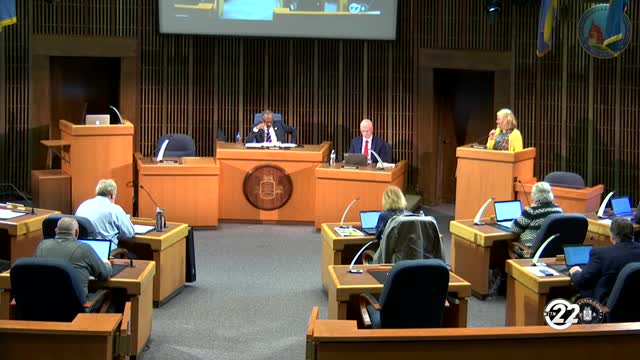
New Castle County officials heard an update on the Family Hope Project on Jan. 25, describing a $9,600,000 U.S. Treasury pay‑for‑success award intended to reduce family homelessness and a financing model that relies on private and philanthropic up‑front funding reimbursed by the Treasury if outcome targets are met. County staff said they expect to begin intake for a first cohort "later in the summer."
The Family Hope Project is a multi‑year initiative administered by the New Castle County Department of Community Services and built around services at the county's Hope Center. Mike Bowser, grants director for Community Services, told the Community Services Committee the project uses a pay‑for‑success model in which private or philanthropic investors provide initial funds, an independent evaluator measures outcomes and the U.S. Treasury reimburses the county when performance goals are met. "We're going to receive this federal funding for this project," Bowser said during the presentation.
County staff said the Treasury award totals $9,600,000 and that the Treasury will also fund the independent evaluator. Bowser and Carrie Casey, general manager in the Department of Community Services, told the committee the evaluator agreement with Tech Impact is expected to total $1,400,000 and is funded through the Treasury award; together those amounts bring the maximum potential value of the federal award to about $11,000,000. Bowser said the project budget that staff expects to raise is roughly $8,800,000 to cover upfront costs until reimbursements are released.
The project model as described by staff includes an extended shelter stay at the Hope Center (up to 90 days), intensive case management, financial counseling and up to two years of direct rental assistance and support services after a family leaves shelter. Bowser summarized the two outcome measures that will trigger Treasury reimbursement as "permanent housing retention" (families remaining in stable housing) and "avoidance of shelter stays" (families not returning to emergency shelters). He said an independent evaluator, Tech Impact, will track outcomes over seven years. "It is tracked for 7 years from our partners, Tech Impact," Bowser said.
Staff described steps already taken and still to come: an RFP for intensive case management services has been released; the county is working on mechanisms for direct rental assistance; staff are coordinating with the Delaware Department of Health and Social Services on benefit waivers to avoid unintentionally reducing families' eligibility for programs such as TANF, SNAP or WIC; and staff have submitted required dependency appendices to the Treasury and are awaiting final approvals. Bowser said he expects the county to be "on track to begin accepting the first cohort of 60 families later in the summer," and that many of the project's legal agreements and a fiscal agent to administer funds remain to be finalized.
Council members pressed staff on several points. Councilman Cartier asked who the up‑front funders would be; Bowser said Social Finance is serving as an intermediary and staff are meeting with philanthropic organizations, including Philanthropy Delaware, and potential private investors. Councilman Koneko and others asked about the number of families to be served; the transcript contains conflicting figures. In an early portion of the presentation Bowser said the project "is designed to assist a 20 families," but later described "two cohorts of 60 families" and repeatedly referenced a first cohort of 60. The transcript does not resolve that inconsistency; county staff did not provide a single, reconciled total during the meeting.
Several members also raised fiscal risk and oversight questions. Councilman Smiley and others asked what would happen if Treasury changed reimbursement decisions; Bowser and Carrie Casey said they have had regular discussions with Treasury and are confident based on those discussions and on Treasury's requirements and reporting processes. Carrie Casey told the committee that, to date, the county has not received any of the federal funds for this project and that fundraising for up‑front costs is ongoing. "We haven't gotten a dime yet," Casey said. Social Finance representative Samantha McNaught Christian told the committee the pay‑for‑success contracts are structured so repayment is contingent on outcome achievement and on contingencies for the availability of funds, and she said the county should not bear repayment risk: "the only instance where we would have any risk to outcome payments... would actually be on the philanthropic partners."
Public commenters and county officials emphasized the Hope Center's role. Joseph Walls, CEO of Veteran Services, praised the Hope Center's centralized services and urged duplication of that model statewide. Carrie Casey and Bowser said the project builds on existing Hope Center infrastructure and county programs and will require continued coordination and reporting to the Treasury.
What happens next: staff said they will return to council to present and, where required, request approval of contracts and grant budget lines (including the anticipated $1,400,000 evaluator agreement), continue fundraising for the up‑front budget, execute the RFP for case management and provide regular updates to the committee. Council members asked for regular email updates on fundraising and for advance notice of items that will require council approval.
The committee also approved the minutes from its Jan. 28 meeting by voice vote at the start of the session; the committee did not take any formal vote on the Family Hope Project itself during the Jan. 25 meeting.