Get Full Government Meeting Transcripts, Videos, & Alerts Forever!
Get email alerts on the Youth Engagement topic
No spam. Unsubscribe anytime.
Yolo County supervisors ask staff to craft longer-term plan for youth commission after positive pilot
Summary
Following a two‑year pilot, the board directed staff to collaborate with the Yolo County Office of Education to develop a detailed proposal for continuing the Youth Commission, including staffing and a proposed $200,000 annual funding estimate.
The Yolo County Board of Supervisors heard an evaluation of the county's two‑year Youth Commission pilot on March 25 and asked county and school district staff to develop a detailed, costed plan for the program's continuation.
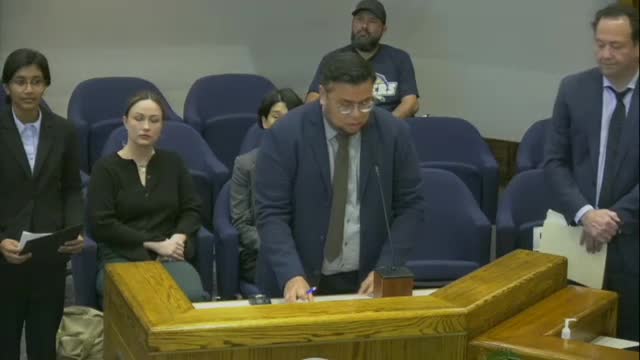
The pilot, administered by the Yolo County Office of Education (YCOE), convened 15 youth commissioners (ages 13'—18) in each cohort to advise the county, administer youth grants and build civic skills. Edwin Ortega Beltran, Youth Development Program Specialist at YCOE, told the board the program awarded seven grants so far and directly served 148 young people through grantees in Round 1.
The evaluation, completed by an outside consultant, found commissioners increased public‑speaking, civic knowledge, decision making and peer relationships. "This program helped me find my voice and become ASB president at my school," Youth Commissioner Parami Jayakodi told the board during the presentation.
YCOE and partners highlighted logistical barriers encountered during the pilot: staffing turnover, transportation challenges for rural youth, and calendar misalignment between school and calendar year that reduced continuity during summer months. Presenters said youth repeatedly asked for deeper embedding with existing local boards and more mentorship and adult support.
To keep the program viable, YCOE proposed a continuing funding package the county could consider. Assistant Superintendent Stan Mosich and YCOE staff outlined a funding example that included about 0.5 full‑time equivalent (FTE) for a program lead, roughly 0.33 FTE of administrative support, and operational costs (transportation, materials, outreach), estimating a near‑term need in the neighborhood of $200,000 annually if the county were to underwrite staffing and overhead. YCOE clarified the pilot relied on a mix of cannabis tax revenue, YCOE funds and a Dr. MLK Jr. Freedom Center grant; future grant opportunities could offset some costs.
Board members said they value the commission's outcomes but voiced caution about committing general fund dollars amid tight county finances. Supervisor Lucas Riggs asked staff to reference prior analyses of alternative models and to present options that would be less costly if needed. Supervisor Villegas urged exploring lower‑cost models and suggested staff research other jurisdictions' youth commission approaches.
By consensus the board directed county staff to continue working with YCOE to develop a detailed proposal and contract outline and to return with options consolidated for board review (timeline discussed with YCOE suggested bringing materials back in April to align with the county's budget calendar). The board did not adopt a budget appropriation at the meeting.
Background: the commission was authorized by the board as a two‑year pilot on May 10, 2022, and YCOE continued to support activities after the original contract ended in December 2024 through the end of the 2024'—25 school year.
What's next: staff will work with YCOE to produce a more detailed staffing, cost and governance proposal for the board's consideration, with the intention of aligning any request to the county's budget process and exploring alternate, lower‑cost models if required.