Get Full Government Meeting Transcripts, Videos, & Alerts Forever!
Get email alerts on the Open Meetings topic
No spam. Unsubscribe anytime.
Committee advances bill to make pandemic-era remote meeting rules permanent with guardrails
Summary
The committee voted to continue and make permanent the remote-participation rules for state boards and commissions adopted during the pandemic while retaining an in-person quorum and provisions aimed at accessibility and security; opponents urged stronger guardrails for advisory bodies and in-person access.
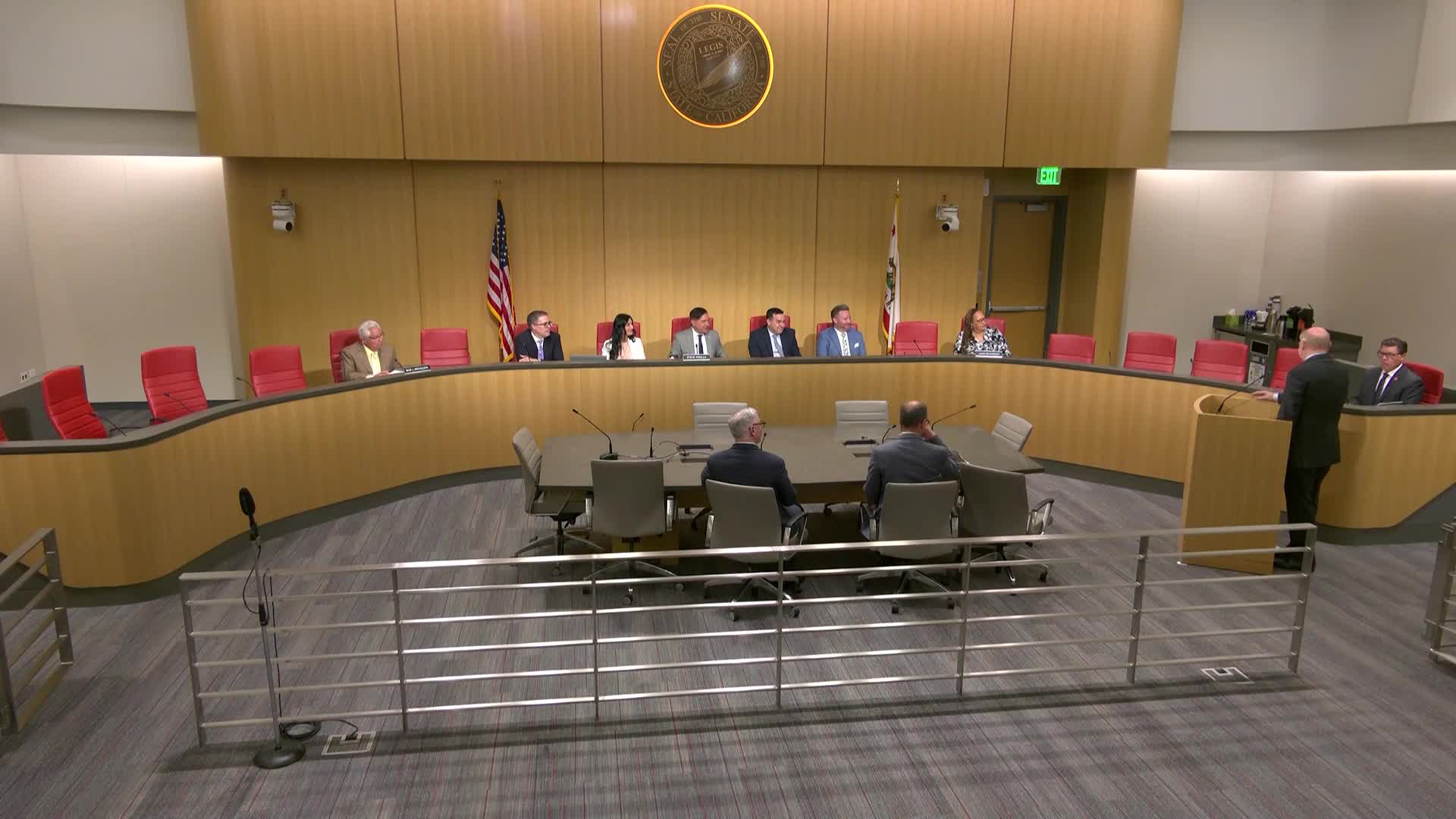
Senator Laird presented SB 470 (filed as SB 470 in the hearing), a measure to remove the sunset on pandemic-era changes to the Bagley-Keene open meeting law and maintain remote participation options for state boards and commissions. He said the law preserves in-person quorums while allowing remote participation for members and the public, requires cameras be on for remote participants when practicable, and protects the security of remote participants by not requiring publication of home addresses.
Supporters said the changes increased public participation and improved accessibility for people with disabilities, caregivers and those who cannot travel to Sacramento. Ethan Rorick of the Little Hoover Commission told the committee the commission saw higher attendance and broader public engagement when meetings used remote technology. Aaron Carruthers of the State Council on Developmental Disabilities described how remote options allow members with disabilities and caregivers to participate and noted the council uses a mix of in-person and remote meetings under the current law.
Opponents, including the ACLU California Action, California Chamber of Commerce, First Amendment Coalition and journalist and media organizations, urged the committee to add stronger guardrails. Cynthia Valencia of ACLU California Action said the bill "prioritizes the convenience of public officials over the meaningful participation of the public" unless further amendments are adopted; she warned advisory committees could meet entirely virtually and cited potential problems for boards that review serious misconduct cases. The California Chamber raised concerns about loss of spontaneous, in-person interaction between officials and the public.
Committee members debated limits on remote attendance by members, the possibility of advisory bodies avoiding in-person meetings, and technical issues such as how remote chat transcripts and questions are preserved for public access. The author said the bill allows any board or commission to adopt the old in-person rules instead and pledged to work on language to address advisory committee concerns.
Senator Archuleta moved SB 470; the motion to pass the bill as amended to Judiciary was recorded and placed on call. The committee roll shows the item placed on call with recorded ayes and nos; the consolidated roll later showed the item reported out of committee with recorded votes and was placed on call for further floor consideration.