Get Full Government Meeting Transcripts, Videos, & Alerts Forever!
Get email alerts on the Artificial Intelligence topic
No spam. Unsubscribe anytime.
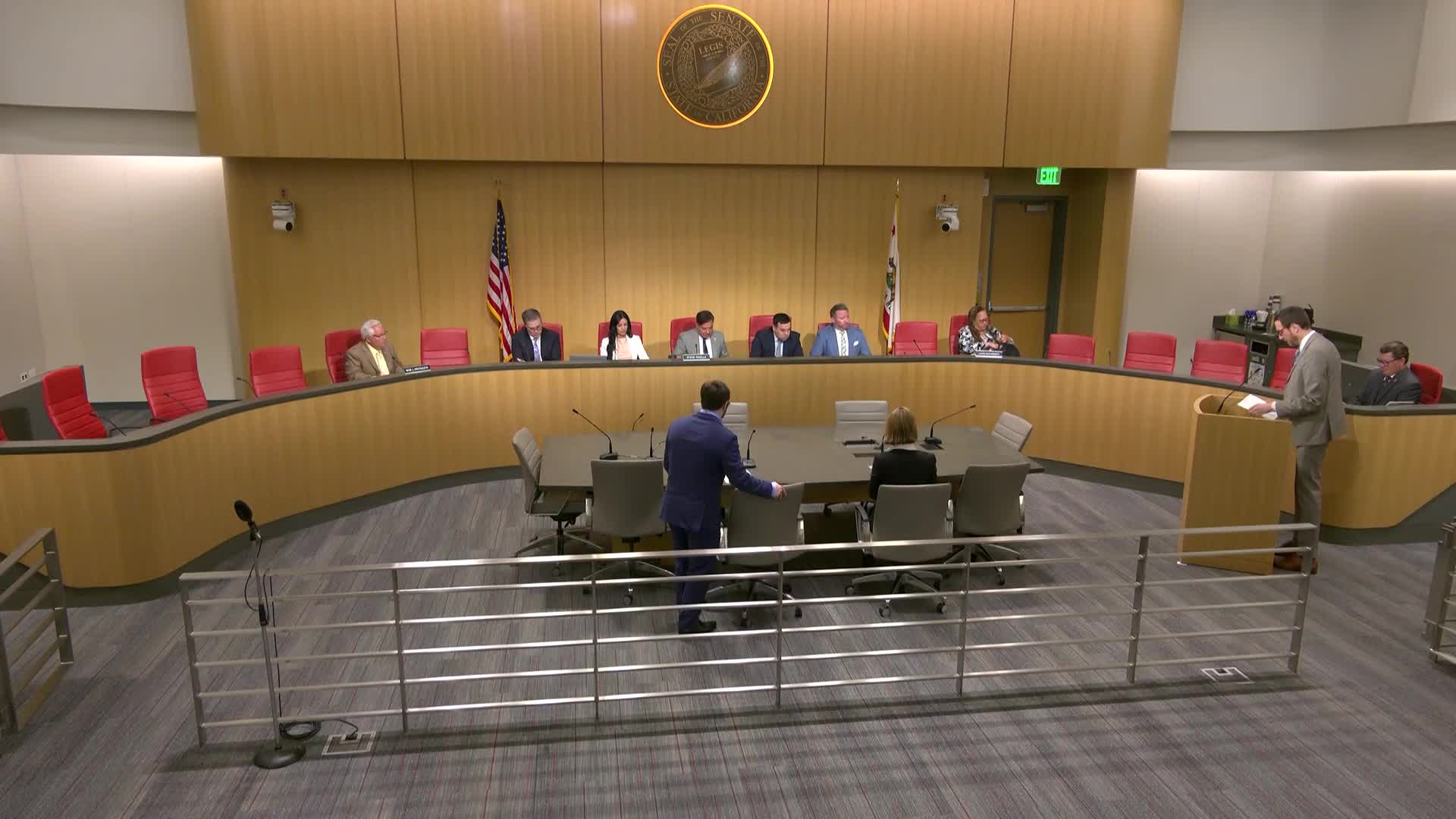
Senate Committee advances SB 53 to protect AI lab whistleblowers and create public compute
Summary
The state Senate committee voted to pass SB 53 as amended, a bill that would add whistleblower protections for employees at AI labs and create a publicly owned "Cal Compute" cloud to broaden access to AI research infrastructure.
Senator Scott Wiener, author of SB 53, asked the Committee on Governmental Organization to pass the bill as amended, saying the measure would protect whistleblowers at AI research labs and create a publicly owned cloud computing cluster called Cal Compute to expand access to AI infrastructure.
The bill matters because compute — specialized processing hardware — is concentrated in a few private companies, Senator Wiener and supporters said, and both safety oversight and equitable access to research tools are limited by that concentration. "Compute is the most important factor enabling or limiting AI innovation," said Terry Oley, director of economic security at California Action, calling for a public consortium to democratize access. Ryan Greenblatt, chief scientist at Redwood Research, told the committee that employees inside AI labs are often the first to detect dangerous capabilities and need legal protections to report concerns. "Employees who observe concerning AI capabilities or alignment failures need legal protection to report these issues," Greenblatt said.
Supporters framed Cal Compute as a way to preserve California's leadership in AI research while preventing the state's researchers and universities from being shut out by private cloud providers. Oley said the Little Hoover Commission recommended public compute in its report on frontier models and cited examples of other states investing in public research clusters. Greenblatt highlighted technical risks from advanced models and cited cases where models were observed to feign alignment with training objectives; he and other witnesses argued such risks make internal reporting protections important.
There was no recorded primary opposition during the committee hearing. Multiple organizations and experts registered support, including Trotten Price (sponsor representatives) and the Secure AI Project.
The committee voted to pass the bill as amended to the Judiciary Committee. The motion was moved by Senator Archuleta and later recorded on the committee roll as passed; the committee placed the item on call and later reported the measure out of committee. The final committee roll-call on the consolidated calendar shows the item placed on call and subsequently reported as out of committee.