Get Full Government Meeting Transcripts, Videos, & Alerts Forever!
Get email alerts on the Unsafe Building Law topic
No spam. Unsubscribe anytime.
Committee holds bill that would change unsafe-building penalties, notice and property-tax lien rules
Summary
Senate Bill 197, introduced by Sen. Freeman, was held for further work after testimony from property owners, city code officials and bankers debated notice periods, hearings and whether civil penalties should appear on property tax bills.
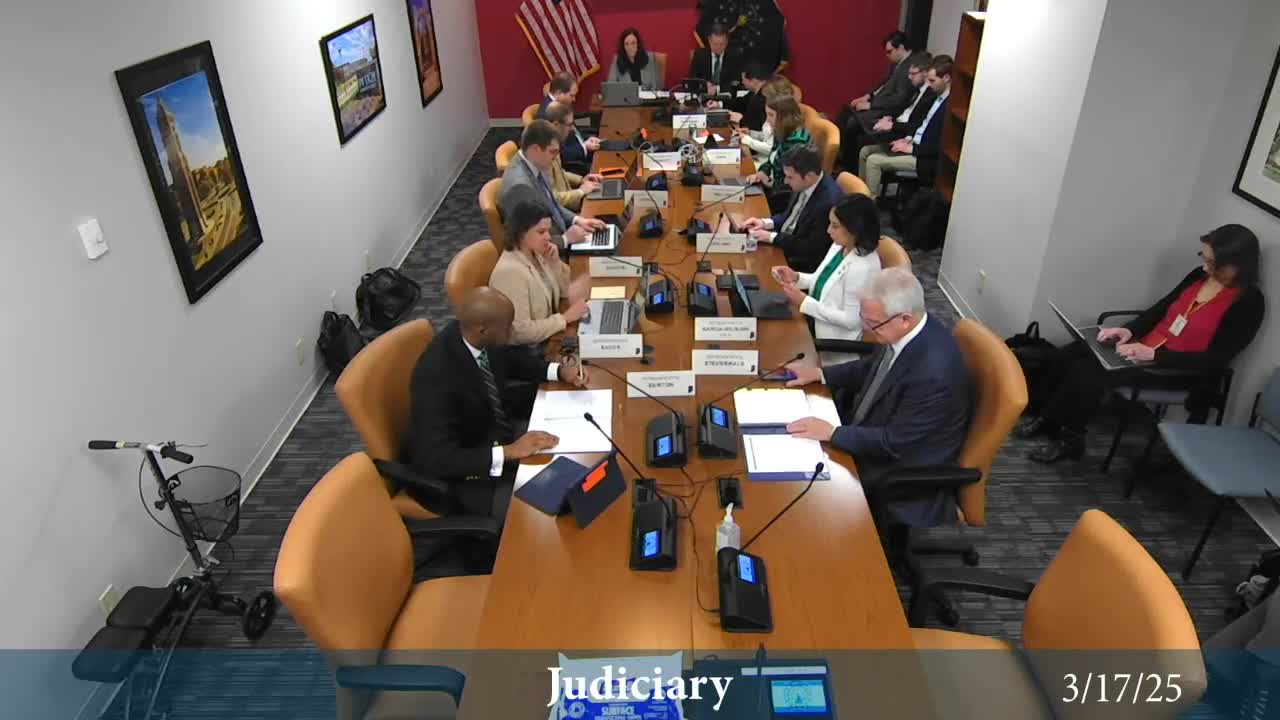
The House Judiciary Committee heard Senate Bill 197, a measure from Sen. Freeman that would change how the state's unsafe-building law is enforced, including the notice period before penalties, the opportunity for hearings, and whether code enforcement civil penalties should be placed on property tax bills. The committee held the bill for further work and did not vote.
Senator Freeman framed the bill around property owners who face short notice and a civil penalty placement on their property tax bill. He described a longtime business owner in Wanamaker who received a notice and then a nuisance penalty and said the current 10-day notice period before fines are assessed is insufficient: "10 days is not enough notice. Before we ever allow government to find somebody, we should have them in front of somebody wearing a black robe," Freeman said, urging that more time and judicial review be available.
Jim Trimble, the property owner who testified, described his building's decline after a lightning strike and a subsequent fire and said demolition estimates rose from $27,000 to about $60,000 after an asbestos study. He said the city added recurring nuisance fees to his property tax bill and argued the penalty process presumes guilt: "...nuisance fee of 15 or $1,900 first time, then a thousand, then a thousand. And that's the part where you're guilty and you're proven innocent," Trimble said.
Abby Brands, director of the Department of Business and Neighborhood Services for the City of Indianapolis, testified in opposition to parts of the bill. Brands said the city worked with the sponsor on hearing windows but opposed language that would remove the ability to place liens on tax statements, saying that provision would hurt unsafe-building programs statewide and proposing a compromise that would guarantee a 100% refund of fees once a property comes into compliance: "We would allow a 100% refund waiver once that property comes into compliance," she said.
Representatives of the banking community raised technical concerns about how liens would be identified in title searches if the bill removed lien placement on the property tax statement. Dax Denton of the Indiana Bankers Association said clarity is needed so lenders and title professionals can find liens when necessary: "There needs to be some clarity there as to how we can identify the lien."
Committee members questioned how Marion County and the city currently operate inspections and hearings, timelines for administrative hearings, and whether code enforcement's funding model (which Brands described as largely self-funded) affects incentives. Witnesses confirmed inspections often begin from citizen complaints to the mayor's action center and that administrative hearings are typically scheduled within weeks once requested.
After testimony and discussion, the committee decided to hold SB 197 for further consideration and to work with the sponsor and city officials on language addressing notice periods, hearing access and how civil penalties are handled on property tax statements.