Get Full Government Meeting Transcripts, Videos, & Alerts Forever!
Get email alerts on the Budget And Finance topic
No spam. Unsubscribe anytime.
SFHSS finance report shows improved net position; board approves 10‑county survey for 2026 rates
Summary
SFHSS staff reported a smaller-than-expected decline in net position for the current year and forecasted interest and pharmacy rebate impacts. The board unanimously approved the annual 10‑county survey results, used to set plan-year 2026 rates; actuaries also presented 2024 plan experience across self-funded and flex-funded plans.
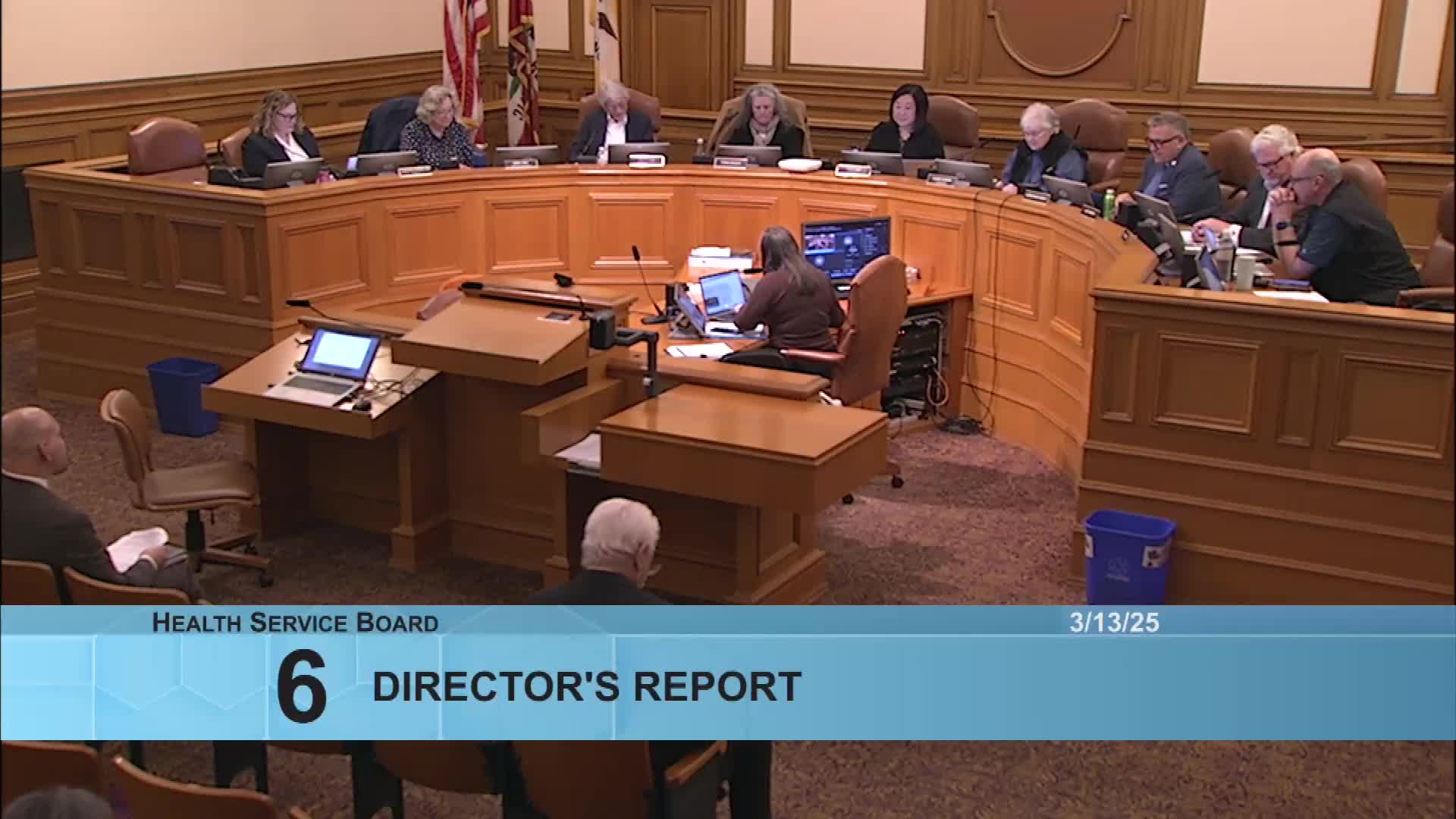
San Francisco Health Service System staff told the Health Service Board on March 13 that the system’s net position projection improved from a projected $37 million drop to a $25 million decline, driven in part by payroll timing and three pay periods in the reporting window, while medical and pharmacy claims remain elevated.
SFHSS Chief Financial Officer Iftikhar Hussain told the board the projection improved primarily because of pay-period timing: “We had a projection of a $37,000,000 drop last month, and it improved to $25,000,000 mainly on how the pay periods fall. So we had 3 pay periods.” He said pharmacy rebates and the timing of pay periods yielded favorable adjustments; interest income was expected to be “a good $6,000,000 due to the higher rates that we’re seeing.” The health sustainability fund projection remained unchanged with a projected ending balance of $5,100,000.
After the finance update, the board considered and unanimously approved the results of the annual 10‑county survey that SFHSS uses to set plan-year 2026 rates for non-represented employees. Iftikhar Hussain said the survey produced an average increase of 6.81% for the counties surveyed, moderated from the prior year’s peak of 9.46%. A roll-call vote recorded ayes from all present board members.
Actuarial staff from Aon then presented a series of reports on 2024 experience for SFHSS self‑funded and flex‑funded plans. Mike Clark, Aon lead actuary, summarized plan-level experience: Blue Shield HMO and the UHC EPO experience saw increases driven by facility-based medical claims and pharmacy; Health Net Canopy Care showed lower aggregate per-employee expense on some measures and continued enrollment growth; the non‑Medicare PPO plan’s financial position improved as active employee enrollment rose.
Aon reported large-claim activity: 38 members exceeded $500,000 in combined medical and pharmacy paid claims in 2024, accounting for $39 million of total spend; roughly $9.5 million of claims were reimbursed under the large-claim pooling arrangement for amounts exceeding $1 million. Prescription drug per‑covered‑life costs rose, with specialty medications and classes such as GLP-1s contributing materially to trends.
Board members discussed county-by-county variations in dental and medical network access and asked staff to include county-level utilization and network data in upcoming rate presentations. No new rate increases were adopted at the meeting beyond the procedural approval of the 10‑county survey results.
Ending: SFHSS staff and Aon actuaries will present more detailed rate recommendations and dental-specific network updates at subsequent meetings as part of the rates-and-benefits calendar.